Village BLT Regulations Every Community Should Understand
Gusti Ayu Tita P
9 September 2026
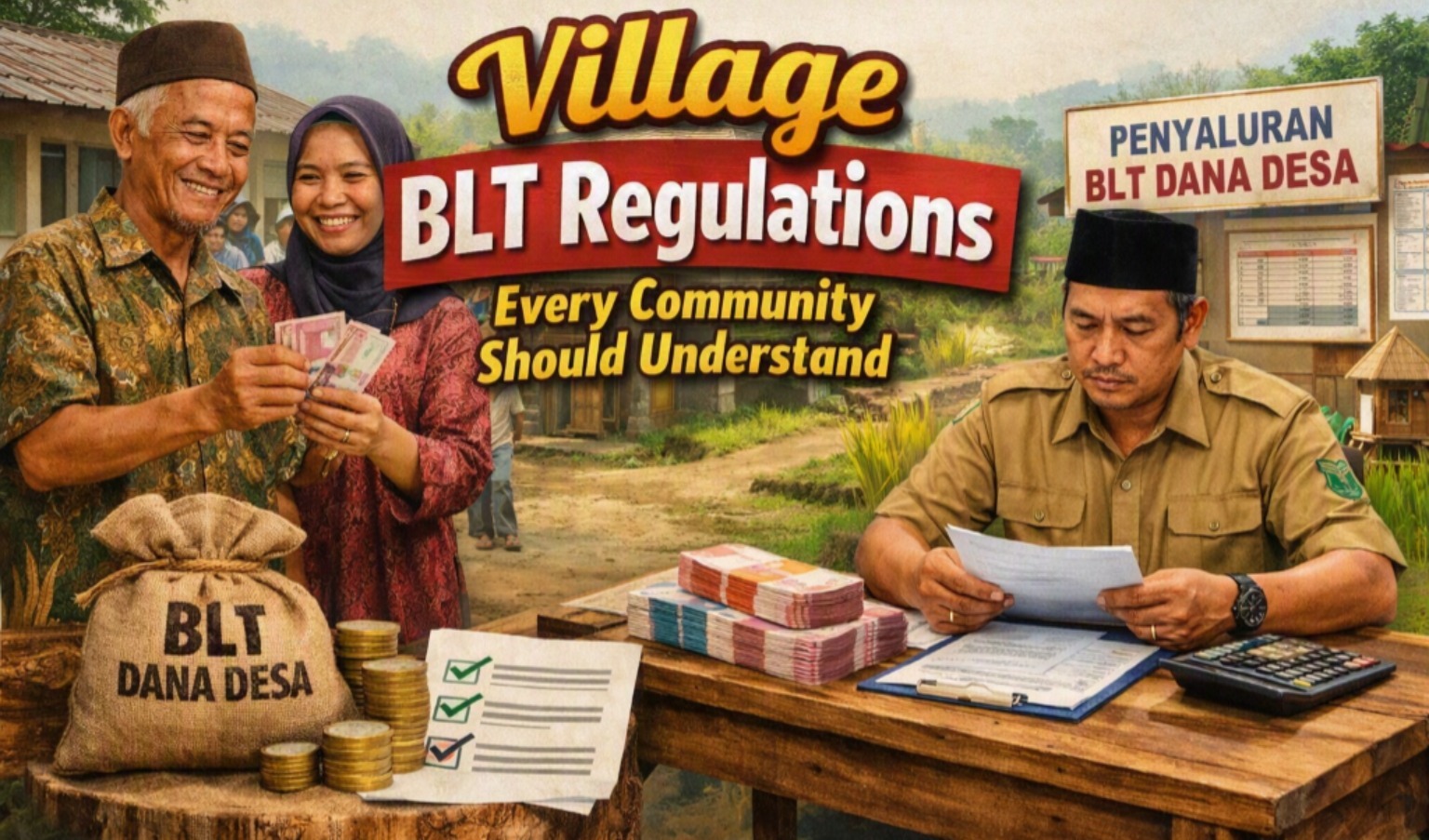
Village BLT or Bantuan Langsung Tunai Desa is an important form of social support funded through the Village Fund. The program is intended to help vulnerable families, particularly in efforts to address extreme poverty at the village level. For the 2026 fiscal year, the main national reference is Minister of Villages and Development of Disadvantaged Regions Regulation Number 16 of 2025, which provides operational guidance for the use of Village Funds in 2026.
Understanding the rules is important because receiving Village BLT is not an automatic right for every low-income resident. The selection of beneficiaries must follow applicable criteria, available government data, and a village-level decision-making process. Communities should therefore understand how beneficiaries are identified, how the assistance is determined, and what transparency mechanisms apply.
WHAT IS VILLAGE BLT?
Village BLT is direct cash assistance financed from Village Funds and prioritized for handling extreme poverty. In the 2026 framework, the use of Village Funds for extreme poverty reduction includes Village BLT as one of the main priorities.
The assistance is designed to provide short-term financial support to families facing serious economic difficulties. The money can help households meet essential needs according to their circumstances. However, the program should not be understood as a permanent income source because its purpose is social protection and poverty reduction. The implementation must also follow the village planning and budgeting framework applicable to the relevant fiscal year.
WHO CAN RECEIVE VILLAGE BLT?
The main target is poor families living in the relevant village, with government data used as an important reference for identifying potential beneficiaries. The beneficiary list is not simply created based on personal requests or informal recommendations. Instead, the proposed list must go through a Village Deliberation process and be formally determined by the Village Head.
When the relevant government data is unavailable, the selection can consider specific vulnerability conditions. These include families that have lost their livelihood, families with members who have chronic or prolonged illnesses or disabilities, poor families that do not receive certain social assistance, households consisting of a single elderly person, and poor female-headed households.
These criteria are intended to help villages identify households facing substantial economic vulnerability. Having one criterion does not mean that a person automatically receives assistance because the final determination still follows the applicable village process. Each village should also verify the information before establishing its beneficiary list.
HOW IS THE VILLAGE BLT BENEFICIARY LIST DETERMINED?
The beneficiary list is discussed and agreed upon through a Village Deliberation, commonly conducted specifically to validate and finalize Village BLT beneficiaries. This process gives the community and village institutions an opportunity to examine whether proposed beneficiaries meet the applicable requirements. The result is then formalized through a Village Head Decision or another village legal instrument according to local administrative practice.
The process is important because it promotes accuracy, fairness, and accountability in the distribution of public funds. Local village officials should verify relevant information rather than selecting beneficiaries solely on personal relationships or individual requests. Communities can participate by providing accurate information and raising concerns through appropriate village channels. A beneficiary list should therefore reflect actual conditions and comply with the governing regulations.
HOW MUCH VILLAGE BLT CAN BENEFICIARIES RECEIVE?
For the 2026 fiscal year, Village BLT may be provided at a maximum of Rp300,000 per beneficiary family per month. The assistance may also be paid at once for a period of up to three months, depending on the applicable implementation and payment arrangements.
This means the maximum amount that can be paid at one time for a three-month period would be Rp900,000 per beneficiary family, if the village applies the maximum monthly amount for all three months. The actual payment should follow the amount and period established under the applicable village budget and administrative decisions. Residents should therefore distinguish between the maximum amount allowed by the national guidance and the payment actually scheduled by their village.
WHY MUST THE PROCESS BE TRANSPARENT?
Transparency is essential because Village Funds are public funds and their use must be accountable to the community. Information about Village BLT should be handled through proper village planning, budgeting, documentation, and reporting mechanisms. The 2026 Village Fund framework places emphasis on accountable planning and implementation, while village-level practices include communicating beneficiary decisions and program implementation to the community.
Transparency also helps prevent misunderstandings when some households receive assistance while others do not. Residents can ask about the applicable criteria, the deliberation process, and the administrative basis for the beneficiary list through the appropriate village government channels. Clear information reduces conflict and makes it easier to identify errors in beneficiary data. At the same time, personal data of beneficiaries should be handled responsibly and not disclosed beyond what is permitted by applicable rules.
WHAT SHOULD COMMUNITIES DO IF THEY ARE NOT INCLUDED?
Not being included in the Village BLT list does not automatically mean that a household's economic difficulties are being ignored. Residents should first check whether their household information is accurate and whether it is represented correctly in the relevant government data. They can then communicate with the Village Government or participate through the appropriate community and deliberation mechanisms when beneficiary data is being reviewed. The aim should be to correct inaccurate information through an official process rather than relying on informal claims.
Communities should also understand that Village BLT is only one component of broader Village Fund priorities. For 2026, Village Funds also have priorities related to climate resilience and disaster preparedness, basic health services, food and energy security, support for village cooperatives, labor-intensive infrastructure, digital infrastructure, and other priority sectors. Therefore, households that do not receive BLT may still have access to other programs or services, depending on local planning and eligibility requirements.
CONCLUSION
The most important rule is that Village BLT is targeted assistance, not a payment automatically received by every resident. Beneficiary selection should rely on relevant government data where available and consider applicable vulnerability criteria when the necessary data is unavailable. The list must be discussed and agreed upon through a Village Deliberation and formally established by the Village Head.
For 2026, the maximum Village BLT amount is Rp300,000 per beneficiary family per month, with payment potentially made for up to three months at once. Communities should pay attention to data accuracy, transparent decision-making, proper documentation, and accountability throughout the process. By understanding these basic regulations, residents can better monitor the program and help ensure that Village BLT reaches families who genuinely need support.
About the Author
Gusti Ayu Tita P
Author — STEKOM University
An active author focused on academic issues, educational technology, and human resource development in the campus environment.