What Activities Can Be Done at a Neighborhood Watch Post?
Gusti Ayu Tita P
18 September 2026
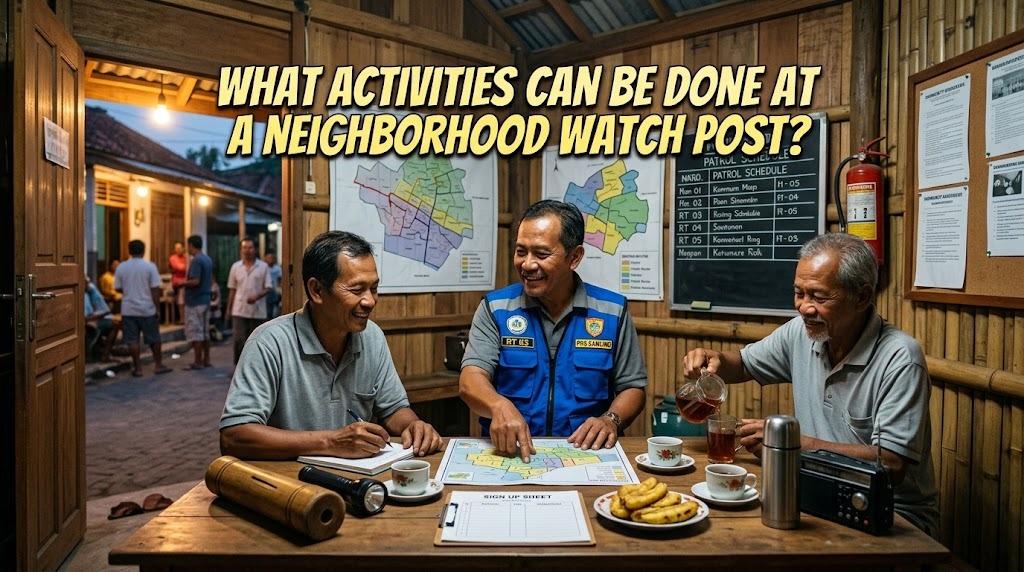
A neighborhood watch post can serve as more than a place for residents to gather at night. It can become a community space where residents work together to maintain security, awareness, and cooperation. Various useful activities can be organized according to the needs and conditions of the neighborhood. When managed consistently, these activities can encourage residents to become more attentive to their surroundings. A well-organized neighborhood watch post can therefore support a safer and more connected community.
COMMUNITY PATROL ACTIVITIES
One of the main activities that can be carried out at a neighborhood watch post is community patrol. Residents can take turns monitoring streets, public spaces, and other areas that may need additional attention, especially during hours when fewer people are outside. A patrol should focus on observation and prevention, rather than taking personal action against people suspected of wrongdoing. If residents notice an emergency or potentially dangerous situation, they should contact the appropriate authorities instead of confronting the situation themselves.
A clear patrol schedule can make participation more organized and fair. Residents can divide shifts according to their availability and make sure that important information is passed between groups at the end of each shift. Communication, visibility, and cooperation are important elements of an effective patrol system. Regular patrols can also help residents become more familiar with normal conditions in their neighborhood, making unusual situations easier to recognize.
RESIDENT MONITORING AND REPORTING
The neighborhood watch post can also be used to support community monitoring and reporting. Residents can record important observations such as damaged street lighting, blocked roads, suspicious incidents, or other conditions that may affect neighborhood safety. This information can be documented in a simple security logbook so that community leaders can review recurring problems. Accurate records can help the community understand which issues require attention.
Reporting should always be based on observable facts rather than assumptions about a person's identity or intentions. Residents should avoid spreading unverified information because rumors can create unnecessary conflict within the community. When a serious incident occurs, residents should use appropriate emergency or law enforcement channels. The neighborhood watch post can function as a coordination point while respecting privacy, safety, and legal boundaries.
COMMUNITY MEETINGS AND DISCUSSIONS
Another useful activity is holding community meetings at the neighborhood watch post. Residents can discuss security concerns, environmental problems, neighborhood rules, and upcoming community activities. These meetings provide an opportunity for people to share ideas and identify practical solutions together. They can also help ensure that security responsibilities are understood by residents.
Regular discussions can strengthen communication between neighbors and prevent small problems from becoming larger disagreements. Community leaders can use the meetings to evaluate previous activities and identify areas that need improvement. Residents can also suggest changes to patrol schedules or other neighborhood programs. With open communication, the neighborhood watch post can become a place for collaborative decision making.
EMERGENCY PREPAREDNESS ACTIVITIES
A neighborhood watch post can be used for emergency preparedness activities as well. Residents can discuss what to do during fires, floods, earthquakes, power outages, or other local emergencies. The community can identify important emergency contacts and establish simple communication procedures. Basic preparedness discussions can help residents understand how to respond calmly when an emergency occurs.
The post can also serve as a meeting point for coordinating residents during certain emergencies when it is safe and appropriate to do so. Community members can review evacuation routes, identify vulnerable areas, and make sure important information can be communicated quickly. However, residents should not attempt dangerous rescue operations without proper training. Safety procedures and professional emergency services should remain the priority.
COMMUNITY CLEANUP AND SOCIAL ACTIVITIES
Neighborhood watch posts can also support activities that strengthen community relationships. Residents can organize neighborhood cleanups, maintenance activities, or environmental campaigns around the post and nearby public areas. A clean and well-maintained environment can make shared spaces more comfortable and encourage residents to take greater responsibility for their surroundings. These activities can also increase interaction among people who may not normally meet.
Social activities such as informal gatherings, youth activities, or community discussions can make the neighborhood watch post more active. Community cooperation often becomes stronger when residents have regular opportunities to communicate outside of security-related situations. These activities should remain inclusive and considerate of different ages and schedules. A neighborhood watch post that supports both security and social interaction can become a valuable part of everyday community life.
CONCLUSION
A neighborhood watch post can support many activities, including community patrols, monitoring and reporting, community meetings, emergency preparedness, cleanups, and social programs. The most effective activities are those that match the actual needs of local residents and are carried out consistently. Every activity should prioritize safety, cooperation, accurate communication, and respect for legal boundaries. Residents should also work with local authorities and emergency services when professional assistance is required.
When residents participate actively, a neighborhood watch post can become more than a physical building. It can function as a community coordination point that encourages awareness and stronger relationships between neighbors. Through responsible and organized activities, communities can build a safer, more prepared, and more cooperative environment.
About the Author
Gusti Ayu Tita P
Author — STEKOM University
An active author focused on academic issues, educational technology, and human resource development in the campus environment.