
What Activities Can Support the Adiwiyata School Program?
Gusti Ayu Tita P
15 September 2026
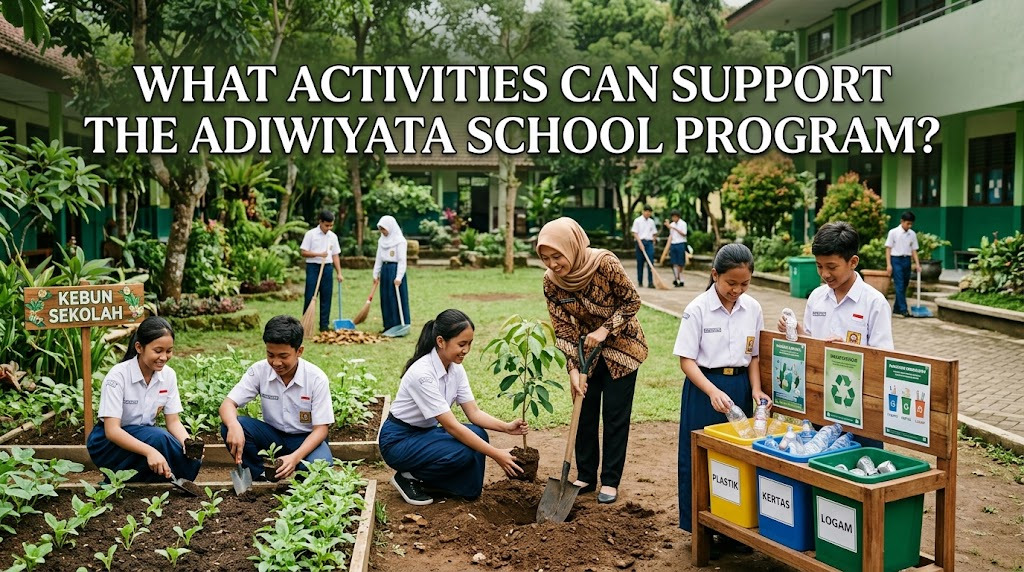
The Adiwiyata School Program encourages schools to develop environmental awareness through education and practical activities. The program can become more effective when students, teachers, and school staff actively participate in daily environmental practices. Activities do not always need to be complicated because simple habits can create meaningful changes when practiced consistently. Waste management, gardening, environmental campaigns, and resource conservation are examples of activities that can support an environmentally responsible school. Through regular participation, schools can build an environmental culture that benefits both students and their surroundings.
WHAT IS THE ROLE OF ENVIRONMENTAL ACTIVITIES IN THE ADIWIYATA PROGRAM?
Environmental activities help students understand that protecting nature is not only a theory but also a practical responsibility. Through direct participation, students can learn how their daily actions affect the school environment. Activities such as cleaning, recycling, planting, and saving resources can develop positive habits. These experiences can also strengthen students' sense of responsibility toward their surroundings. Therefore, environmental activities are an important part of creating an effective Adiwiyata School.
Schools can organize activities according to their facilities and environmental conditions. The program does not have to use expensive equipment or complicated methods. What matters most is that activities are planned clearly, performed regularly, and evaluated when necessary. Teachers can connect environmental activities with classroom learning so students understand the reasons behind each action. This approach can make the Adiwiyata School Program more meaningful and sustainable.
HOW CAN WASTE MANAGEMENT ACTIVITIES SUPPORT ADIWIYATA SCHOOLS?
Waste management is one of the practical activities that can be implemented in an Adiwiyata School. Students can learn to separate waste according to the categories provided by their school. Schools can also encourage waste reduction by promoting reusable bottles, lunch containers, and other reusable products. Recycling activities can be introduced for suitable materials through safe and appropriate procedures. These practices can reduce unnecessary waste while teaching students about responsible consumption.
Schools can make waste management more interesting through creative projects and environmental campaigns. For example, students can create educational posters, participate in recycling projects, or help monitor waste separation in their classrooms. Teachers can explain the environmental impact of excessive waste and improper disposal. Students can then understand that waste management is not simply about throwing garbage into a bin. It is a broader effort to reduce, separate, reuse, and manage waste responsibly.
WHY ARE PLANTING AND SCHOOL GARDENING IMPORTANT?
Planting trees and maintaining school gardens can support the creation of green school spaces. Students can participate in planting, watering, and caring for suitable plants under teacher or staff guidance. Gardening activities can introduce students to basic concepts about plants, ecosystems, and environmental balance. Green areas can also make school surroundings more attractive and provide spaces for outdoor learning. Regular maintenance is important so that planted areas remain healthy and useful.
Gardening activities can also encourage students to develop a stronger care for nature. Students may become more aware of the importance of protecting plants when they are directly involved in caring for them. Schools can organize simple gardening schedules for classes or student groups. The activities should be adapted to available space, local conditions, and the needs of the plants. With consistent participation, school gardens can become both educational resources and examples of environmental responsibility.
HOW CAN CLEANING ACTIVITIES BUILD ENVIRONMENTAL AWARENESS?
Regular cleaning activities can help students understand the importance of maintaining a clean and healthy school environment. Students can participate in classroom cleaning, school yard maintenance, and other appropriate environmental activities. These tasks can teach discipline, cooperation, and responsibility. Cleaning should not only be carried out when an inspection or special event is approaching. Instead, it should become a normal part of daily school life.
Schools can also organize community cleaning activities involving students, teachers, and staff. During these activities, participants can identify areas that need improvement and discuss practical solutions. Students can learn that cleanliness is a shared responsibility rather than the responsibility of one group. Teachers can reinforce positive behavior by providing examples and explanations. When cleaning becomes a consistent habit, it can strengthen environmental awareness throughout the school community.
HOW CAN WATER AND ENERGY CONSERVATION ACTIVITIES HELP?
Water conservation and energy conservation are important activities because schools use these resources every day. Students can be encouraged to close water taps properly and avoid unnecessary water use. They can also turn off lights, fans, and other electrical equipment when they are no longer needed, according to school rules. Teachers can explain why saving resources is important for environmental responsibility. Simple actions performed by many students can help reduce unnecessary resource consumption.
Schools can make conservation activities more educational through posters, classroom reminders, monitoring programs, or student campaigns. Students can observe whether water and electricity are being used responsibly in their surroundings. If they notice problems such as leaking taps or damaged equipment, they should report them to teachers or responsible staff. These activities can help students connect environmental education with their daily behavior. As a result, resource conservation can become part of a sustainable lifestyle.
WHAT ENVIRONMENTAL CAMPAIGNS CAN BE ORGANIZED AT SCHOOL?
Environmental campaigns can make the Adiwiyata School Program more engaging and easier for students to understand. Schools can organize poster competitions, environmental presentations, clean-school campaigns, recycling projects, or educational exhibitions. Students can also create simple messages about saving water, reducing waste, protecting plants, and keeping classrooms clean. Such activities allow students to express their creativity while communicating environmental values. Campaigns can also encourage cooperation between different classes and student groups.
The success of a campaign depends on clear messages and active participation. Environmental information should be presented in language that students can easily understand and apply. Teachers can guide students in developing accurate and responsible campaign materials. Schools can also evaluate which activities receive positive responses and which areas need improvement. Through creative campaigns, environmental education can become more interesting and encourage students to practice environmentally friendly habits.
CONCLUSION
Many activities can support the Adiwiyata School Program, including waste management, gardening, cleaning, resource conservation, and environmental campaigns. These activities help students learn environmental responsibility through direct experience rather than theory alone. Consistent participation can develop discipline, cooperation, environmental awareness, and care for nature. Schools should choose activities that match their conditions and make them part of regular school routines. By working together, students, teachers, and school staff can create an environmentally friendly school that promotes sustainable habits and positive environmental behavior.
About the Author
Gusti Ayu Tita P
Author — STEKOM University
An active author focused on academic issues, educational technology, and human resource development in the campus environment.















