
What Are Effective Solutions to Reduce Illegal Parking?
Gusti Ayu Tita P
29 Agustus 2026
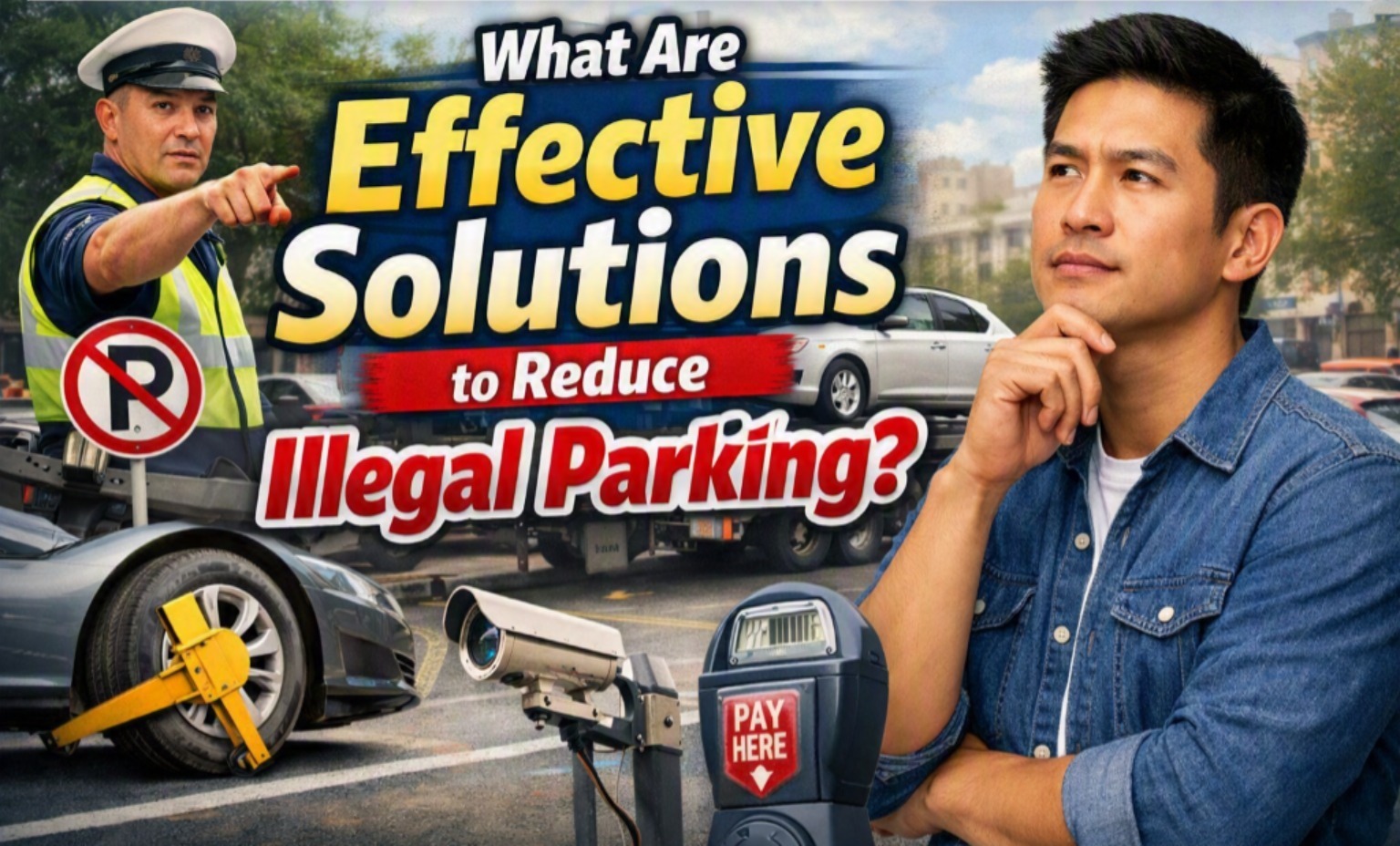
Illegal parking is a common problem in many urban areas. Vehicles that are parked in prohibited locations can reduce road capacity, cause traffic congestion, block pedestrians, and increase accident risks. The problem can become more serious when drivers ignore parking signs or leave their vehicles in busy areas for long periods.
Reducing illegal parking requires more than simply issuing fines. Cities need a combination of clear regulations, effective enforcement, sufficient parking facilities, technology, and public awareness. The following solutions can help create safer and more orderly streets.
IMPROVE PARKING REGULATIONS
One effective solution is to establish clear and consistent parking regulations. Drivers should be able to easily understand where they can park, how long they can stay, and which areas are prohibited. Signs should use simple language, visible symbols, and appropriate placement so they can be seen before drivers stop their vehicles.
Parking rules should also be applied consistently across different areas. Authorities can identify locations with frequent violations and introduce specific restrictions based on traffic conditions. Clear regulations make it easier for drivers to follow the rules and give enforcement officers a stronger basis for taking action.
PROVIDE ADEQUATE PARKING FACILITIES
A lack of convenient parking spaces can encourage drivers to park illegally. Cities can reduce this problem by developing adequate and accessible parking facilities near commercial areas, offices, schools, markets, and public transportation hubs. Parking facilities should be easy to locate and reasonably convenient for drivers.
Authorities can also improve existing parking areas instead of relying entirely on new construction. Better parking management, organized vehicle spaces, and reasonable parking fees can encourage drivers to use designated facilities. When legal parking is practical and accessible, people have fewer reasons to leave their vehicles on restricted roads.
STRENGTHEN LAW ENFORCEMENT
Consistent enforcement is essential for reducing illegal parking. Authorities can conduct regular patrols in locations where violations frequently occur. Depending on local regulations, vehicles that violate parking rules may receive fines, towing, or other penalties.
Enforcement should focus on preventing repeated violations rather than simply collecting penalties. Officers can prioritize areas where illegal parking causes serious traffic obstruction, pedestrian safety problems, or emergency access issues. Fair and consistent enforcement can also encourage drivers to take parking regulations more seriously.
USE SMART PARKING TECHNOLOGY
Technology can make parking management more efficient. Cities can use parking sensors, digital payment systems, license plate recognition, and mobile parking applications to monitor parking activity. These technologies can help drivers find available legal parking spaces while helping authorities identify violations more efficiently.
Digital systems can also provide useful information about parking demand. Authorities can analyze parking occupancy, peak hours, and violation patterns to improve traffic and parking policies. Smart parking technology therefore supports both enforcement and better planning.
INCREASE PUBLIC AWARENESS
Public education is another important solution because illegal parking is often influenced by driver behavior and a lack of awareness. Authorities can use social media, road signs, schools, community programs, and public campaigns to explain why illegal parking is dangerous. Messages should focus on practical consequences such as blocked roads, restricted pedestrian movement, and delayed emergency vehicles.
Campaigns should also encourage drivers to develop responsible parking habits. Simple reminders such as checking parking signs, using designated spaces, and avoiding restricted areas can make a difference when communicated consistently. Greater awareness can reduce violations without depending entirely on penalties.
PROTECT PEDESTRIANS AND EMERGENCY ACCESS
Parking policies should give special attention to areas that must remain accessible at all times. Sidewalks, pedestrian crossings, fire lanes, hospital entrances, and emergency routes should be protected from unauthorized parking. Blocking these locations can create serious safety problems and delay emergency responses.
Authorities can install physical barriers, road markings, bollards, or other appropriate measures where necessary. Regular monitoring is also important because drivers may continue to park illegally if restrictions are rarely enforced. Keeping these critical areas clear can significantly improve road safety and public accessibility.
ENCOURAGE BETTER URBAN PARKING MANAGEMENT
Long-term solutions require parking management to be included in broader urban planning. Authorities can use parking zones, time limits, variable parking fees, and restricted parking areas according to local traffic conditions. These measures can help manage demand in busy districts and discourage unnecessary vehicle use in congested areas.
Cities can also connect parking policies with public transportation and walking infrastructure. Convenient alternatives can reduce pressure on limited parking spaces, especially in central business districts. A well-planned system combines parking management, traffic control, public transportation, and pedestrian facilities rather than treating illegal parking as an isolated problem.
CONCLUSION
Reducing illegal parking requires a combination of practical policies and responsible driver behavior. Effective solutions include clearer regulations, better parking facilities, consistent enforcement, smart technology, public education, and protection of pedestrian and emergency access. Each measure addresses a different cause of illegal parking and becomes more effective when implemented together.
The ultimate goal is not simply to punish drivers but to create safer, more organized, and more accessible streets. With proper planning and cooperation between authorities, businesses, and the public, cities can significantly reduce illegal parking and improve the overall quality of urban transportation.
About the Author
Gusti Ayu Tita P
Author — STEKOM University
An active author focused on academic issues, educational technology, and human resource development in the campus environment.















