
What Are the Benefits of Adiwiyata Schools for Students and the Environment?
Gusti Ayu Tita P
15 September 2026
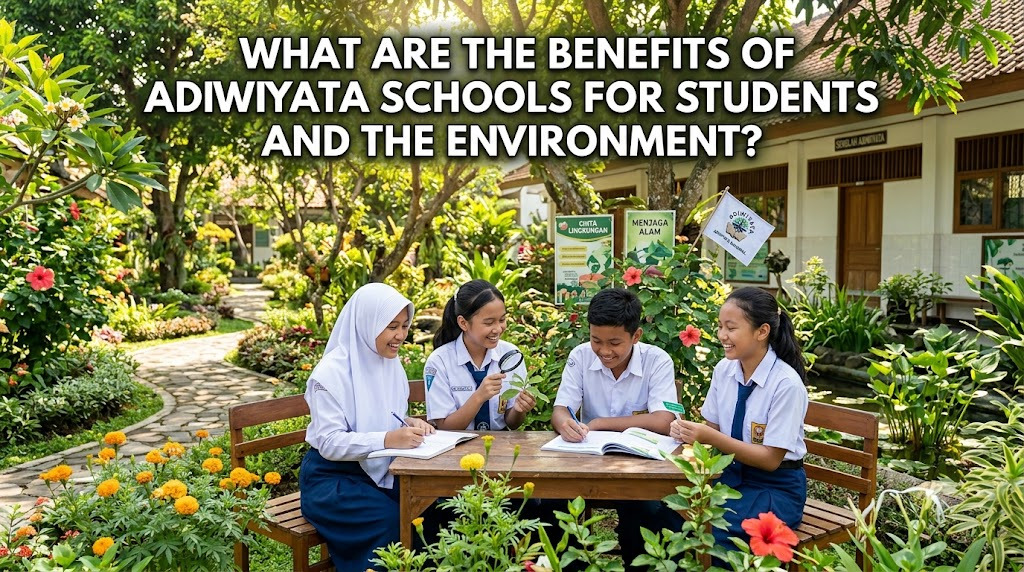
Schools have an important role in helping students understand the importance of protecting the environment. The Adiwiyata School Program provides an approach that combines environmental education with practical activities in the school environment. Students can learn how to maintain cleanliness, manage waste, conserve resources, and care for plants through daily activities. These habits can support the creation of a clean and environmentally friendly school. Therefore, Adiwiyata Schools can provide benefits not only for students but also for the surrounding environment.
WHAT IS AN ADIWIYATA SCHOOL?
An Adiwiyata School is an educational institution that develops environmental responsibility through school policies, learning activities, and daily practices. The program encourages students, teachers, and school staff to work together in managing and protecting the school environment. Environmental values can be introduced through lessons and reinforced through practical activities. These activities may include waste separation, gardening, cleanliness programs, and conservation of water and energy. Through this approach, environmental education becomes part of everyday school life.
The implementation of Adiwiyata does not simply mean making the school look clean or green. It also involves developing a consistent environmental culture among members of the school community. Students are encouraged to understand why environmental protection is important and how their actions can make a difference. Teachers and school management can support these habits through guidance, policies, and suitable facilities. As a result, environmental responsibility can become a long-term practice rather than a temporary activity.
WHAT ARE THE BENEFITS FOR STUDENTS?
One of the main benefits of an Adiwiyata School is helping students develop responsibility and discipline. Students learn to dispose of waste properly, maintain cleanliness, save water, and use electricity wisely. Repeated practice can make these activities become positive habits in their daily lives. Environmental activities can also teach students to work together and respect the needs of others. These experiences support both environmental awareness and character development.
The program can also improve students' understanding of environmental problems. Instead of learning only from books, students can observe and solve simple environmental problems around their school. They may participate in recycling projects, gardening activities, or environmental campaigns. Such activities can develop creativity, teamwork, and problem-solving skills. The knowledge and habits gained at school can also be applied in students' homes and communities.
HOW CAN ADIWIYATA BENEFIT THE SCHOOL ENVIRONMENT?
Adiwiyata practices can help create a cleaner, healthier, and more comfortable school environment. Proper waste management can reduce litter and make school areas easier to maintain. Planting trees and other vegetation can increase green spaces and improve the appearance of the surroundings. Regular cleaning can also help maintain classrooms, toilets, yards, and other facilities. A well-maintained environment can support a more comfortable atmosphere for learning.
Environmental management can also encourage schools to use natural resources more responsibly. Water can be conserved by avoiding unnecessary use and maintaining facilities properly. Electricity can be saved by turning off lights and electronic equipment when they are not needed. Schools can also reduce unnecessary waste by encouraging reusable products. These practices demonstrate that sustainable school management can begin with simple and consistent actions.
HOW DOES ADIWIYATA SUPPORT ENVIRONMENTAL AWARENESS?
The Adiwiyata program helps students understand that environmental protection is a shared responsibility. Students are given opportunities to participate directly in activities that affect their surroundings. For example, they can help separate waste, care for school gardens, and participate in environmental campaigns. These experiences can make environmental issues easier to understand because students can see the results of their actions. Over time, repeated participation can strengthen their environmental awareness.
Environmental awareness developed at school can also influence behavior outside the school. Students may bring habits such as reducing waste, conserving water, and keeping public spaces clean into their homes and communities. They can also encourage family members and friends to practice similar habits. This creates an opportunity for environmental values to spread beyond the school. In this way, Adiwiyata Schools can contribute to a broader culture of environmental responsibility.
WHAT ARE THE BENEFITS OF WASTE MANAGEMENT AND GREENING?
Waste management is an important part of an environmentally responsible school because it teaches students how to reduce and handle waste properly. Schools can introduce waste separation and encourage students to reduce unnecessary packaging. Recyclable materials can be collected and processed through appropriate recycling activities. Students can also learn about the environmental effects of excessive waste. These practices help connect environmental knowledge with practical daily behavior.
Greening activities provide another important benefit by creating and maintaining green school spaces. Students can participate in planting and caring for trees, flowers, and other suitable vegetation. Gardening activities can teach students about plants, ecosystems, and the importance of caring for living things. Green spaces can also make the school environment more attractive and comfortable. When combined with proper maintenance, greening and waste management can strengthen the school's overall environmental program.
WHAT IS THE ROLE OF TEACHERS AND STUDENTS?
The success of an Adiwiyata School depends heavily on the participation of students, teachers, and school staff. Students can contribute by following environmental rules, keeping their surroundings clean, saving resources, and joining school activities. Teachers can guide students and connect environmental topics with relevant lessons. They can also become examples by practicing responsible environmental habits themselves. School staff can support the program through facility maintenance and daily environmental management.
Cooperation among these groups makes environmental programs easier to maintain. Students can provide ideas for environmental activities, while teachers can help organize and evaluate them. School management can provide policies, facilities, and support so that activities can continue consistently. Parents and the surrounding community can also contribute when appropriate. Strong cooperation can turn environmental care into a sustainable school culture.
CONCLUSION
Adiwiyata Schools provide important benefits for both students and the environment. Students can develop responsibility, discipline, teamwork, creativity, and stronger environmental awareness through practical activities. At the same time, schools can improve waste management, maintain green spaces, conserve water and energy, and create a cleaner learning environment. The program becomes more effective when students, teachers, school staff, and other members of the community participate consistently. Ultimately, the Adiwiyata School Program can help create environmentally responsible students while supporting a healthier and more sustainable school environment.
About the Author
Gusti Ayu Tita P
Author — STEKOM University
An active author focused on academic issues, educational technology, and human resource development in the campus environment.















