
What Are The Biggest Challenges Faced By Diplomats In Global Politics?
Gusti Ayu Tita P
4 Agustus 2026
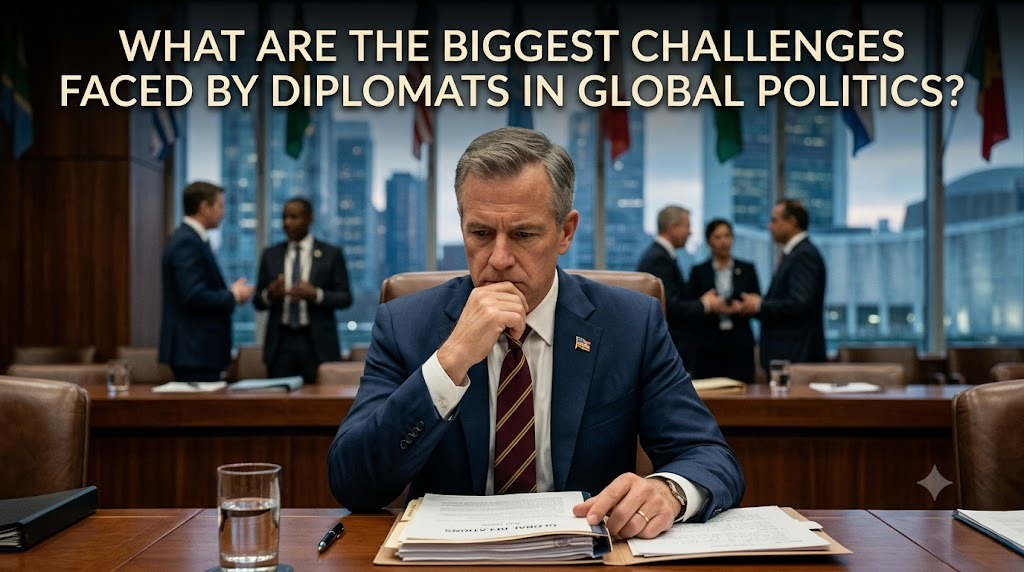
Diplomats play an important role in managing relationships between countries. They represent their governments, communicate with foreign officials, protect national interests, and help find peaceful solutions to international problems. Their work can involve politics, economics, security, trade, culture, and humanitarian issues. Because international relations are constantly changing, diplomats must be prepared to deal with complex situations.
Working in global politics requires more than knowledge of international affairs. Diplomats need strong communication skills, cultural awareness, negotiation abilities, and the capacity to make careful decisions under pressure. They may also face political disagreements, international crises, security risks, and rapidly changing global conditions. Understanding these challenges helps explain why diplomacy is an important but demanding profession.
MANAGING POLITICAL CONFLICTS BETWEEN COUNTRIES
One of the biggest challenges for diplomats is dealing with political conflicts between countries. Governments may have different interests, priorities, security concerns, or views about international issues. Diplomats must communicate these positions while trying to prevent disagreements from becoming more serious. Even a small misunderstanding can sometimes affect diplomatic relations.
Diplomats often need to find areas where countries can cooperate despite their differences. This requires patience, negotiation, and careful communication. They must understand their own government's position while also listening to the concerns of other countries. Successful diplomacy often depends on finding practical compromises without abandoning important national interests.
HANDLING INTERNATIONAL CRISES
Diplomats may be required to respond quickly during international crises. These situations can include armed conflicts, natural disasters, humanitarian emergencies, political instability, or major diplomatic disputes. During a crisis, information can change rapidly and decisions may have serious consequences. Diplomats therefore need to remain calm and evaluate information carefully.
Crisis diplomacy often involves communication with governments, international organizations, and other stakeholders. Diplomats may help coordinate negotiations, support humanitarian efforts, or communicate official positions. They also need to consider the safety of citizens and diplomatic personnel. Fast but responsible decision making is essential when dealing with sensitive situations.
BALANCING NATIONAL INTERESTS AND INTERNATIONAL COOPERATION
Diplomats are expected to protect their country's national interests while participating in international cooperation. These goals can sometimes create difficult choices. A government may want to protect its economic or security interests while also supporting international agreements. Diplomats must understand how to balance these priorities.
International cooperation is especially important when countries face problems that cannot be solved by one government alone. Issues such as climate change, global health, migration, organized crime, and international trade require cooperation across borders. Diplomats therefore need to find solutions that support national priorities while contributing to shared international goals.
DEALING WITH CULTURAL AND LANGUAGE DIFFERENCES
Diplomats regularly work with people from different cultural and linguistic backgrounds. Differences in communication styles, traditions, social expectations, and political cultures can create misunderstandings. A statement that is acceptable in one culture may be interpreted differently in another. For this reason, cultural awareness is an important diplomatic skill.
Language skills can also improve communication and strengthen professional relationships. Diplomats who understand local customs and communication styles may be better prepared to build trust. They must also be careful when using words in formal negotiations and public statements. Respect for cultural differences can help reduce unnecessary tension.
NEGOTIATING COMPLEX INTERNATIONAL AGREEMENTS
Negotiation is one of the central responsibilities of diplomacy. Diplomats may participate in discussions about trade, security, environmental policies, international law, and political cooperation. These negotiations can involve many countries with different interests. Reaching an agreement may require long discussions and multiple rounds of compromise.
A successful negotiation requires preparation and a clear understanding of the issues involved. Diplomats must know their government's priorities while identifying areas where compromise is possible. They also need to communicate proposals clearly and understand the positions of other parties. Trust and credibility can make international negotiations more effective.
RESPONDING TO GLOBAL POWER CHANGES
The global political environment is constantly changing. Countries may experience changes in economic strength, political leadership, military capabilities, technology, or international influence. These developments can affect existing relationships and create new opportunities or risks. Diplomats need to understand these changes and adjust their strategies accordingly.
The growth of multipolar global politics can make international relations more complicated. Different countries and regional organizations may have significant influence over specific issues. Diplomats must therefore build relationships with multiple partners rather than focusing on only one major power. Strategic flexibility is increasingly important in a changing international environment.
DEALING WITH TECHNOLOGY AND DIGITAL DIPLOMACY
Technology has changed the way diplomats communicate and interact with international audiences. Digital diplomacy allows governments and diplomatic missions to share information quickly through websites and social media. However, the speed of digital communication also creates risks. Incorrect information, misleading content, or poorly considered statements can spread rapidly.
Diplomats need to understand how digital platforms influence public opinion and international communication. They must protect sensitive information while communicating effectively with the public. Cybersecurity is also an important concern because diplomatic organizations can be targeted by cyber threats. Digital skills have therefore become increasingly relevant to modern diplomacy.
MANAGING PUBLIC OPINION AND MEDIA PRESSURE
Diplomats increasingly operate in an environment where international events receive immediate public attention. News reports and social media can influence how people understand diplomatic decisions. A single statement can receive widespread attention within a short period. Diplomats must therefore communicate carefully and accurately.
Managing public diplomacy requires the ability to explain government positions while maintaining credibility. Diplomats may communicate with journalists, local communities, students, businesses, and other groups. They need to understand that diplomacy is not limited to communication between governments. Building positive relationships with foreign publics can also support broader diplomatic objectives.
PROTECTING CITIZENS AND DIPLOMATIC PERSONNEL
Another important challenge is protecting citizens abroad and ensuring the safety of diplomatic personnel. Embassies and consulates may assist citizens during emergencies, political instability, natural disasters, or other difficult situations. Diplomats need to coordinate with local authorities and their home governments when providing assistance.
Security can become particularly challenging in areas affected by conflict or political instability. Diplomatic personnel may need to operate under strict security procedures while continuing essential services. They must balance their responsibilities with the safety of themselves and others. Careful preparation and coordination are essential in these situations.
HANDLING ECONOMIC AND TRADE INTERESTS
Modern diplomacy also involves significant economic cooperation and trade relations. Diplomats may support investment opportunities, promote exports, strengthen business relationships, and communicate economic policies. Differences in regulations, tariffs, market conditions, and national priorities can make economic negotiations complicated.
Economic diplomacy requires an understanding of both international politics and business conditions. Diplomats need to communicate with government officials as well as companies and other economic stakeholders. Strong economic relationships can create opportunities for countries, but disagreements over trade policies can also create diplomatic tension. Finding mutually beneficial solutions is therefore an important part of their work.
CONCLUSION
Diplomats face many challenges in global politics, from political conflicts and international crises to cultural differences, economic negotiations, and technological changes. Their responsibilities require strong communication, negotiation, analytical thinking, and cultural awareness. They must also protect national interests while supporting cooperation with other countries. These responsibilities can become especially difficult when international situations change rapidly.
Despite these challenges, diplomacy remains essential for maintaining international cooperation and peaceful relations. Skilled diplomats can help governments communicate, negotiate disagreements, respond to crises, and build long term partnerships. By adapting to changes in global politics and developing modern diplomatic skills, diplomats can continue to play an important role in addressing international challenges.
About the Author
Gusti Ayu Tita P
Author — STEKOM University
An active author focused on academic issues, educational technology, and human resource development in the campus environment.















