What Are The Career Opportunities For Game Developers In The Global Gaming Industry?
Gusti Ayu Tita P
5 Agustus 2026
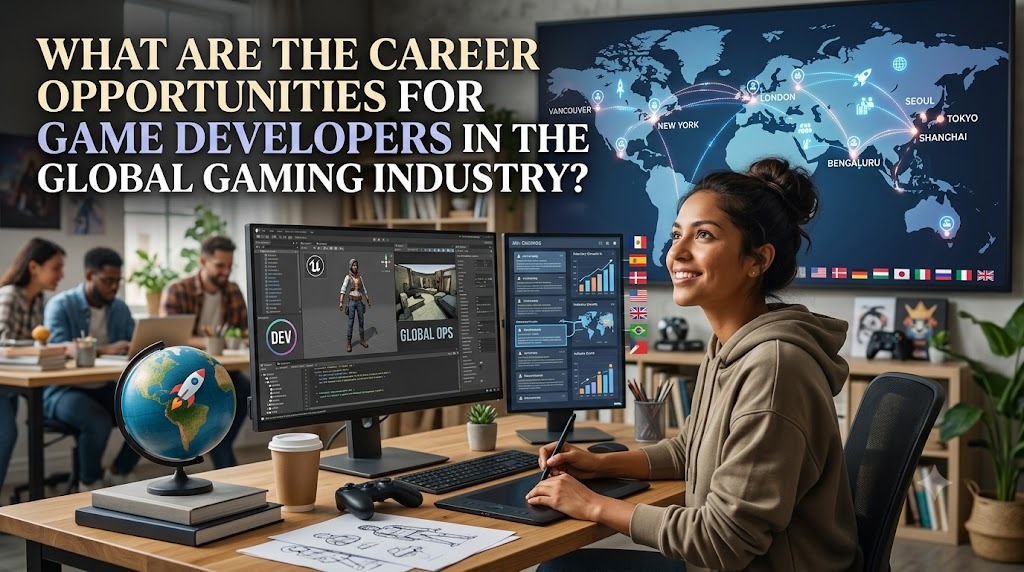
The global gaming industry continues to grow and create opportunities for people with technical, creative, and business skills. Behind every successful game, there are professionals who design gameplay, write code, create visual assets, produce sound, test features, and manage projects. Game developers are therefore an important part of the gaming industry because they turn ideas into interactive experiences. As technology develops, new career paths continue to appear across different areas of game production.
A career in game development can offer opportunities in game studios, independent development teams, technology companies, publishers, and freelance projects. Professionals can also work on games for computers, consoles, mobile devices, and other interactive platforms. The career path chosen usually depends on a person's skills, interests, experience, and specialization. Understanding the available opportunities can help aspiring developers choose a suitable direction.
UNDERSTANDING THE ROLE OF GAME DEVELOPERS
A game developer is a professional involved in creating and maintaining video games. The term can refer to people working in different disciplines, including programming, game design, technical art, production, and other development roles. Game development normally requires collaboration because a modern game can contain many interconnected systems and creative elements. Developers work together to transform an initial concept into a playable product.
The responsibilities of a developer depend on their specialization and the size of the development team. In a small indie team, one person may perform several different tasks, while a large studio may divide responsibilities among specialized departments. Developers may participate in planning, prototyping, production, testing, optimization, and post launch updates. This variety makes game development a broad career field rather than a single job position.
CAREER AS A GAME PROGRAMMER
Game programming is one of the most important career paths in the gaming industry. Game programmers write and maintain the code that makes gameplay systems function. They can work on player controls, artificial intelligence, physics, user interfaces, networking, graphics systems, and other technical features. Depending on the position, programmers may specialize in areas such as gameplay programming, engine programming, graphics programming, or tools development.
A strong foundation in programming languages, algorithms, mathematics, debugging, and software development can help people enter this field. Programmers also need to understand how their code interacts with other parts of a game. Collaboration with designers and artists is important because technical systems must support the intended player experience. As games become more technically advanced, specialized programming skills can become increasingly valuable.
CAREER AS A GAME DESIGNER
A game designer focuses on how a game works and how players experience it. Designers may create gameplay mechanics, rules, progression systems, missions, levels, challenges, and reward structures. They need to understand what makes a game enjoyable while ensuring that its systems support the overall design goals. Game designers often work closely with programmers, artists, writers, and producers.
Good designers require more than creative ideas. They need problem solving, communication, analytical thinking, and playtesting skills to evaluate whether a feature actually works. Designers may create prototypes and adjust mechanics based on testing and feedback. The role can also include balancing difficulty and ensuring that players understand the game's systems without unnecessary confusion.
CAREER AS A GAME ARTIST
Game artists create the visual elements that give a game its appearance and identity. Their work can include characters, environments, objects, animations, textures, visual effects, and user interface elements. Depending on their specialization, artists may work in 2D, 3D, animation, concept art, technical art, or visual effects. Large studios often have separate teams for different art disciplines.
A successful game artist needs strong visual skills as well as an understanding of technical limitations. Artists must consider factors such as performance, file sizes, animation requirements, and the capabilities of the target platform. They also need to follow a consistent art direction so that different assets feel like part of the same game. Building a strong portfolio is especially important for people seeking professional art positions.
CAREER AS A QA TESTER
Quality assurance or QA testers help identify problems before and after a game is released. They test gameplay features, menus, controls, performance, compatibility, and other parts of the product. Testers may deliberately perform unusual actions to find bugs that ordinary players might not encounter. Their findings can help developers improve stability and overall player experience.
QA work requires attention to detail, patience, communication, and analytical thinking. Testers need to describe problems clearly so developers can reproduce and fix them. Although QA is sometimes viewed as an entry level position, it can provide valuable experience with game development processes. Experienced QA professionals can also move into specialized testing, QA leadership, production, or other development roles.
CAREER AS A SOUND DESIGNER OR AUDIO PROFESSIONAL
Audio professionals create the sounds and music that support the game's atmosphere and interaction. Sound designers may produce effects for weapons, characters, environments, menus, and gameplay events. Composers can create music that supports different moods and important moments. Voice and audio implementation specialists may also contribute to projects with extensive dialogue or interactive audio.
Working in game audio requires knowledge of sound production, recording, editing, mixing, and audio implementation. Audio professionals often work with game engines and specialized audio tools. They need to understand how sound interacts with gameplay and player actions. A strong audio portfolio can help demonstrate creativity and technical ability to potential employers.
CAREER AS A TECHNICAL SUPPORT OR TOOLS DEVELOPER
Some developers specialize in creating tools that help other members of a game team work more efficiently. Tools programmers can develop systems for level editing, asset processing, debugging, animation, testing, or other production tasks. Their work may not be directly visible to players, but it can significantly improve development workflows. These professionals are especially valuable in large and technically complex projects.
This career path requires strong programming and problem solving abilities. Tools need to be reliable, efficient, and easy for other developers to use. A good tools developer understands the needs of different departments and creates solutions that reduce repetitive work. This role demonstrates that game development careers extend beyond creating visible gameplay features.
CAREER IN MOBILE AND INDEPENDENT GAME DEVELOPMENT
Mobile game development provides opportunities for developers who want to create games for smartphones and tablets. Mobile projects can range from simple casual games to complex online experiences. Developers need to consider device performance, screen sizes, touch controls, battery usage, and platform requirements. Monetization and user retention can also be important considerations depending on the business model.
Indie game development offers another career path with a different working environment. Indie developers often have greater creative freedom but may have fewer resources than large studios. A small team may need to handle programming, art, design, marketing, publishing, and community management. This path can be challenging but provides an opportunity to build original projects and develop a broad range of professional skills.
CAREER OPPORTUNITIES IN GLOBAL GAME STUDIOS
The global gaming industry includes studios and companies operating across many countries and regions. Developers may find opportunities through local studios, international companies, remote teams, publishers, outsourcing companies, and freelance work. Some organizations hire professionals based on specialized skills rather than location, although requirements vary between employers. Remote collaboration has also created additional possibilities for some roles.
Working in a global environment can expose developers to different production methods and perspectives. However, international careers may require strong English communication skills, teamwork, adaptability, and professional networking. Developers should also understand the expectations and hiring practices of the companies or markets they are targeting. A strong portfolio and demonstrable skills can be particularly useful when applying for competitive international positions.
SKILLS NEEDED FOR A GAME DEVELOPMENT CAREER
Successful game developers need a combination of technical skills, creative abilities, and soft skills. Technical requirements depend on the role, but may include programming, 3D modeling, animation, game engines, audio production, or testing. Creative thinking is useful for solving problems and developing engaging player experiences. Communication is also essential because game development involves collaboration between different disciplines.
Another important skill is continuous learning. Game engines, development tools, hardware, player expectations, and industry practices continue to evolve. Developers who regularly improve their skills can adapt more effectively to changes in the industry. Building personal projects and maintaining a strong portfolio can also demonstrate practical ability beyond formal education.
HOW TO START A CAREER IN GAME DEVELOPMENT
People who want to enter the gaming industry can begin by choosing a specific area that matches their interests. Someone who enjoys coding may start with programming and game engines, while someone interested in visual creativity may explore art, animation, or technical art. Beginners can use small projects to learn how different parts of game development work. Starting with a manageable project is usually more practical than attempting to create a large commercial game immediately.
A portfolio is one of the most useful tools for demonstrating practical skills. It should contain selected projects that clearly show what the developer can contribute to a professional team. Beginners can also participate in game jams, collaborative projects, internships, online communities, or educational programs to gain experience. Over time, these activities can help build both technical skills and professional connections.
FUTURE CAREER PROSPECTS FOR GAME DEVELOPERS
The future of game development is connected to advances in real time graphics, artificial intelligence, cloud technologies, virtual reality, augmented reality, and interactive experiences. These technologies may create new types of games and new specialized roles. At the same time, traditional skills such as programming, design, art, audio, testing, and production will remain important. Developers will increasingly need to understand how new technologies can be used responsibly and effectively.
The global nature of the industry also means that developers can work across different markets and platforms. However, competition for professional positions can be strong, particularly for popular roles. Building a clear specialization while maintaining a broad understanding of game development can improve career flexibility. Ultimately, adaptability, strong skills, practical experience, and continuous learning can help developers build sustainable careers.
CONCLUSION
The global gaming industry offers a wide range of career opportunities for people with different interests and abilities. Professionals can work as game programmers, designers, artists, technical artists, producers, QA testers, audio specialists, tools developers, or indie developers. Each role contributes to a different part of the game development process and requires its own combination of skills.
A successful career does not depend only on having a formal qualification. Practical experience, a strong portfolio, teamwork, communication, problem solving, and continuous learning are equally valuable. For aspiring developers, the best approach is to choose a specialization, create real projects, learn from feedback, and gradually build professional experience. With consistent effort and adaptability, game development can become a rewarding career in the global gaming industry.
About the Author
Gusti Ayu Tita P
Author — STEKOM University
An active author focused on academic issues, educational technology, and human resource development in the campus environment.