
What Are the Characteristics of a Successful Adiwiyata School?
Gusti Ayu Tita P
15 September 2026
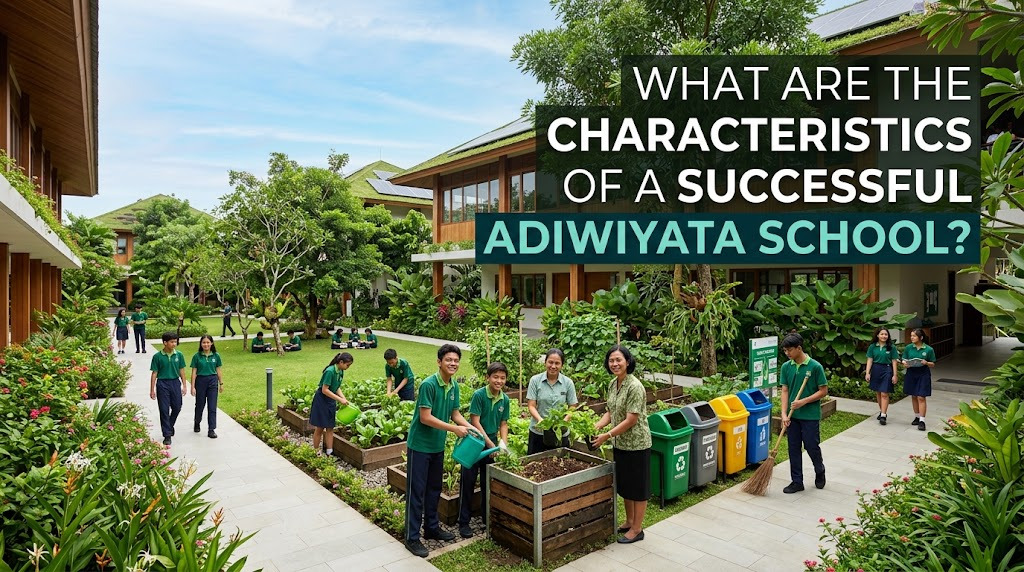
Environmental awareness is an important part of creating a clean, healthy, and sustainable school environment. Students spend a large amount of time at school, so schools can become an effective place to develop responsible habits toward nature. The Adiwiyata School Program encourages students to understand environmental problems and participate in practical solutions. Through education, daily habits, and environmental activities, students can learn that protecting nature is a shared responsibility. A strong environmental awareness can also encourage students to apply positive habits outside the school environment.
WHY IS ENVIRONMENTAL AWARENESS IMPORTANT FOR STUDENTS?
Environmental awareness helps students understand the relationship between human activities and the condition of nature. Simple actions such as throwing waste properly, saving water, and reducing unnecessary energy use can affect the school environment. When students understand the reasons behind these actions, they are more likely to practice them consistently. Environmental awareness also teaches students to think about the long-term effects of their choices. Therefore, it is an important part of developing responsible and environmentally conscious individuals.
Schools can introduce these values through lessons and daily activities. Teachers can explain environmental issues using examples that students can easily find around them. Students can then observe problems such as excessive waste, dirty areas, or unnecessary use of electricity and discuss possible solutions. This approach makes environmental education more practical and meaningful. As a result, students can gradually develop habits that support a healthier environment.
HOW CAN ENVIRONMENTAL EDUCATION INCREASE STUDENT AWARENESS?
Environmental education can help students understand why protecting nature is important. Teachers can include topics such as pollution, waste management, conservation, biodiversity, and sustainable living in appropriate lessons. These topics can be explained through discussions, assignments, experiments, presentations, or simple observations around the school. Students can learn not only environmental facts but also how their daily behavior contributes to environmental conditions. This combination of knowledge and practice can strengthen student environmental awareness.
Schools can also organize educational campaigns that use simple and attractive messages. Posters, videos, announcements, and classroom discussions can remind students about responsible environmental behavior. Digital media can make these messages more interesting, especially when students are involved in creating the content. The important point is that environmental education should encourage understanding rather than simply giving instructions. With continuous education, students can develop a stronger connection with environmental responsibility.
WHAT ENVIRONMENTAL ACTIVITIES CAN STUDENTS PARTICIPATE IN?
Practical activities can make environmental awareness easier for students to understand. Schools can organize activities such as tree planting, school gardening, classroom clean-ups, recycling projects, and environmental campaigns. Students can participate individually or in groups according to their abilities and interests. These activities allow students to see the direct results of their efforts. Participation can also develop discipline, cooperation, creativity, and responsibility.
Schools can design activities that are simple enough to become regular habits. For example, students can take turns maintaining classroom plants or checking whether waste has been placed in the correct containers. Environmental projects can also be connected with school events so that students have more opportunities to participate. Teachers can provide guidance while allowing students to contribute their own ideas. Regular participation can turn environmental awareness into practical behavior instead of temporary knowledge.
HOW CAN WASTE MANAGEMENT BUILD ENVIRONMENTAL AWARENESS?
Waste management is one of the easiest environmental issues for students to observe in their daily lives. Schools can teach students to reduce unnecessary waste, separate suitable waste materials, and reuse products when appropriate. Clearly labeled waste containers can help students understand how waste should be handled. Teachers can explain the environmental effects of careless disposal and excessive consumption. Through these practices, waste management can become an effective way to develop environmental responsibility.
Schools can also organize recycling or reuse projects using safe and suitable materials. Students may create useful products from selected recyclable materials or participate in collection activities supported by the school. These projects can show students that some materials still have value after their first use. At the same time, students can learn that recycling is only one part of responsible waste management. Reducing waste at the source remains an important habit for creating a more sustainable school environment.
HOW CAN TEACHERS AND SCHOOL STAFF SUPPORT STUDENTS?
Teachers have an important role in helping students develop environmental habits. They can demonstrate responsible behavior, explain environmental rules, and remind students to practice them consistently. Teachers can also connect environmental topics with relevant classroom assignments. When students see teachers applying environmental values in daily activities, the lessons can become more convincing. This makes teachers important environmental role models within the school community.
School staff and management also contribute by providing suitable facilities and maintaining a supportive environment. Waste containers, green spaces, water facilities, and energy-saving systems can make it easier for students to practice responsible behavior. School rules should also support environmental goals in a clear and realistic way. Cooperation between teachers, staff, students, and school management can create a consistent environmental culture. With strong support, the Adiwiyata School can become a place where environmental responsibility is practiced every day.
HOW CAN STUDENTS APPLY ENVIRONMENTAL HABITS OUTSIDE SCHOOL?
The success of environmental education can be seen when students apply what they learn beyond the school environment. Students can practice waste reduction, save water and electricity, care for plants, and avoid littering at home and in their communities. They can also share environmental knowledge with family members and friends. These simple actions can extend the positive impact of the Adiwiyata Program beyond school grounds. Environmental awareness becomes more meaningful when it influences everyday decisions.
Students can also become positive examples for people around them. They do not need to organize large projects to make a difference because consistent small actions can encourage others to change their habits. For example, using a reusable bottle or reminding friends not to litter can start a simple environmental movement. When these behaviors are repeated, they can become part of a sustainable lifestyle. In this way, an environmentally friendly lifestyle can develop from habits learned at school.
CONCLUSION
Adiwiyata Schools can increase environmental awareness among students through environmental education, practical activities, responsible waste management, and consistent daily habits. Teachers and school staff can support the process by becoming good examples and providing facilities that encourage environmental responsibility. Students should also be given opportunities to participate actively in gardening, recycling, conservation, and cleanliness activities. Most importantly, environmental awareness should not stop at school but should become part of students' everyday lives. Through consistent cooperation, the Adiwiyata School Program can help develop students who understand, respect, and actively protect their environment.
About the Author
Gusti Ayu Tita P
Author — STEKOM University
An active author focused on academic issues, educational technology, and human resource development in the campus environment.















