What Are the Duties and Authorities of the Ministry of Finance?
Gusti Ayu Tita P
1 Agustus 2026
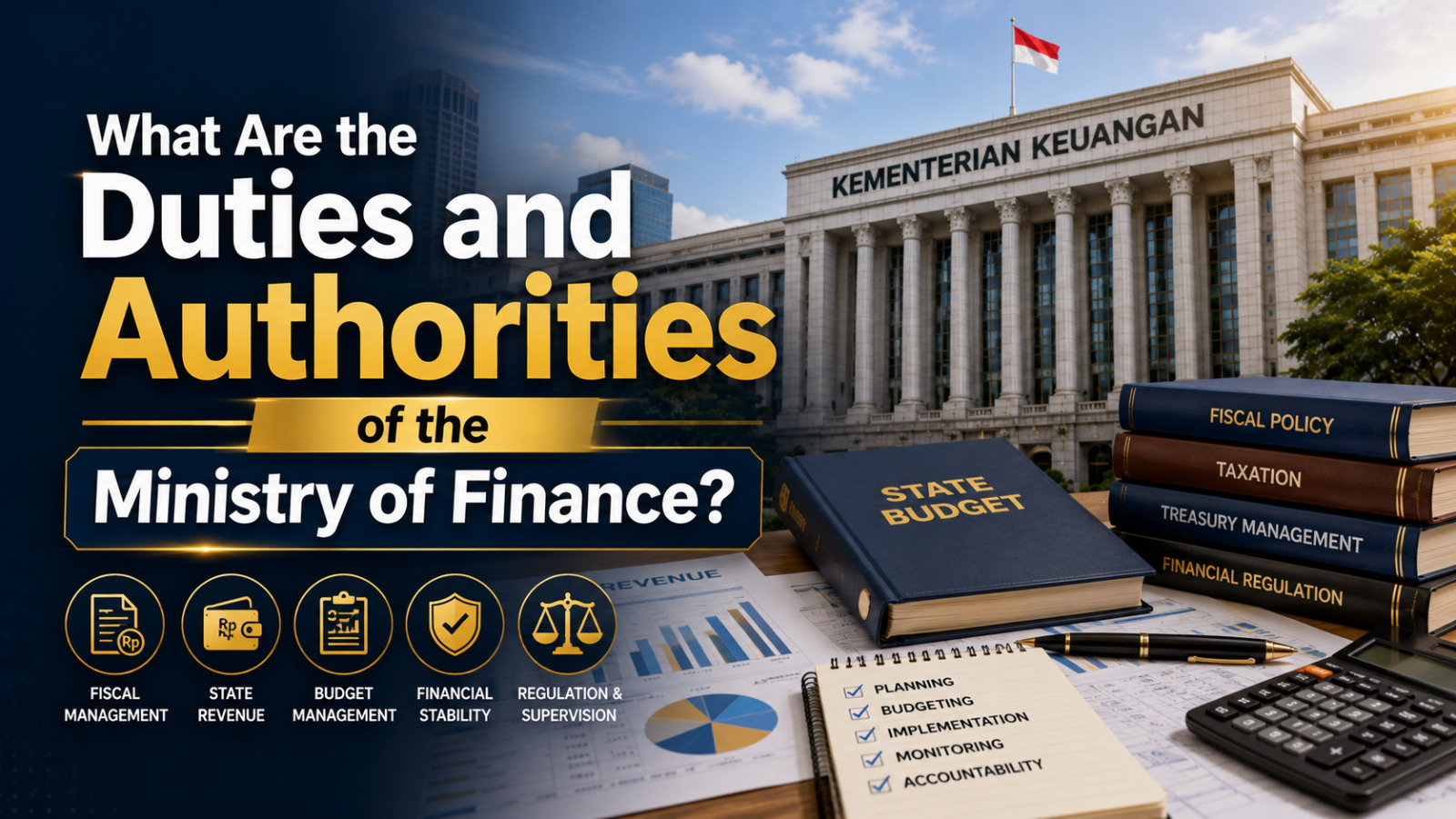
The Ministry of Finance is one of Indonesia's most important government institutions, responsible for managing the country's public finances and maintaining fiscal stability. Its duties and authorities cover budget planning, revenue collection, financial regulation, and the supervision of state assets. Through these responsibilities, the ministry supports national development, economic growth, and public welfare.
By implementing sound fiscal policies and transparent financial governance, the Ministry of Finance ensures that public resources are managed efficiently and responsibly. Its work plays a vital role in building a stable and sustainable national economy.
MANAGING THE STATE BUDGET
One of the primary duties of the Ministry of Finance is managing the State Budget. The ministry prepares, allocates, and monitors government spending to ensure that public funds are used effectively. Budget planning focuses on supporting national priorities such as education, healthcare, infrastructure, and social protection. Careful financial management helps maintain fiscal balance while supporting sustainable development. Efficient budget implementation also improves the quality of public services.
The ministry regularly evaluates budget performance to increase efficiency and accountability. This process ensures that government spending delivers maximum benefits to society.
COLLECTING AND MANAGING STATE REVENUE
The Ministry of Finance has the authority to collect and manage state revenue through taxation, customs, and non-tax revenue. These financial resources are essential for funding government programs and public services. The ministry continuously improves tax administration and revenue collection systems to increase compliance and efficiency. Modern digital platforms simplify financial transactions while strengthening transparency. Strong revenue management supports long-term economic stability.
Fair and effective revenue policies also encourage sustainable business growth and investment. Reliable state revenue provides the financial foundation for national development.
DEVELOPING FISCAL POLICIES
Another important authority of the Ministry of Finance is developing fiscal policies that maintain economic stability and promote growth. The ministry designs taxation policies, government spending strategies, and financing plans that respond to changing economic conditions. Effective fiscal policies help control inflation, encourage investment, and support employment opportunities. These measures strengthen Indonesia's economic resilience and improve financial sustainability. Sound fiscal management creates a favorable environment for businesses and communities.
The ministry continuously reviews economic indicators to ensure that fiscal policies remain relevant and effective. Flexible policymaking supports long-term national prosperity.
ENSURING TRANSPARENT FINANCIAL GOVERNANCE
The Ministry of Finance is responsible for ensuring transparent financial governance across government institutions. It strengthens accountability through financial supervision, standardized reporting, and digital financial systems. Transparent governance reduces financial risks while improving public confidence in government administration. Better oversight also increases the effectiveness of public spending and policy implementation. These efforts support responsible management of public finances.
Continuous financial reforms and digital innovation help improve governance standards. A transparent financial system contributes to sustainable economic development.
CONCLUSION
The Ministry of Finance carries broad duties and authorities, including managing the State Budget, collecting state revenue, developing fiscal policies, and ensuring transparent financial governance. These responsibilities strengthen Indonesia's economy, improve public services, and support sustainable national development. Through professional financial management and continuous reform, the ministry remains a key pillar of the country's economic progress.
About the Author
Gusti Ayu Tita P
Author — STEKOM University
An active author focused on academic issues, educational technology, and human resource development in the campus environment.