
What Are the Impacts of Illegal Parking on Traffic Safety?
Gusti Ayu Tita P
29 Agustus 2026
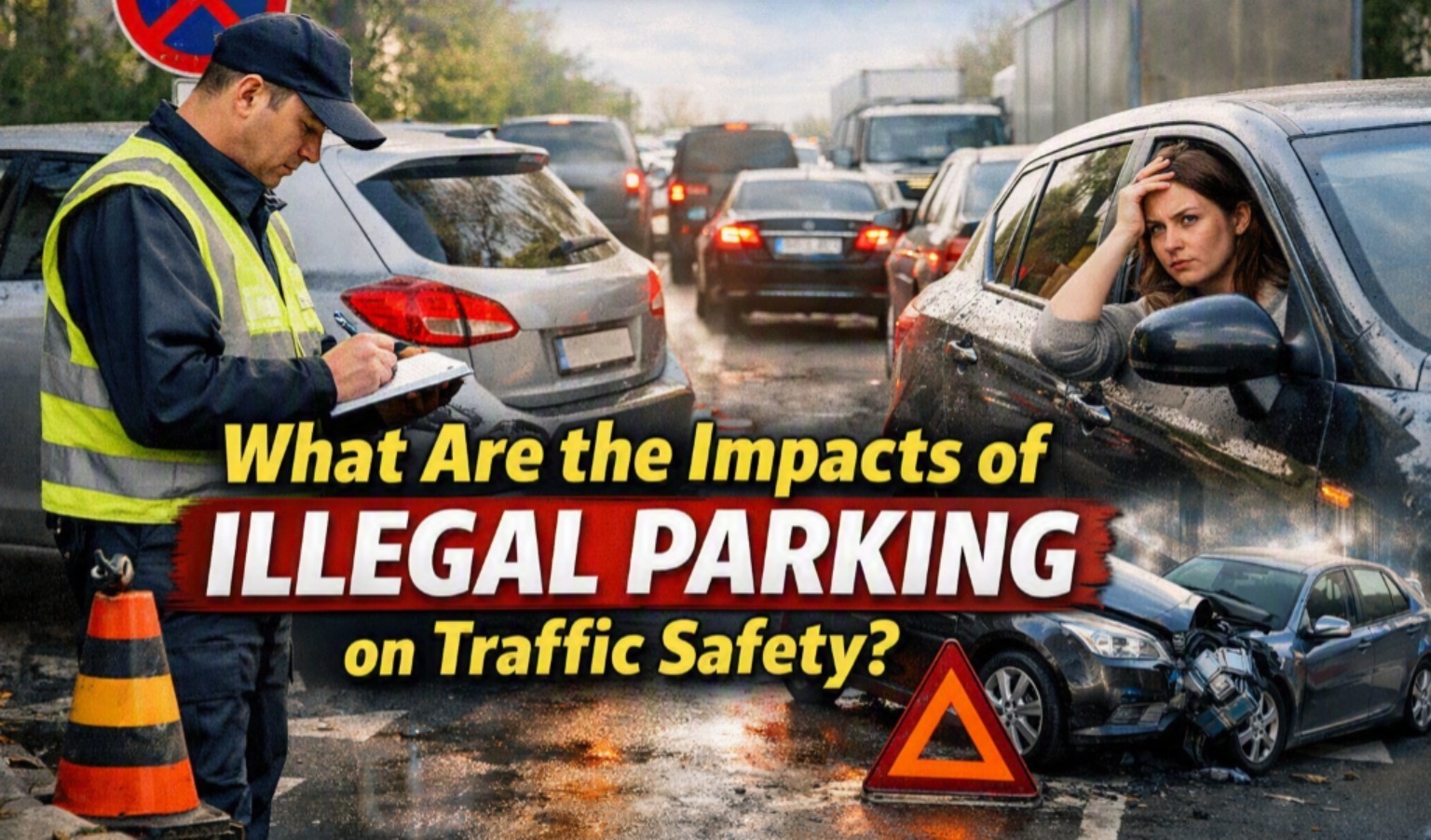
Illegal parking is a common problem in many urban areas, especially on busy roads, sidewalks, and public spaces. Although it may seem like a minor violation, parking in prohibited areas can create serious risks for drivers, pedestrians, cyclists, and other road users. Vehicles parked carelessly can reduce road capacity, block visibility, and interfere with normal traffic movement.
Understanding the impacts of illegal parking on traffic safety is important because these problems can affect not only traffic flow but also the overall safety of a community. Effective enforcement, better parking facilities, and greater public awareness are needed to reduce these risks.
REDUCED ROAD VISIBILITY
One of the most significant effects of illegal parking is reduced visibility for road users. A vehicle parked near an intersection, pedestrian crossing, or road curve can obstruct the view of drivers and pedestrians. As a result, drivers may have difficulty seeing pedestrians, cyclists, motorcycles, or vehicles approaching from another direction. This situation can increase the possibility of sudden braking, collisions, and other traffic incidents.
Poor visibility is particularly dangerous in areas with heavy pedestrian activity. Children, elderly people, and pedestrians crossing between parked vehicles may be difficult for drivers to notice. Therefore, keeping intersections, crossings, and other critical areas clear is an important part of maintaining traffic safety.
INCREASED RISK OF TRAFFIC ACCIDENTS
Illegal parking can directly increase the risk of traffic accidents by forcing moving vehicles to change their normal paths. Drivers may need to move suddenly into another lane to avoid a parked vehicle. This maneuver can become dangerous when traffic is busy or when another vehicle is approaching from behind.
The risk can become even greater for motorcycles and bicycles because they may have less protection in a collision. Illegal parking near intersections, narrow roads, and busy commercial areas can create unpredictable movements among road users. For this reason, parking violations should not be viewed simply as a matter of convenience but as a potential road safety concern.
CAUSES TRAFFIC CONGESTION
Vehicles parked illegally can reduce the effective width of a road and limit the space available for moving traffic. When one lane is blocked, vehicles may be forced to merge into the remaining lane, slowing the overall movement of traffic. If several vehicles are parked illegally along the same road, the impact can become much more significant.
Traffic congestion also creates secondary safety problems. Frustrated drivers may make unsafe overtaking maneuvers or change lanes without sufficient caution. Emergency vehicles can also face difficulties passing through congested streets when illegally parked vehicles occupy valuable road space.
CREATES DANGER FOR PEDESTRIANS
Illegal parking can force pedestrians to leave sidewalks and walk closer to moving traffic. This commonly happens when vehicles are parked on sidewalks, pedestrian paths, or areas designated for pedestrians. People who are forced onto the road become more exposed to passing cars, motorcycles, and other vehicles.
The danger is particularly serious for children, older adults, and people with disabilities. Blocked sidewalks can also make it harder for wheelchair users or people with mobility limitations to travel safely. Providing and protecting accessible pedestrian spaces is therefore essential for creating a safer traffic environment.
OBSTRUCTS EMERGENCY VEHICLES
Illegal parking can become a serious problem when it blocks access for ambulances, fire trucks, or other emergency vehicles. Emergency responders often need to reach their destinations as quickly as possible. Even a short delay caused by a blocked road can interfere with their ability to provide timely assistance.
Narrow streets are especially vulnerable because illegally parked vehicles can leave insufficient space for large emergency vehicles to pass. Maintaining clear access routes is therefore an important responsibility for both authorities and road users. Drivers should always consider whether their parking position could prevent emergency services from reaching people in need.
REDUCES TRAFFIC ORDER AND DISCIPLINE
Widespread illegal parking can weaken public compliance with traffic regulations. When people see others repeatedly parking in prohibited areas without consequences, they may assume that the rules are not important. Over time, this behavior can become normalized and make traffic management more difficult.
A safe traffic environment depends not only on regulations but also on public discipline. Consistent enforcement can discourage repeated violations, while sufficient legal parking spaces can make it easier for drivers to follow the rules. Cooperation between authorities, businesses, and the public is essential to create a more orderly road environment.
HOW TO REDUCE THE IMPACT OF ILLEGAL PARKING?
Reducing illegal parking requires a combination of law enforcement, adequate parking facilities, and public awareness. Authorities can improve signs, road markings, parking management, and enforcement in areas with frequent violations. Clear information about where vehicles can and cannot park can also help drivers make safer decisions.
Businesses and property owners can contribute by providing appropriate parking areas and avoiding practices that encourage vehicles to occupy public roads or sidewalks. Meanwhile, drivers should check parking restrictions before leaving their vehicles. These simple actions can help reduce congestion, protect pedestrians, and improve traffic safety.
CONCLUSION
The impacts of illegal parking extend far beyond inconvenience. It can reduce visibility, increase accident risks, cause congestion, endanger pedestrians, and obstruct emergency vehicles. These problems show why responsible parking behavior is an important part of maintaining a safe transportation system.
Every road user has a role in reducing the problem. By following parking regulations, using designated parking areas, and respecting pedestrian and emergency access, communities can create roads that are safer, more orderly, and more accessible for everyone.
About the Author
Gusti Ayu Tita P
Author — STEKOM University
An active author focused on academic issues, educational technology, and human resource development in the campus environment.















