What Are the Main Duties of Customs in International Trade?
Gusti Ayu Tita P
8 Agustus 2026
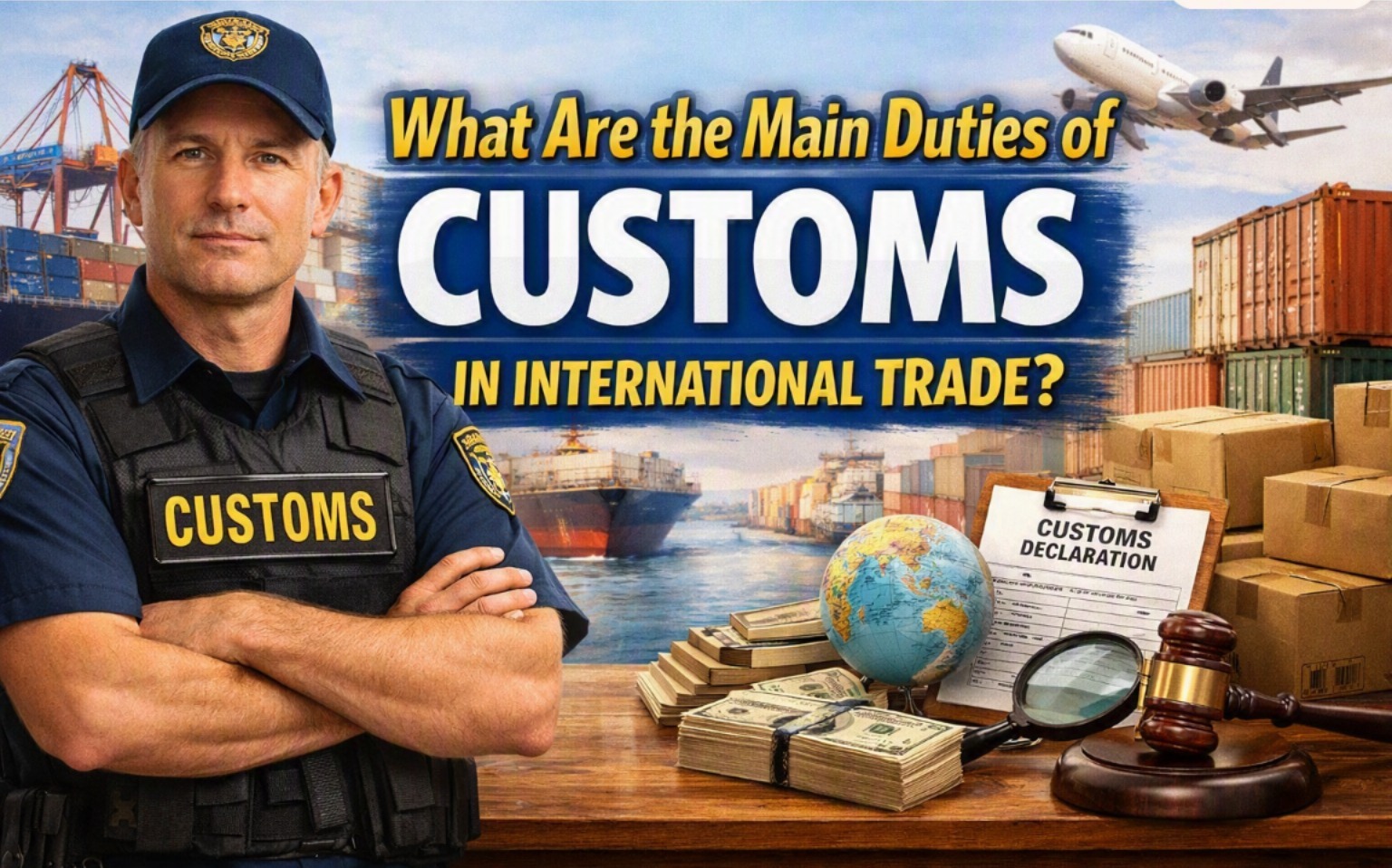
International trade allows goods to move between countries and supports businesses, consumers, and national economies. However, the movement of goods across borders needs to be controlled, documented, and regulated to ensure that trade activities follow the law. This is where customs authorities play an important role.
Customs agencies are responsible for supervising goods that enter and leave a country. Their duties include collecting customs duties, checking shipments, preventing illegal trade, and facilitating legitimate international commerce. Understanding these responsibilities helps businesses and individuals better understand how international trade works.
COLLECTING CUSTOMS DUTIES AND TAXES
One of the main duties of customs is to collect duties and taxes on imported goods. When products enter a country, customs authorities determine whether import duties, value added tax, excise, or other applicable charges must be paid. The amount can depend on factors such as the type of product, its customs value, and its country of origin.
This function provides an important source of government revenue while ensuring that imported products are processed according to national regulations. Customs officers may examine commercial invoices, shipping documents, and other information to determine the correct amount payable. Accurate assessment helps reduce underpayment, misclassification, and customs fraud.
CHECKING GOODS AT THE BORDER
Customs authorities also inspect goods entering or leaving a country to make sure they comply with applicable laws. Inspections can involve checking cargo declarations, shipping documents, packaging, and the actual contents of shipments. Modern customs administrations may use risk management systems to identify shipments that require closer examination.
Not every shipment needs to be physically inspected. Customs can use risk assessment, electronic data, scanning technology, and intelligence information to focus resources on higher-risk cargo. This approach can improve border security while allowing low-risk shipments to move more efficiently.
PREVENTING ILLEGAL TRADE AND SMUGGLING
Another important responsibility of customs is to prevent smuggling and other forms of illegal cross-border trade. Customs authorities work to detect prohibited or restricted goods, including certain weapons, illegal drugs, counterfeit products, and other goods controlled by national law. They may also cooperate with police, border agencies, and international organizations when dealing with serious cross-border crime.
Effective customs enforcement protects national security, public safety, consumers, and legitimate businesses. By stopping illegal shipments, customs can help prevent criminals from using international supply chains for unlawful activities. Customs authorities may also investigate suspicious transactions and take enforcement action when violations are identified.
ENFORCING IMPORT AND EXPORT REGULATIONS
Customs ensures that traders comply with import and export requirements established by national laws and international agreements. Depending on the product, traders may need licenses, certificates, permits, or other supporting documents before goods can be released or exported.
These requirements are especially important for products that are subject to special controls. Examples may include agricultural products, endangered species, hazardous materials, medicines, and strategic goods. Customs helps verify whether the required documentation is available and whether the shipment meets the applicable rules.
VERIFYING CUSTOMS DECLARATIONS
Importers and exporters generally provide customs declarations containing information about their shipments. Customs authorities are responsible for verifying the accuracy of this information. Important details can include the product description, quantity, value, classification, and country of origin.
Correct classification is particularly important because it can affect the customs duty rate and other trade requirements. Customs may compare declarations with invoices, packing lists, transport documents, and other available information. If authorities identify incorrect or misleading information, they can require corrections or take enforcement measures according to applicable law.
FACILITATING LEGITIMATE INTERNATIONAL TRADE
Customs does not only focus on enforcement. Another major responsibility is to facilitate legitimate trade so that compliant goods can cross borders efficiently. Delays at borders can increase transportation costs, disrupt supply chains, and create difficulties for businesses.
To improve trade efficiency, customs administrations increasingly use digital declarations, automated systems, electronic data exchange, and risk-based controls. International standards also encourage customs authorities to simplify procedures while maintaining effective controls. A balanced approach allows governments to protect their borders without creating unnecessary obstacles for legitimate traders.
PROTECTING SOCIETY AND THE ECONOMY
Customs also contributes to the protection of consumers, domestic industries, and the national economy. Illegal or unsafe products can create serious risks for public health and legitimate businesses. Customs controls can help prevent goods that violate national requirements from entering the domestic market.
At the same time, customs enforcement can support fair competition by addressing counterfeit goods, undeclared imports, and other forms of unlawful trade. This helps legitimate companies compete under the same legal framework. Strong customs administration therefore has an impact beyond the border because it supports economic stability and public protection.
COOPERATING WITH INTERNATIONAL AUTHORITIES
International trade involves multiple countries, meaning customs authorities often need to cooperate across borders. Customs administrations may exchange information, coordinate inspections, and participate in international programs designed to improve supply chain security and trade facilitation.
The World Customs Organization, for example, develops international customs standards and provides a framework for cooperation among customs administrations. Cooperation is important because criminals and illegal trade networks can operate across several countries. Sharing information and applying compatible standards can help authorities respond more effectively to cross-border risks.
USING TECHNOLOGY TO IMPROVE CUSTOMS SERVICES
Technology has become an important part of modern customs operations. Many customs administrations use electronic customs systems, automated declarations, cargo scanning equipment, data analysis, and risk management tools. These technologies can help authorities process large amounts of trade information more efficiently.
Digital systems can also make customs procedures more transparent and predictable for businesses. Traders may be able to submit documents electronically and receive updates without relying entirely on paper-based processes. When implemented effectively, technology can help customs achieve both stronger controls and faster trade processing.
CONCLUSION
Customs plays a central role in maintaining a balance between border protection and trade facilitation. Its responsibilities include collecting government revenue, checking shipments, enforcing regulations, preventing illegal trade, and supporting legitimate businesses. Without effective customs administration, countries would face greater challenges in controlling goods that cross their borders.
For businesses involved in international trade, understanding customs responsibilities is essential. Proper documentation, accurate declarations, correct product classification, and compliance with applicable regulations can help reduce delays and unexpected costs. Ultimately, efficient customs services contribute to a safer, more organized, and more reliable international trading system.
About the Author
Gusti Ayu Tita P
Author — STEKOM University
An active author focused on academic issues, educational technology, and human resource development in the campus environment.