
What Are The Main Responsibilities Of A Mayor In Local Government?
Gusti Ayu Tita P
12 Agustus 2026
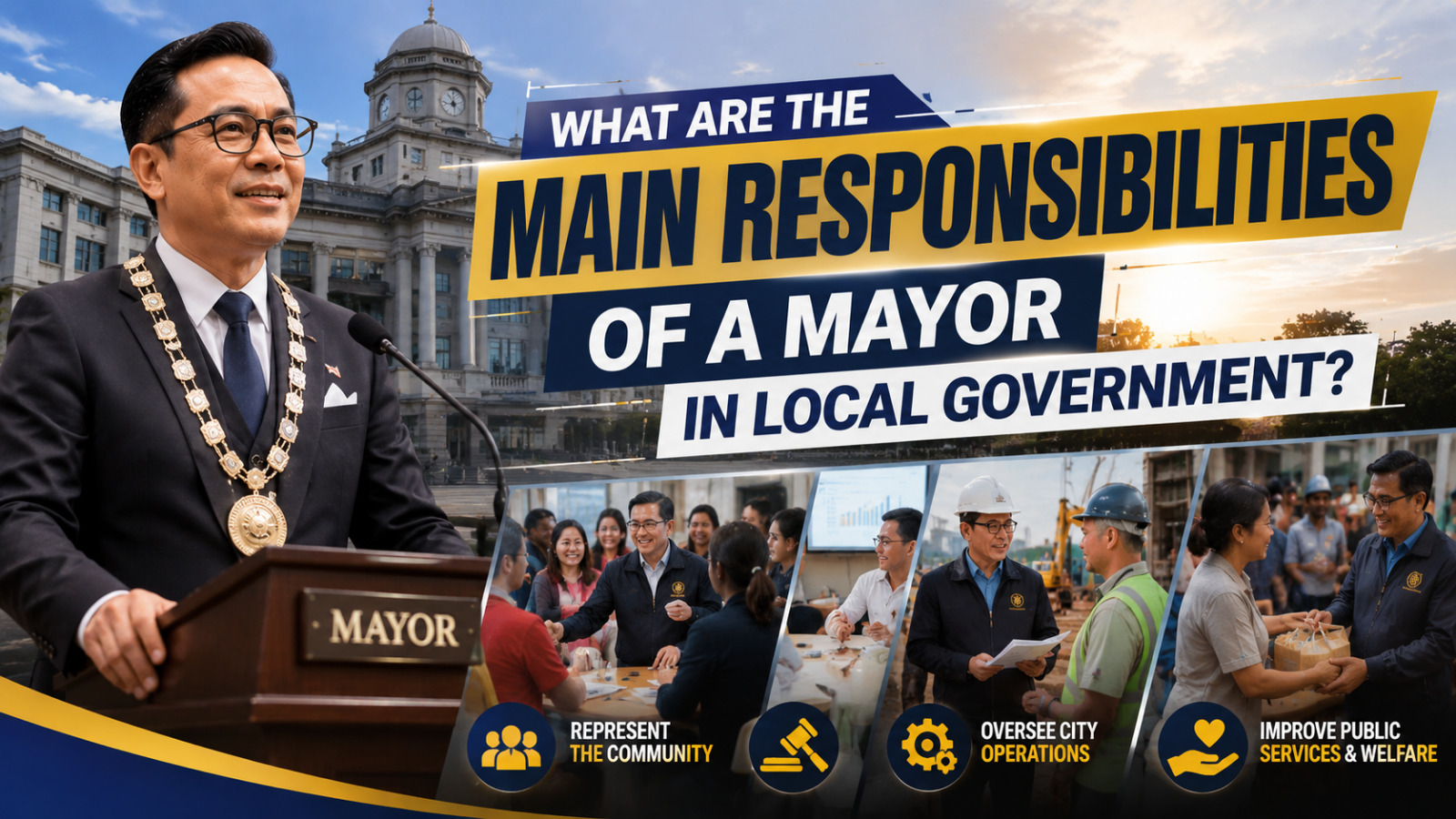
A mayor has an important position in Local Government because the mayor helps lead the administration and development of a city. The responsibilities of a mayor can vary depending on the country's laws and the structure of local government. In general, a mayor works with government officials to implement policies, manage programs, and respond to community needs. The position requires leadership, accountability, communication, and administrative knowledge. A mayor must also ensure that government activities are carried out according to applicable laws and regulations.
LEAD LOCAL GOVERNMENT
One of the main Mayor Responsibilities is providing leadership for local government. A mayor helps establish development priorities and coordinates government departments that are responsible for different public services. Effective leadership requires clear objectives and cooperation between officials. The mayor must also understand the authority and limitations of the position under applicable law. Strong Public Leadership can help create a more organized and responsive administration.
A mayor should also encourage cooperation among government employees and public institutions. Different departments may have separate responsibilities, but their programs often affect one another. Good coordination can reduce duplication and help government resources be used more effectively. Regular evaluation can show whether departments are achieving their objectives. This allows the mayor to take corrective action when problems arise.
MANAGE GOVERNMENT PROGRAMS
Mayors play an important role in managing and overseeing Government Programs. These programs can cover areas such as infrastructure, transportation, sanitation, education, health, environmental management, and economic development. A mayor should ensure that programs are based on established plans, available resources, and community priorities. Clear objectives and performance indicators can make programs easier to evaluate. Good program management helps ensure that government activities produce meaningful results.
Effective management also requires monitoring implementation. A program may look strong on paper but face challenges during execution. The mayor and relevant officials should review progress and identify delays, budget problems, or other obstacles. When necessary, adjustments can be made based on evidence and applicable procedures. Continuous monitoring can improve the effectiveness of public programs.
IMPROVE PUBLIC SERVICES
Improving Public Services is another important responsibility of a mayor. Residents rely on local government for various services, including administrative services, sanitation, public facilities, transportation, and other services within local authority. The mayor should pay attention to service quality, accessibility, efficiency, and responsiveness. Complaints and community feedback can provide valuable information about problems in service delivery. Better services can directly improve residents' daily experiences.
Technology can also support improvements in public services. Online applications, digital information systems, and complaint platforms can make some services faster and more accessible. However, digital solutions should not unnecessarily exclude residents who have limited internet access or digital skills. Traditional service channels may still be necessary. A balanced approach can help make public services more inclusive.
MANAGE PUBLIC RESOURCES RESPONSIBLY
Responsible Resource Management is essential because local governments operate with limited public resources. A mayor must work within the approved budget and applicable financial regulations. Government spending should focus on important priorities and provide reasonable public benefits. Transparent financial management can also strengthen accountability. Efficient use of resources helps local governments achieve more with available funding.
Public resources include more than money. Government employees, infrastructure, equipment, information, and public facilities also need to be managed properly. The mayor should encourage departments to avoid unnecessary duplication and inefficient practices. Regular monitoring can identify areas where resources are not being used effectively. Responsible management can support better Community Development.
SUPPORT COMMUNITY DEVELOPMENT
A mayor should ensure that development policies respond to the needs of residents. Community Development can involve infrastructure, economic opportunities, social programs, environmental protection, and improvements to public facilities. Different communities may have different priorities, so consultation can help identify important issues. Inclusive planning can ensure that development benefits are not concentrated in only a small part of the city. Community participation can also improve cooperation between residents and government.
Development should be planned with both current and future needs in mind. A project that solves an immediate problem should also be evaluated for its long-term effects. Environmental, economic, and social considerations can help create more sustainable policies. Mayors should work with relevant experts and stakeholders when making complex development decisions. This approach supports balanced and responsible local development.
MAINTAIN ACCOUNTABILITY AND PUBLIC TRUST
A mayor has a responsibility to maintain Accountability in government administration. This means being prepared to explain policies, programs, decisions, and the use of public resources through appropriate legal and institutional mechanisms. Transparency can help residents understand how local government operates. Leaders should also respond professionally when programs do not achieve their intended results. Taking responsibility can strengthen institutional credibility.
Public Trust is built through consistent and responsible actions. A mayor should communicate honestly and avoid making unrealistic promises. Listening to residents and responding to legitimate concerns can improve relationships with the community. Trust may take a long time to develop but can be damaged quickly by irresponsible behavior. For this reason, integrity should remain an essential part of local leadership.
CONCLUSION
The main Mayor Responsibilities include leading Local Government, managing Government Programs, improving Public Services, managing resources, supporting Community Development, and maintaining accountability. These responsibilities require strong leadership, ethical behavior, effective communication, and careful decision making. A mayor who understands these responsibilities can help create a more organized and responsive local government. Ultimately, effective Public Leadership should focus on delivering meaningful benefits and better services for the community.
About the Author
Gusti Ayu Tita P
Author — STEKOM University
An active author focused on academic issues, educational technology, and human resource development in the campus environment.















