
What Are The Main Responsibilities Of State Owned Enterprise Employees?
Gusti Ayu Tita P
24 Agustus 2026
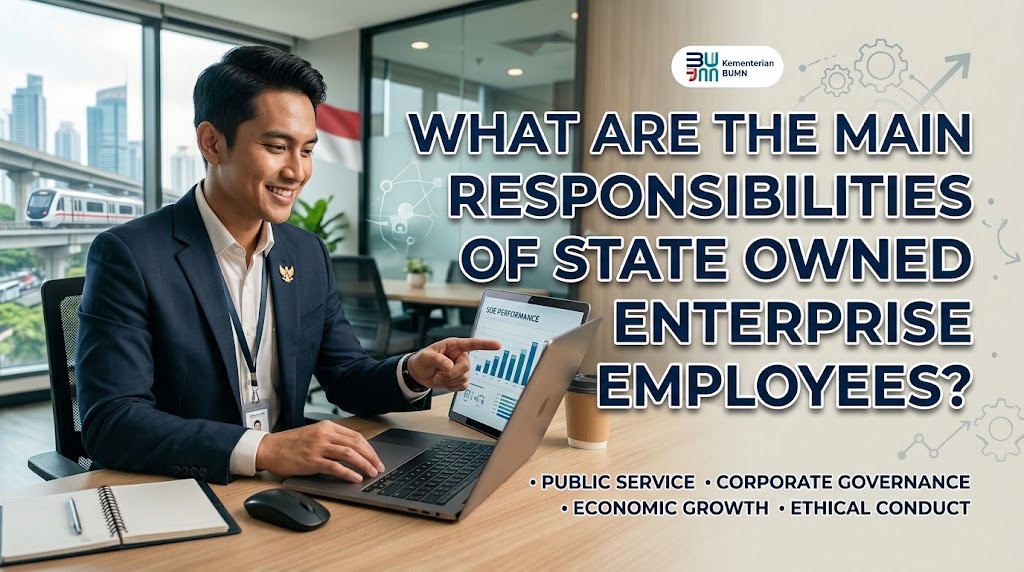
State-owned enterprises play an important role in supporting the economy and providing essential services to society. These companies are owned partly or wholly by the state and may operate in sectors such as energy, transportation, banking, telecommunications, infrastructure, and public services. Employees working in these organizations have responsibilities that go beyond completing daily tasks. They are expected to maintain professional standards while supporting the company’s objectives and serving the public interest. Understanding these responsibilities helps employees recognize the importance of their roles within a state-owned enterprise.
UNDERSTANDING THE ROLE OF STATE OWNED ENTERPRISES
State-owned enterprises generally have both business objectives and public responsibilities. They are expected to operate efficiently while contributing to national economic and social goals. Employees therefore need to understand how their individual work contributes to the organization’s broader mission. Their responsibilities can vary depending on their position, industry, and company regulations. However, every employee is expected to perform their duties professionally and responsibly.
In Indonesia, state-owned enterprises can have strategic roles in sectors that affect the wider community. Because of this position, employee performance can influence not only the company but also customers and other stakeholders. Employees should understand the importance of maintaining trust in the organization. Professional conduct and accountability are essential parts of working in a state-owned enterprise.
PERFORMING JOB DUTIES PROFESSIONALLY
The most basic responsibility of every employee is to complete assigned duties properly. Employees should understand their job descriptions, follow workplace procedures, and meet reasonable performance expectations. They need to manage their time effectively and complete tasks according to established standards. Employees should also communicate with colleagues when problems affect their work. Professional performance helps organizations maintain productivity and service quality.
Employees are also expected to continuously improve their knowledge and skills. Changes in technology, regulations, and customer expectations can require workers to adapt. Training and professional development can help employees perform their responsibilities more effectively. A willingness to learn is therefore an important part of long-term performance.
MAINTAINING INTEGRITY AND ETHICAL CONDUCT
Integrity is particularly important in organizations connected to public interests and state assets. Employees should perform their duties honestly and avoid actions that could create conflicts of interest. They should not misuse company authority, resources, or confidential information for personal gain. Ethical behavior helps protect the reputation of both employees and the organization. Employees should also follow applicable laws, regulations, and internal codes of conduct.
A strong ethical culture can reduce the risk of fraud, corruption, and other forms of misconduct. Employees should report serious violations through appropriate internal channels when required by company policies. Transparency and honesty can strengthen relationships with customers, colleagues, and stakeholders. Integrity in the workplace is therefore more than a personal quality because it contributes to organizational trust.
PROVIDING QUALITY SERVICES TO THE PUBLIC
Many state-owned enterprises provide products or services that are important to everyday life. Employees may therefore have direct or indirect responsibilities toward customers and the wider community. They should provide services according to established standards and treat customers fairly. Customer service quality can influence public trust in the organization. Employees should respond to customer concerns professionally and appropriately.
Providing quality service also means understanding customer needs and responding to problems efficiently. Employees should avoid unnecessary delays and communicate information clearly. When employees consistently provide reliable service, the organization can build stronger relationships with its customers. This responsibility is especially important for enterprises operating in essential public-service sectors.
PROTECTING COMPANY ASSETS AND INFORMATION
Employees are responsible for using company resources appropriately. These resources can include equipment, facilities, vehicles, technology systems, financial resources, and intellectual property. Employees should use them only for legitimate work-related purposes and follow company procedures. Protecting company assets helps prevent unnecessary losses and supports operational efficiency.
Information security is another important responsibility. Employees may have access to confidential business information, customer data, or internal documents. They should protect this information and avoid sharing it with unauthorized individuals. Responsible information management helps reduce security risks and protects the interests of the organization and its stakeholders.
FOLLOWING LAWS AND COMPANY REGULATIONS
State-owned enterprise employees must comply with applicable laws and organizational policies. These rules can cover areas such as employment, finance, safety, procurement, data protection, and business operations. Employees should understand the regulations relevant to their positions. Ignoring established procedures can expose the organization to financial, legal, or reputational risks. Regulatory compliance is therefore an important part of everyday professional responsibilities.
Employees should also ask supervisors or relevant departments when they are uncertain about a particular rule. Keeping up with regulatory changes can help prevent accidental violations. Compliance should not be viewed merely as an administrative requirement. It is an important mechanism for maintaining responsible and sustainable operations.
WORKING EFFECTIVELY WITH COLLEAGUES
Collaboration is essential in large organizations because many tasks require cooperation between different departments. Employees should communicate clearly, respect their colleagues, and share relevant information when necessary. Teamwork can help employees solve problems more efficiently and achieve organizational targets. Conflicts should be handled professionally rather than allowed to interfere with work.
Employees should also understand that different departments may have different responsibilities and priorities. Respecting these differences can improve cooperation across the organization. A supportive workplace can encourage productivity, innovation, and better decision-making. Good collaboration ultimately benefits both employees and the organization.
SUPPORTING EFFICIENCY AND INNOVATION
State-owned enterprises need to remain efficient and responsive to changes in technology and society. Employees can contribute by identifying inefficient processes and suggesting practical improvements. Innovation does not always require major technological changes because small improvements can also create meaningful results. Operational efficiency can help organizations reduce unnecessary costs and improve service quality.
Employees should be willing to learn new technologies and adapt to changing work methods. Digital tools, automation, and improved data management can change how many jobs are performed. Employees who develop relevant skills can contribute more effectively to organizational transformation. Continuous improvement should therefore become part of the workplace culture.
MAINTAINING ACCOUNTABILITY AND RESPONSIBILITY
Employees should be accountable for decisions and tasks within their authority. They need to complete assignments responsibly and report problems honestly when they occur. Hiding mistakes can make problems more difficult and expensive to solve. Accountability encourages employees to take ownership of their work and its results. It also supports a culture of trust within the organization.
Accountability applies to employees at different levels, although specific responsibilities depend on their positions. Managers may have broader responsibilities for teams and organizational decisions, while other employees may focus on operational duties. Regardless of position, employees should understand what they are responsible for. Clear accountability helps organizations work in a more structured and transparent way.
CONCLUSION
The main responsibilities of state-owned enterprise employees include professional performance, integrity, customer service, regulatory compliance, teamwork, asset protection, and accountability. Employees also have an important role in supporting efficiency and adapting to technological changes. Their work can influence organizational performance as well as the quality of services received by the public. By carrying out their duties responsibly, employees can contribute to a healthier and more trustworthy organization. Ultimately, strong employee performance is an important foundation for the success of state-owned enterprises.
About the Author
Gusti Ayu Tita P
Author — STEKOM University
An active author focused on academic issues, educational technology, and human resource development in the campus environment.















