
What Are The Real Challenges Behind The KKN Program?
Gusti Ayu Tita P
20 Agustus 2026
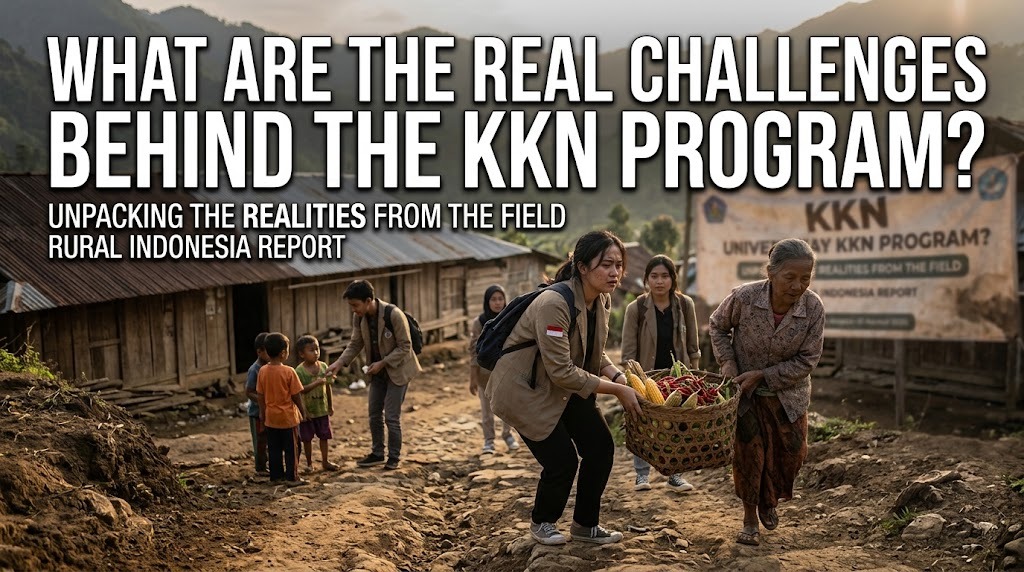
The KKN program is an important part of higher education in Indonesia because it allows university students to apply academic knowledge while working with communities. KKN, or Kuliah Kerja Nyata, usually places students in villages or communities where they participate in social, educational, economic, or development activities. Although KKN is often described as a valuable and memorable experience, the program also has real challenges that students must face. These challenges can involve adaptation, communication, teamwork, limited resources, and differences in community needs. Understanding these difficulties is important so students can prepare themselves more realistically before joining the program.
ADAPTING TO A NEW COMMUNITY
One of the first challenges students face during KKN is adapting to a new social environment. Students may come from different cities, cultures, educational backgrounds, and family situations. When they enter a community, they need to understand local habits and respect existing traditions. Adaptation requires patience, openness, and willingness to listen. Students cannot simply assume that their usual habits will be accepted in a different environment.
The adjustment process can take time because every community has its own social structure. Students need to learn how residents communicate, organize activities, and respond to outside initiatives. Building trust is especially important because community members may initially be unfamiliar with the students. Respectful interaction can help create better relationships and make programs easier to implement. Without good adaptation, even a well planned KKN activity may not receive strong community support.
UNDERSTANDING REAL COMMUNITY NEEDS
Another major challenge is identifying what the community actually needs. Students may arrive with ideas based on academic knowledge, but those ideas may not match local priorities. A program that seems useful from a university perspective may not be considered important by residents. Therefore, students need to conduct observation, discussion, and basic needs assessment before deciding on a program. Listening to residents can provide a more accurate understanding of local conditions.
Students also need to avoid treating the community as merely a place to complete academic requirements. Community members should be involved in identifying problems and developing solutions. Participation from local residents can make programs more relevant and sustainable. It can also help students understand that development is more effective when it considers local knowledge and resources. This approach makes KKN more meaningful for both students and communities.
MANAGING EXPECTATIONS
Students and community members may have different expectations about KKN. Students may expect to implement certain programs, while residents may hope that students will solve larger or long term problems. These differences can create disappointment if they are not discussed from the beginning. Clear communication about goals and limitations is necessary to manage expectations. Students should explain what they can realistically contribute during the program.
At the same time, students should remain open to suggestions from residents. Flexibility is important because conditions in the field may differ from the original plan. A program may need to be modified because of weather, community schedules, available resources, or changing priorities. Adaptability is more valuable than rigid planning in many community activities. Students who can adjust their plans are more likely to maintain good relationships with residents.
TURNING ACADEMIC KNOWLEDGE INTO PRACTICAL SOLUTIONS
Another challenge is applying university knowledge to real community situations. Academic theories are often developed under specific assumptions, while real communities are much more complex. Students need to understand how their knowledge can be adjusted to fit local conditions. This requires practical thinking and problem solving rather than simply following textbook concepts. The experience can reveal limitations that are not always visible in classroom learning.
For example, a business development idea may need to consider local purchasing power, production capacity, market access, and community habits. Similarly, an educational program needs to consider the age, interests, and learning conditions of its participants. Students must therefore connect theory with realistic community conditions. This process can strengthen their professional and social skills.
MAINTAINING PROFESSIONALISM AND RESPONSIBILITY
KKN students represent their universities while living and working in the community. Their behavior can influence how residents view both the students and their institution. Students therefore need to demonstrate discipline, responsibility, respect, and professionalism. Arriving late, failing to complete responsibilities, or ignoring community rules can damage trust. Professional behavior is important even when activities take place outside a formal campus environment.
Students also need to be responsible for the sustainability of their programs. A project should not create unnecessary dependence on students if it is expected to continue after KKN ends. Wherever possible, residents should understand and be able to manage the activities independently. Sustainable community involvement is more valuable than a program that only looks successful during its implementation. This requires careful planning and cooperation from the beginning.
LEARNING FROM FAILURE AND UNEXPECTED CONDITIONS
Not every KKN program will work exactly as planned. Some activities may receive fewer participants than expected, while others may face technical, social, or logistical problems. These situations can make students feel disappointed, especially when they have invested significant time and effort. However, failure can become an important learning experience when students evaluate what went wrong. The ability to learn from unexpected outcomes is one of the valuable lessons of KKN.
Students also learn that community development cannot always produce immediate results. Some problems require long term cooperation and cannot be solved within a short student placement. Recognizing these limitations can help students develop more realistic expectations. Reflection and evaluation allow students to identify what worked, what failed, and what could be improved. This process can make the KKN experience more meaningful and educational.
CONCLUSION
The real challenges behind the KKN program go beyond completing academic requirements. Students must adapt to communities, understand local needs, communicate effectively, work with different personalities, manage limited resources, and respond to unexpected situations. They also need to transform academic knowledge into practical solutions while maintaining professionalism and respect for local communities. These challenges can be difficult, but they also provide valuable opportunities to develop adaptability, leadership, teamwork, communication, and problem solving skills. When approached with preparation and an open mind, KKN can become more than a university obligation because it can serve as meaningful preparation for life and professional work.
About the Author
Gusti Ayu Tita P
Author — STEKOM University
An active author focused on academic issues, educational technology, and human resource development in the campus environment.















