What Causes A Volcanic Eruption?
Gusti Ayu Tita P
19 September 2026
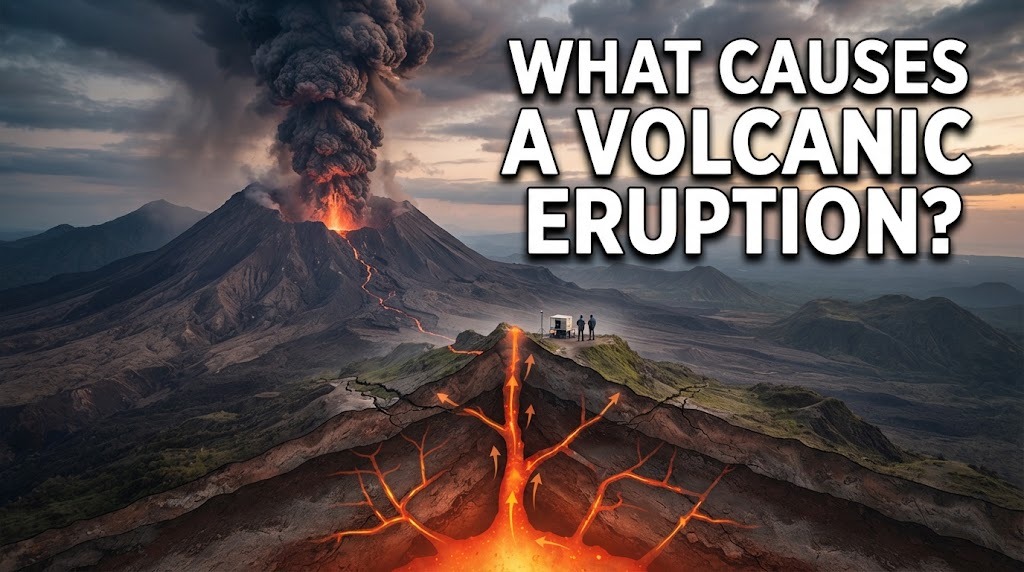
A volcanic eruption happens when magma, gas, and volcanic materials move from inside Earth toward the surface. Magma forms deep underground and can collect in a magma chamber beneath a volcano. As magma rises, pressure can increase because of dissolved gases and changes within the volcanic system. When the pressure becomes strong enough, magma and other materials may escape through cracks or openings. The type and size of an eruption depend on several conditions inside and around the volcano.
MAGMA PRESSURE INCREASES
One of the main causes of a volcanic eruption is increasing pressure inside the volcano. Magma contains dissolved gases that can expand as magma moves toward the surface. This expansion can increase pressure inside the volcanic system. If the pressure becomes greater than the strength of the surrounding rock, magma may push through cracks. The rising pressure can eventually contribute to an eruption.
MAGMA MOVES TOWARD THE SURFACE
Magma can move upward through cracks and channels in Earth's crust. This movement may happen when new magma enters the volcanic system from deeper underground. As magma rises, it can change the pressure and temperature inside the volcano. The movement of magma may also produce volcanic earthquakes that can be detected by monitoring instruments. If magma reaches shallow areas, the chance of an eruption may increase.
VOLCANIC GASES EXPAND
Volcanic magma contains gases such as water vapor, carbon dioxide, and sulfur dioxide. When magma rises toward the surface, the surrounding pressure decreases, allowing dissolved gases to form bubbles and expand. This process can increase the pressure inside the magma. If the gas cannot escape easily, the pressure may contribute to an explosive eruption. The amount and behavior of gas are therefore important factors in volcanic activity.
THE VOLCANIC VENT CAN BECOME BLOCKED
A volcano can become more explosive when its vent or pathway is blocked by solidified lava or other material. When magma and gas continue to accumulate behind the blockage, pressure can increase. If the pressure eventually breaks through the obstruction, the eruption may become sudden and powerful. The condition of the volcanic pathway can therefore influence how an eruption develops. However, not every blockage leads to a large eruption because volcanic systems differ from one another.
TECTONIC ACTIVITY CAN INFLUENCE ERUPTIONS
Volcanic activity is closely connected to tectonic processes beneath Earth's surface. The movement of tectonic plates can create cracks and conditions that allow magma to rise. At some plate boundaries, magma is generated or transported toward the surface. Earthquakes caused by tectonic activity can also affect existing volcanic systems. These processes can contribute to volcanic activity, although the exact relationship varies between different volcanoes.
CONCLUSION
A volcanic eruption can be caused by a combination of magma movement, increasing pressure, expanding gases, blocked pathways, and tectonic activity. These factors interact within the volcanic system and influence how an eruption develops. Not every volcano erupts in the same way because each has different geological conditions. Monitoring changes in earthquakes, gas emissions, ground deformation, and other indicators helps scientists understand volcanic activity. Understanding these causes can also help communities prepare for possible volcanic hazards.
About the Author
Gusti Ayu Tita P
Author — STEKOM University
An active author focused on academic issues, educational technology, and human resource development in the campus environment.