
What Causes Illegal Parking in Public Spaces?
Gusti Ayu Tita P
29 Agustus 2026
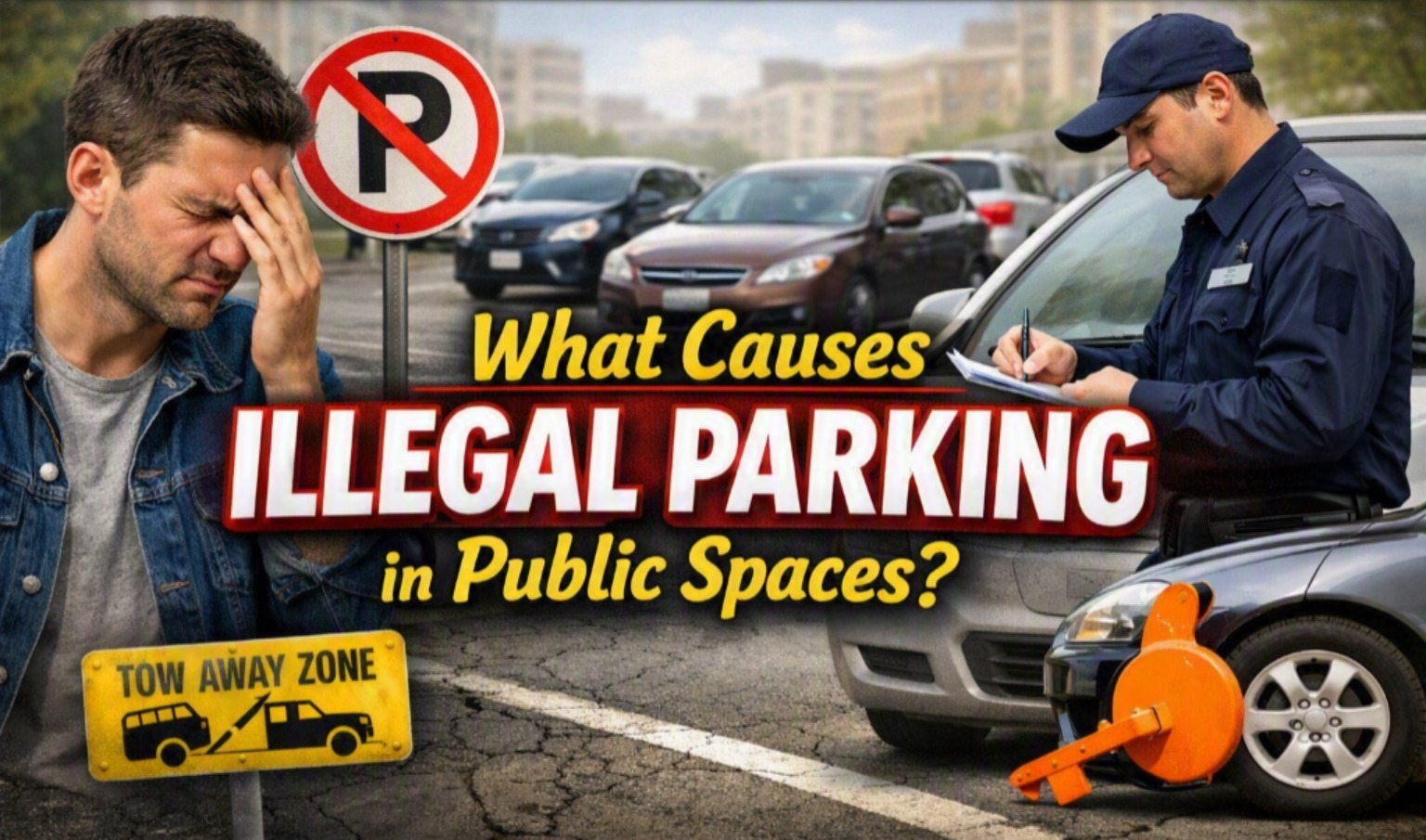
Illegal parking is a common problem in many urban areas. Vehicles that are parked in restricted locations can reduce road capacity, block pedestrians, and interfere with traffic flow. This problem may seem simple, but it is often caused by several factors that involve drivers, infrastructure, regulations, and public behavior.
Understanding the causes of illegal parking is important because effective solutions should address the reasons behind the problem, not only punish violators. By identifying these causes, communities and authorities can create safer, more orderly, and more accessible public spaces.
LIMITED PARKING AVAILABILITY
One of the main causes of illegal parking is the limited availability of legal parking spaces. In busy commercial areas, offices, schools, markets, and entertainment districts, the number of vehicles can be much higher than the available parking capacity. Drivers may struggle to find a convenient parking space, especially during peak hours. As a result, some people choose to park on roadsides, sidewalks, or other restricted areas. A shortage of parking spaces can therefore encourage drivers to ignore parking regulations.
The problem becomes more serious when existing parking facilities are located too far from the driver's destination. Some drivers prefer illegal parking because it allows them to reach shops, workplaces, or public facilities more quickly. Although this may save time temporarily, it can create traffic congestion and safety risks for other road users. Increasing legal parking capacity and improving access to existing facilities can help reduce this pressure.
DRIVER BEHAVIOR AND LACK OF AWARENESS
Driver behavior also plays an important role in causing illegal parking in public spaces. Some drivers understand parking restrictions but choose to ignore them because they believe they will only stop for a short time. Others may not fully understand parking signs, road markings, or local regulations. This behavior can become common when people see other vehicles violating the same rules. When illegal parking appears normal, more drivers may become willing to follow the same behavior.
A lack of awareness about the consequences can make the situation worse. Drivers may focus only on their own convenience without considering pedestrians, cyclists, public transportation, and emergency vehicles. Parking on a sidewalk, for example, can force pedestrians to walk onto the road. Better public education and clear parking information can encourage drivers to understand why parking rules exist and why compliance matters.
WEAK ENFORCEMENT OF PARKING RULES
Another important factor is weak enforcement. Parking regulations are less effective when violations are rarely monitored or punished consistently. If drivers believe that illegal parking will not result in a warning, fine, towing, or other consequences, they may be more likely to violate the rules. Inconsistent enforcement can also create the impression that parking regulations are optional. Consistent enforcement is therefore essential for maintaining public compliance.
Enforcement does not always have to rely on punishment alone. Authorities can combine regular patrols, parking officers, warning systems, cameras, and clearly communicated penalties. Enforcement should also be fair and applied consistently across different locations and situations. When drivers see that parking rules are actively enforced, the perceived risk of violating them becomes higher.
POOR PARKING INFRASTRUCTURE
Poorly designed parking infrastructure can contribute to illegal parking. Some areas may have unclear parking boundaries, insufficient signs, faded road markings, or poorly positioned parking spaces. Drivers may become confused about where they are legally allowed to leave their vehicles. In other cases, parking facilities may not be designed to accommodate the size or volume of vehicles using the area. Unclear infrastructure can make compliance more difficult even for drivers who want to follow the rules.
Urban planning also influences parking behavior. If residential areas, commercial centers, offices, and public facilities are developed without adequate transportation and parking planning, demand can quickly exceed capacity. Authorities can improve conditions by providing clear signs, visible road markings, accessible parking areas, and better traffic design. Good infrastructure makes parking regulations easier to understand and follow.
HIGH DEMAND IN BUSY AREAS
Illegal parking frequently occurs in locations where parking demand is extremely high. Business districts, traditional markets, shopping areas, schools, hospitals, and transportation hubs can attract large numbers of vehicles at the same time. During busy periods, available parking spaces may fill quickly. Drivers who cannot find a legal space may stop in prohibited locations instead.
Short-term activities can also contribute to the problem. People may park illegally while buying goods, picking up passengers, delivering packages, or waiting for someone. Even if the vehicle remains there for only a few minutes, it can obstruct traffic and reduce visibility. High parking demand requires careful management, particularly during peak hours and special events.
CONVENIENCE AND TIME PRESSURE
Convenience is another reason some drivers choose illegal parking. Legal parking may require drivers to walk farther, wait for a space, or pay a parking fee. Illegal parking can appear more convenient because the vehicle can be left close to the destination. Time pressure can make this behavior even more tempting, particularly for people who are in a hurry.
However, individual convenience can create wider problems for the public. A vehicle parked near an intersection can reduce visibility, while a vehicle blocking a lane can slow down hundreds of other road users. In some situations, illegal parking can also prevent emergency vehicles from reaching their destination quickly. Drivers should therefore consider the public impact of parking decisions, rather than focusing only on personal convenience.
COMMERCIAL AND DELIVERY ACTIVITIES
Commercial activity can also increase illegal parking in public spaces. Delivery drivers, online sellers, service workers, and other commercial vehicles often need to stop near businesses or customers. When designated loading zones are unavailable or difficult to access, drivers may temporarily stop in restricted areas. Frequent deliveries can create repeated parking conflicts, especially in dense commercial districts.
The same issue can occur with passenger pick-up and drop-off activities. Schools, offices, stations, and shopping centers may experience temporary vehicle concentrations during certain hours. Without suitable loading areas or pick-up zones, vehicles can stop along busy roads. Providing dedicated loading and drop-off spaces can help separate these activities from normal traffic lanes.
POOR PUBLIC TRANSPORTATION AND URBAN PLANNING
The availability and quality of public transportation can indirectly affect parking problems. When reliable public transportation is limited, more people may depend on private cars and motorcycles for daily travel. This increases demand for parking, especially in commercial and business areas. Higher private vehicle use can place additional pressure on limited public parking facilities.
Urban planning also matters because transportation, land use, and parking are closely connected. Areas designed primarily around private vehicles may require more parking infrastructure than areas with strong public transportation and pedestrian networks. Improving public transportation, walkability, and cycling facilities can reduce dependence on private vehicles. Over time, this can help lower parking demand and reduce illegal parking pressure.
HOW CAN ILLEGAL PARKING BE REDUCED?
Reducing illegal parking requires cooperation between authorities, businesses, communities, and drivers. Authorities can improve enforcement while also providing sufficient and clearly marked legal parking spaces. Businesses can help by offering designated customer parking, loading zones, and drop-off areas where possible. Public campaigns can educate drivers about parking rules and explain how illegal parking affects other road users.
Technology can also support better parking management. Digital parking systems, parking sensors, cameras, and mobile applications can help drivers identify available parking spaces and help authorities monitor violations. At the same time, cities should improve pedestrian facilities and public transportation so people have practical alternatives to private vehicles. The most effective approach combines better infrastructure, clear regulations, consistent enforcement, and responsible driver behavior.
CONCLUSION
Illegal parking in public spaces is rarely caused by a single factor. Limited parking capacity, driver behavior, weak enforcement, poor infrastructure, high demand, convenience, commercial activities, and transportation planning can all contribute to the problem. Understanding these factors helps authorities develop solutions that are more effective than punishment alone. Legal parking must be accessible, regulations must be clear, and enforcement must be consistent.
For drivers, following parking rules is an important part of responsible road use. A few minutes of illegal parking can obstruct traffic, inconvenience pedestrians, or create serious safety problems. By improving parking management and encouraging greater public awareness, communities can create safer, cleaner, and more orderly public spaces.
About the Author
Gusti Ayu Tita P
Author — STEKOM University
An active author focused on academic issues, educational technology, and human resource development in the campus environment.















