
What Challenges Do Schools Face When Implementing the Adiwiyata Program?
Gusti Ayu Tita P
15 September 2026
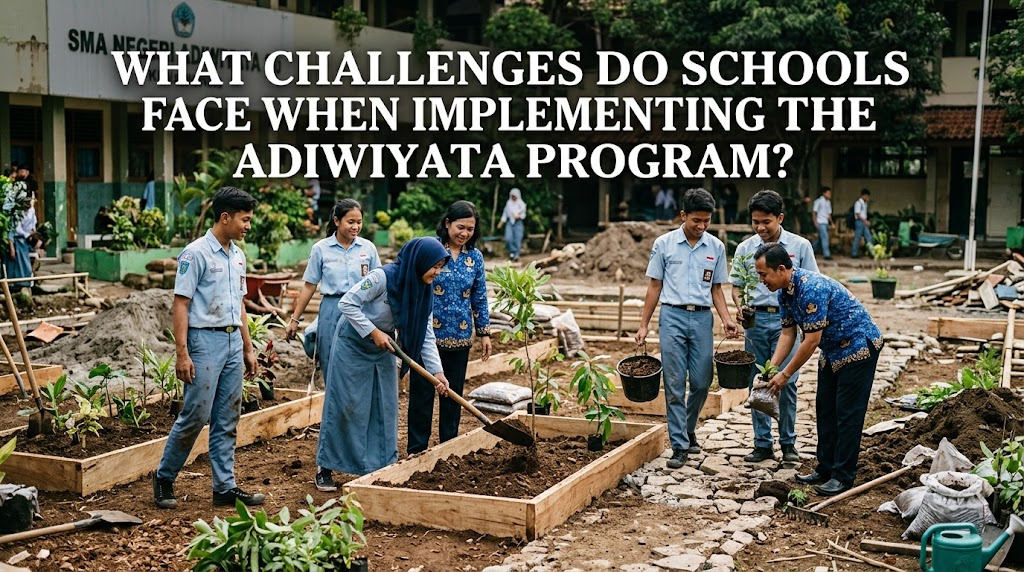
Implementing the Adiwiyata Program can help schools build a cleaner, healthier, and more environmentally responsible learning environment. However, creating an environmentally friendly school is not always easy. Schools may face challenges related to student participation, facilities, funding, habits, and consistency. These challenges can affect how well environmental programs are carried out in daily school activities. Understanding these problems can help schools find practical solutions and strengthen their environmental culture.
WHY CAN IMPLEMENTING THE ADIWIYATA PROGRAM BE CHALLENGING?
One challenge is that environmental programs require participation from the entire school community. Students, teachers, school staff, and management need to understand their responsibilities and work toward the same goals. If only a small number of people participate, activities such as waste management, cleaning, gardening, and conservation may not continue effectively. Differences in awareness and motivation can also make it difficult to create consistent habits. Therefore, shared responsibility is important for successful Adiwiyata implementation.
Another challenge is maintaining environmental habits over a long period. A school may organize a successful environmental campaign, but its impact can decrease if daily practices are not continued. Students may return to habits such as throwing waste carelessly or wasting water and electricity. Teachers and staff need to provide regular reminders without making environmental rules feel like unnecessary burdens. Consistency is essential for turning environmental activities into a lasting school culture.
HOW CAN LIMITED FACILITIES BECOME A CHALLENGE?
Adequate facilities can support the implementation of an Adiwiyata program. Schools may need suitable waste bins, green spaces, water facilities, energy-saving equipment, and areas for environmental activities. However, not every school has the same level of infrastructure or financial resources. Limited facilities can make it harder to carry out certain environmental projects effectively. Schools may therefore need to prioritize practical improvements based on their available resources.
Limited facilities do not always mean that environmental programs cannot be implemented. Schools can begin with simple and affordable activities, such as waste separation, classroom cleaning, plant care, and energy-saving habits. Reusing available materials can also support creative environmental projects. The important point is to focus on actions that are realistic and suitable for the school's conditions. Gradual improvements can help schools develop a more sustainable school environment over time.
WHY IS STUDENT PARTICIPATION SOMETIMES DIFFICULT?
Students are an important part of the Adiwiyata Program, but not every student has the same level of environmental awareness. Some students may see environmental activities as additional tasks rather than meaningful learning experiences. Others may participate only when activities are required by teachers. If students do not understand the purpose of the program, their participation may become temporary. Schools need to explain how environmental activities can benefit both students and their surroundings.
Schools can increase participation by providing activities that are practical, creative, and connected to students' interests. Students can create environmental posters, videos, articles, recycling projects, or school gardening activities. Giving students appropriate responsibilities can also make them feel more involved in the program. When students have opportunities to contribute ideas and work with their friends, they may develop stronger environmental awareness. Positive feedback from teachers can further encourage continued participation.
HOW CAN TEACHERS AND SCHOOL STAFF OVERCOME THESE CHALLENGES?
Teachers and school staff have an important role in maintaining environmental programs. They can provide simple explanations, demonstrate good environmental habits, and guide students during activities. Teachers can also connect environmental topics with classroom assignments and learning activities. When environmental education becomes part of regular learning, students may understand that the program is more than a temporary school project. Teachers can therefore become important environmental role models.
School staff also contribute by maintaining facilities and supporting daily environmental practices. For example, staff can help monitor cleanliness, waste collection, water facilities, and green areas. Cooperation between teachers and staff can make environmental activities more organized and consistent. School management can support them by providing clear guidelines and evaluating programs regularly. This teamwork can help create a stronger Adiwiyata School Program.
HOW CAN SCHOOLS MAINTAIN CONSISTENCY?
Consistency is one of the biggest challenges because environmental responsibility requires continuous action. Schools should not depend only on annual events, competitions, or special campaigns. Instead, simple activities such as waste separation, saving water, turning off unused electrical equipment, and caring for plants should become part of daily routines. Teachers can regularly remind students while also giving them opportunities to take responsibility. Repeated actions can gradually develop environmentally responsible habits.
Schools can also evaluate their environmental programs to identify what works and what needs improvement. Students and teachers can provide feedback about activities, facilities, and difficulties they experience. The results can be used to improve future programs and make activities more suitable for the school community. Regular evaluation can also help prevent environmental programs from becoming inactive after an initial period. Through continuous improvement, schools can strengthen their environmental culture.
WHAT ARE THE BENEFITS OF OVERCOMING THESE CHALLENGES?
Overcoming challenges can make the Adiwiyata Program more effective and sustainable. Students can develop stronger awareness of waste management, conservation, cleanliness, and responsible resource use. Teachers and staff can also develop better cooperation in maintaining the school environment. A successful program can create a learning environment that is cleaner, healthier, and more comfortable. These benefits can support both environmental protection and student development.
The lessons learned through the program can also extend beyond school. Students who develop responsible environmental habits may continue practicing them at home and in their communities. They can encourage family members and friends to reduce waste, save resources, and care for nature. In the long term, overcoming implementation challenges can help schools prepare students to become responsible members of society. This makes the Adiwiyata Program valuable not only for creating an environmentally friendly school but also for supporting sustainable behavior in the future.
CONCLUSION
Schools may face various challenges when implementing the Adiwiyata Program, including limited facilities, different levels of student participation, limited resources, and difficulties maintaining consistency. These challenges can be addressed through teamwork, practical activities, environmental education, and regular evaluation. Schools can begin with simple actions that match their available resources and gradually develop more comprehensive programs. Teachers, staff, students, and management should work together because environmental responsibility is a shared responsibility. With consistent effort, schools can overcome challenges and build a cleaner, healthier, and more sustainable learning environment.
About the Author
Gusti Ayu Tita P
Author — STEKOM University
An active author focused on academic issues, educational technology, and human resource development in the campus environment.















