
What Challenges Does a Government Cabinet Face?
Gusti Ayu Tita P
12 Agustus 2026
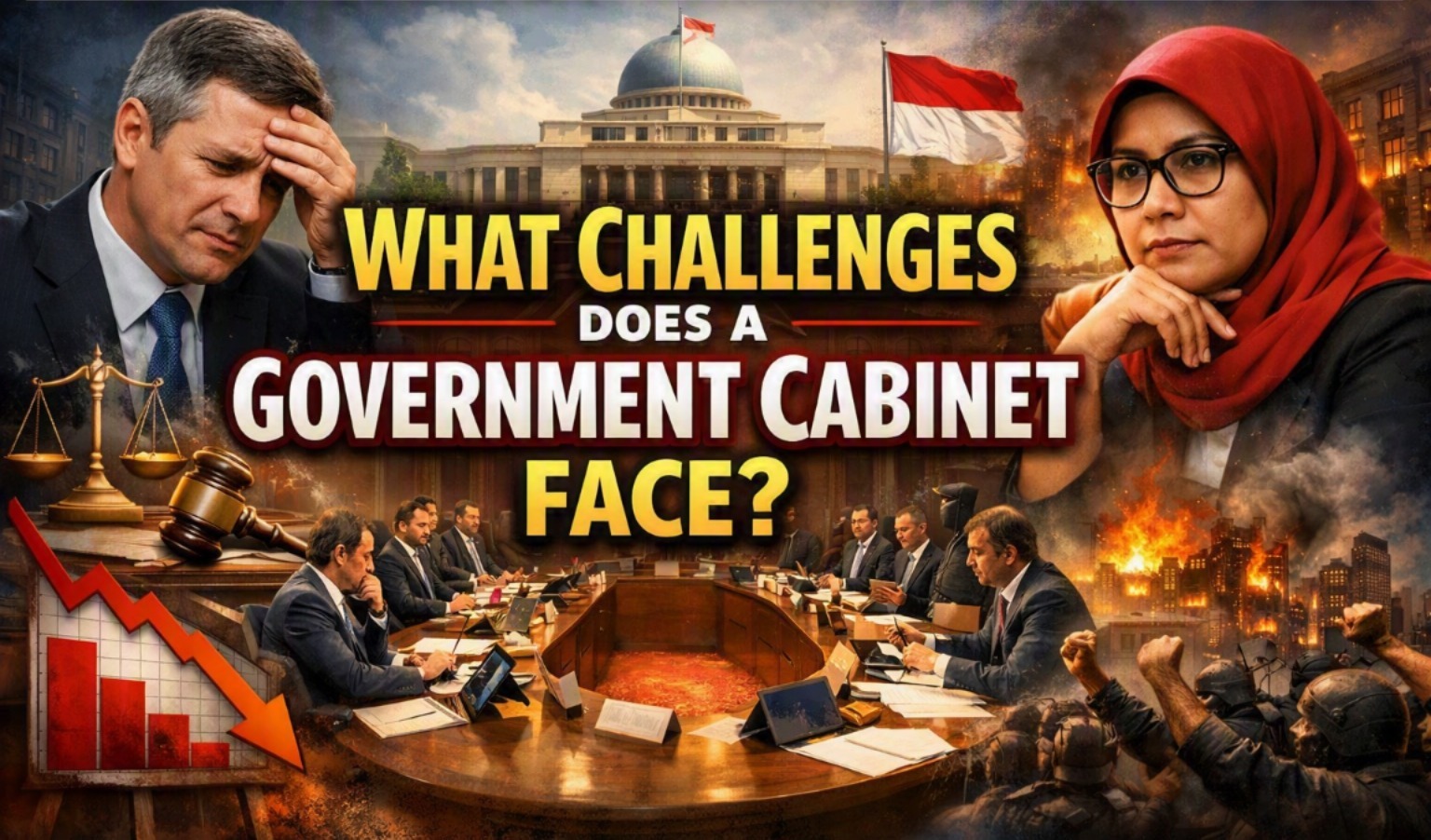
A government cabinet plays an important role in helping a country achieve its national goals. It usually consists of ministers who manage different areas such as education, health, finance, transportation, security, and the economy. Although each ministry has its own responsibilities, cabinet members must work together to create effective policies. In practice, this cooperation can be difficult because governments face complex problems, limited resources, and different public expectations. Understanding these challenges helps explain why cabinet coordination is essential for effective government.
COORDINATING DIFFERENT MINISTRIES
One of the main challenges a government cabinet faces is coordinating different ministries. Each ministry may have different priorities, programs, budgets, and responsibilities. However, many national problems involve several sectors at the same time, so ministries cannot work independently. For example, improving public transportation may require cooperation between transportation authorities, finance officials, environmental agencies, and regional governments. Without strong coordination, policies can overlap, conflict with one another, or become less effective.
Cabinet members therefore need clear communication and shared objectives. Regular meetings, reliable information, and coordinated planning can help ministers understand how their decisions affect other sectors. Strong leadership is also important when different ministries have competing interests. Effective coordination allows the government to use public resources more efficiently and deliver more consistent services.
MANAGING LIMITED GOVERNMENT RESOURCES
Another major challenge is managing limited resources. Governments have finite budgets, personnel, infrastructure, and administrative capacity. At the same time, citizens expect the government to provide quality public services and respond to many social and economic needs. Cabinet members must therefore decide which programs should receive greater attention and funding.
These decisions can be difficult because prioritizing one area may reduce resources available for another. A government may need to balance economic development, healthcare, education, infrastructure, social protection, and national security. Responsible budgeting requires reliable data, careful evaluation, and consideration of both immediate needs and long-term national interests. Poor resource management can reduce public confidence and make important government programs harder to implement.
RESPONDING TO ECONOMIC AND SOCIAL CHANGES
Government cabinets must also respond to rapid economic and social changes. Inflation, unemployment, technological development, demographic changes, global economic conditions, and changes in consumer behavior can affect national policies. These issues may develop faster than traditional government planning processes can handle.
Cabinet members need to remain flexible and responsive while maintaining policy stability. They must examine economic indicators, listen to experts, and understand how policies affect different groups in society. Effective responses should address immediate problems without creating unnecessary long-term risks. This requires ministers to make informed decisions even when information is incomplete or conditions change quickly.
HANDLING PUBLIC EXPECTATIONS
Managing public expectations is another significant challenge for a government cabinet. Citizens often want faster economic growth, better public services, lower living costs, greater employment opportunities, and stronger public safety. However, governments cannot always meet every expectation immediately because policies require funding, planning, legal processes, and implementation time.
Cabinet members must communicate government priorities and policy limitations clearly. Transparent communication can help citizens understand why certain decisions are made and what results can realistically be expected. At the same time, governments need to listen to public concerns and use feedback to improve policies. A balance between public expectations and realistic government capacity is essential for maintaining trust.
DEALING WITH POLITICAL DIFFERENCES
Political differences can make cabinet decision making more complicated. Ministers may have different professional backgrounds, policy preferences, or interpretations of national priorities. In coalition governments, differences between political parties can add another layer of complexity.
A cabinet needs constructive negotiation and collective responsibility to manage these differences. Ministers should be willing to discuss disagreements while focusing on broader national interests. Strong cabinet leadership can help build consensus and prevent internal disagreements from delaying important decisions. When differences are handled professionally, diverse perspectives can actually improve the quality of government policies.
RESPONDING TO CRISES AND EMERGENCIES
Crises are among the most demanding situations for a government cabinet. Natural disasters, economic shocks, public health emergencies, security threats, and major infrastructure failures can require immediate government action. During such situations, ministers may need to make important decisions with limited time and incomplete information.
Effective crisis management depends on preparation, coordination, and clear leadership. Government agencies must know their responsibilities and communicate information quickly. Cabinet members also need to coordinate emergency resources and explain government actions to the public. A well-prepared government can respond more quickly while reducing confusion and protecting essential public services.
MAINTAINING TRANSPARENCY AND ACCOUNTABILITY
A government cabinet also faces pressure to maintain transparency and accountability. Citizens have the right to understand how public decisions are made and how government resources are used. Ministers are expected to act according to laws, regulations, and established public responsibilities.
Accountability requires effective oversight, accurate reporting, and responsible decision making. Governments must also address concerns about corruption, conflicts of interest, and misuse of public resources. Transparent institutions can strengthen public trust and make government programs more credible. For this reason, accountability should be treated as an essential part of effective cabinet governance rather than an additional responsibility.
BALANCING SHORT TERM AND LONG TERM GOALS
Another challenge is finding the right balance between short term needs and long term national goals. Governments often face immediate demands that require quick action, while major national development projects may take many years to produce results. Focusing only on immediate problems can make it harder to achieve sustainable progress.
Cabinet members should therefore consider the long term impact of government policies. Investments in education, infrastructure, digital transformation, environmental protection, and human development may require significant resources before their benefits become visible. Good cabinet decision making combines urgent responses with strategic planning. This approach can help governments remain effective today while preparing the country for future challenges.
CONCLUSION
A government cabinet faces many challenges, from ministry coordination and resource management to economic uncertainty, political differences, public expectations, and national emergencies. These challenges require ministers to communicate effectively and make decisions based on reliable information. Strong leadership, accountability, transparency, and cooperation are essential for addressing complex national problems. A successful cabinet must also balance immediate public needs with long term development goals. Ultimately, effective cabinet governance depends on the ability of ministers and government institutions to work together in pursuit of the public interest.
About the Author
Gusti Ayu Tita P
Author — STEKOM University
An active author focused on academic issues, educational technology, and human resource development in the campus environment.















