
What Digital Skills Will Be Most Needed in the Workforce Over the Next 5 Years?
Gusti Ayu Tita P
24 Februari 2026
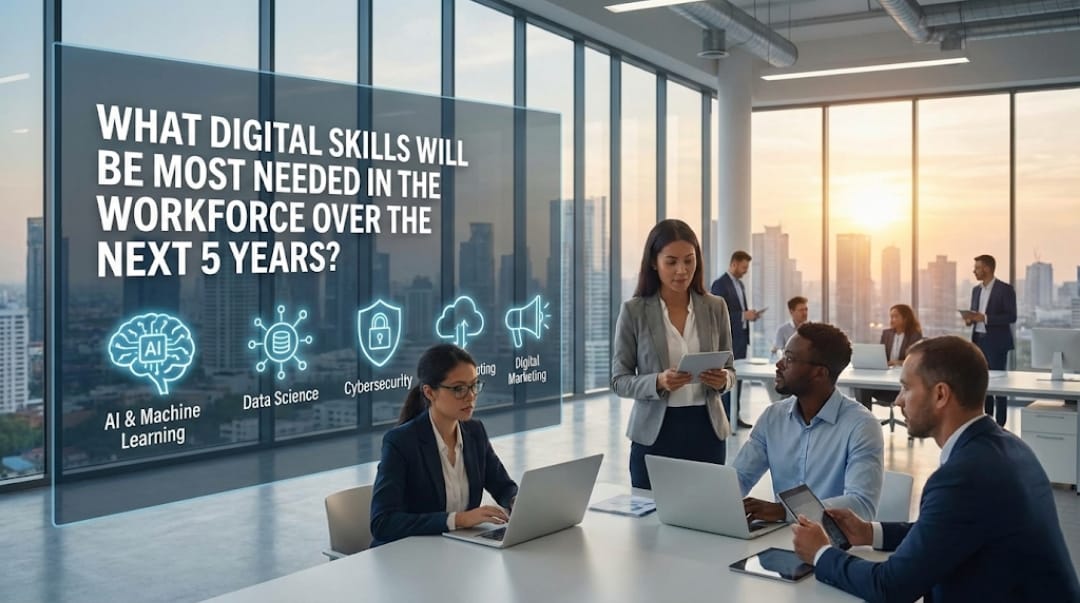
Technology continues to reshape how companies operate, communicate, and compete. As digital transformation accelerates across industries, employers are placing greater emphasis on practical digital skills rather than relying solely on academic credentials. The next five years are expected to bring significant shifts in job requirements, making certain competencies more valuable than ever.
So, what digital skills will be most needed in the workforce over the next five years? Below are the key areas professionals should pay attention to.
DATA ANALYTICS AND DATA LITERACY
Data has become a core asset for modern organizations. Businesses rely on data to understand customer behavior, improve operational efficiency, and develop strategic plans. As a result, data analytics is one of the most in demand digital skills.
Beyond technical analysis, data literacy is equally important. Employees at all levels need the ability to interpret reports, identify trends, and make data driven decisions. Basic knowledge of spreadsheets, data visualization tools, and performance metrics will be valuable across marketing, finance, operations, and management roles.
ARTIFICIAL INTELLIGENCE AND AUTOMATION
Artificial Intelligence and automation tools are increasingly integrated into daily business processes. From chatbots and recommendation systems to predictive analytics, AI enhances efficiency and reduces repetitive tasks.
Professionals who understand how to work alongside AI systems will have a competitive advantage. This does not necessarily mean everyone must become an AI engineer. However, understanding how AI tools function and how to apply them strategically will be crucial in many roles.
Adaptability and continuous learning will be key in this evolving landscape.
CYBER SECURITY AWARENESS
As digital systems expand, so do cyber threats. Companies face growing risks related to data breaches, phishing attacks, and ransomware incidents. This makes cyber security awareness a critical digital skill.
While specialized cyber security professionals remain in high demand, basic security knowledge is also essential for non technical employees. Understanding safe password practices, data protection standards, and secure communication methods can help organizations reduce risk.
In the coming years, digital security will be a shared responsibility across teams.
DIGITAL MARKETING AND CONTENT STRATEGY
Consumer behavior continues to shift toward online platforms. Businesses depend on digital marketing strategies to reach and engage their target audiences effectively.
Skills such as Search Engine Optimization (SEO), social media management, paid advertising, and content strategy are expected to remain highly relevant. Professionals who can combine creativity with analytical thinking will stand out in the job market.
Understanding performance metrics and adjusting campaigns based on data insights will be a valuable capability.
UI UX DESIGN AND CUSTOMER EXPERIENCE
User experience plays a central role in the success of digital products. Companies increasingly invest in UI UX design to ensure their websites and applications are intuitive and user friendly.
Professionals who can conduct user research, develop wireframes, and improve digital interactions will be in demand. As competition intensifies, delivering a seamless customer experience will be a strategic priority for many organizations.
CLOUD COMPUTING AND DIGITAL COLLABORATION
Cloud computing enables businesses to store data, run applications, and collaborate efficiently across locations. As remote and hybrid work models become more common, cloud based tools will continue to expand.
Understanding how cloud platforms operate and how to manage digital collaboration tools will be essential. Even employees outside IT departments benefit from knowing how to work effectively in cloud environments.
This skill supports flexibility, scalability, and productivity in modern workplaces.
CONCLUSION
Over the next five years, the workforce will increasingly prioritize digital competencies that combine technical knowledge with adaptability. Data analytics, Artificial Intelligence, cyber security awareness, digital marketing, UI UX design, and cloud computing are among the most needed skills.
Professionals who invest in continuous learning and practical experience will be better prepared to navigate the evolving job market. Building strong digital skills today can open broader opportunities in the future workforce.
About the Author
Gusti Ayu Tita P
Author — STEKOM University
An active author focused on academic issues, educational technology, and human resource development in the campus environment.