
What Documents Are Needed for a Death Certificate?
Gusti Ayu Tita P
14 September 2026
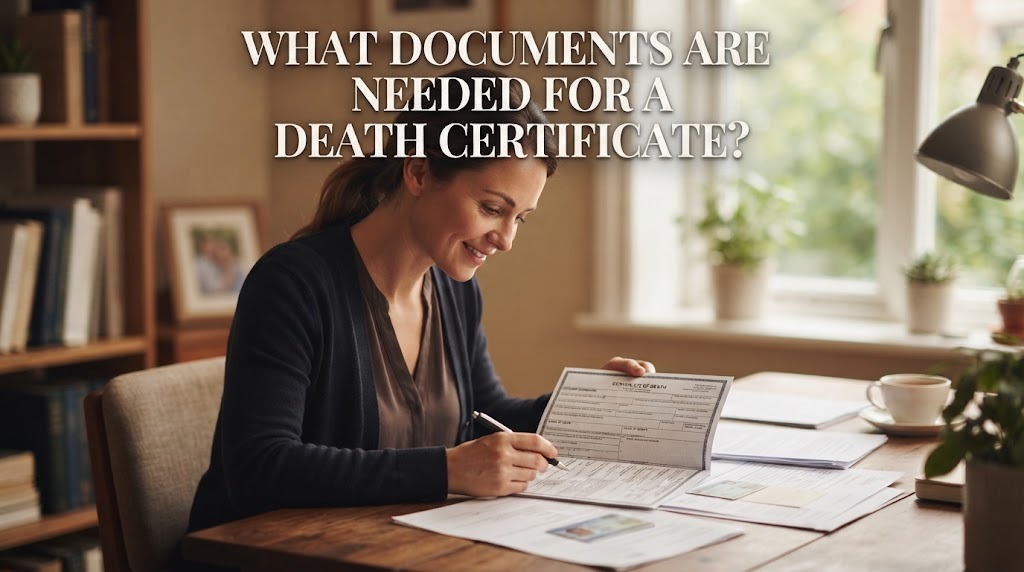
A death certificate is an official civil registration document used to record the death of a person. To obtain it, the family or authorized reporter generally needs to submit a death statement along with identification and other supporting documents. In Indonesia, the exact requirements can vary depending on the local Dukcapil service and the circumstances of the death.
Generally, the required documents are related to proof of death, the identity of the deceased, and the identity of the person reporting the death. Checking the requirements of the local Dukcapil office before applying can help prevent delays.
DEATH STATEMENT FROM A DOCTOR OR HEALTH FACILITY
One of the main supporting documents is usually a death statement issued by a doctor, paramedic, hospital, or other authorized health facility. This document confirms that the person has died and provides the basis for recording the death.
If the person died at home or without examination by a medical professional, an alternative statement may be required depending on local procedures. Some local regulations also provide for a death statement from the village or subdistrict administration.
FAMILY CARD AND IDENTITY CARD
A copy of the deceased person's Family Card (KK) and electronic Identity Card (KTP-el) may be required when registering the death. These documents help Dukcapil verify the deceased person's identity and population data.
The information should be checked carefully before submission. Differences in names, identification numbers, or other details may require additional verification or correction before the death can be registered.
BIRTH CERTIFICATE OF THE DECEASED
In some local services, a copy of the deceased person's birth certificate may also be requested, particularly when the person has one. This document can help verify the identity and civil registration information of the deceased.
However, requirements can differ between regions. Some local regulations explicitly list the birth certificate as a supporting document, while others may use different verification procedures.
IDENTITY OF THE REPORTER
The person reporting the death may also need to provide their own identity document. Depending on the local procedure, the reporter can be a family member, heir, or another person authorized to report the death.
Providing the reporter's identity helps the civil registration authority verify who submitted the application. Some local regulations also require information or identification from witnesses.
IDENTITY OF WITNESSES
Certain local procedures may require copies of the electronic Identity Cards of witnesses. For example, some regional regulations require the KTP-el of two witnesses as part of the death registration requirements.
Because this requirement is not necessarily identical in every region, applicants should check with their local Dukcapil office. This is especially important when preparing documents before visiting a service counter.
OTHER DOCUMENTS MAY BE REQUIRED
Additional documents may be needed depending on the circumstances. For example, a marriage certificate may be requested in certain local procedures, particularly when the deceased was married. Special cases such as a missing person or a death without a discovered body can also require police documentation or a court decision.
For an Indonesian citizen who dies abroad, the documentation can also be different. A death certificate or statement issued by the relevant authority in the country where the death occurred may be required for reporting the death to the Indonesian authorities.
DOES EVERY APPLICATION REQUIRE THE SAME DOCUMENTS?
No. The required documents are not necessarily identical for every application. Requirements can depend on where the death occurred, the deceased person's citizenship and population status, and whether the death occurred under normal or special circumstances.
For example, current regional regulations show different document lists, even though they share core requirements such as proof of death and identity documents. Therefore, families should not rely solely on a checklist from another city or region.
HOW CAN FAMILIES PREPARE THE DOCUMENTS?
Families can begin by collecting the death statement, the deceased person's KK and KTP-el, and the reporter's identification. They should then check whether the local Dukcapil requires additional documents such as a birth certificate, witness identification, or marriage certificate.
It is also useful to prepare clear copies of the documents while keeping the original documents available for verification. Before submitting the application, families should check the latest requirements provided by their local Dukcapil service because administrative procedures can change.
CONCLUSION
The documents commonly needed for a death certificate include a death statement, the deceased person's KK and KTP-el, and the reporter's identification. Depending on the region and circumstances, a birth certificate, witness identification, marriage certificate, or other supporting documents may also be required. Because requirements can vary between local governments, families should confirm the latest requirements with the relevant Dukcapil office before applying. Preparing the documents carefully can make the death registration process smoother and more efficient.
About the Author
Gusti Ayu Tita P
Author — STEKOM University
An active author focused on academic issues, educational technology, and human resource development in the campus environment.















