What Does Being a Middle Child Mean and What Is Their Personality Like?
Gusti Ayu Tita P
8 September 2026
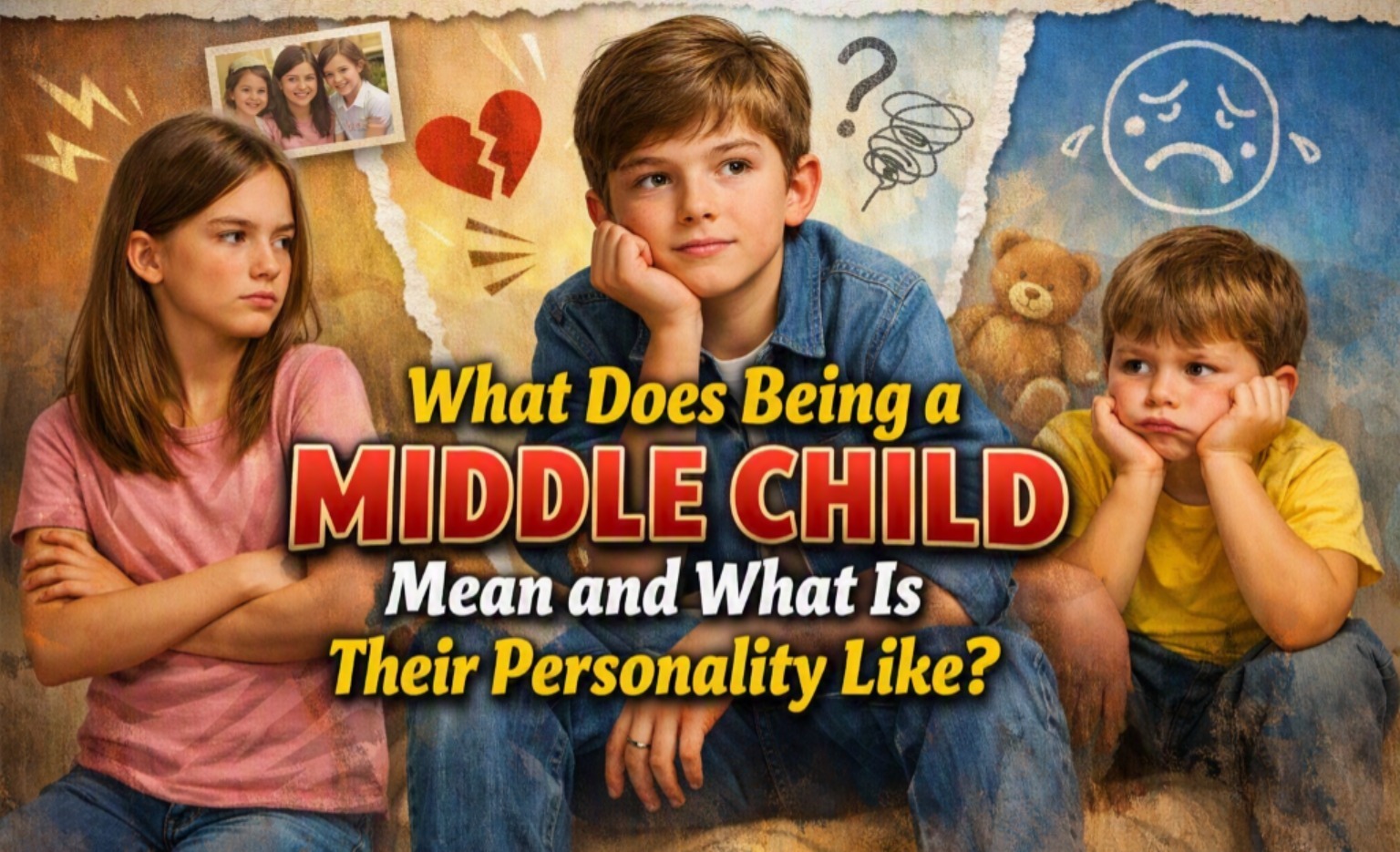
Being a middle child means growing up between an older sibling and a younger sibling in the family. This position can create a unique family experience because middle children often receive different expectations and attention from their parents. They may learn to adjust to both older and younger siblings while developing their own way of expressing themselves. However, birth order does not determine a person's personality completely. Family relationships, parenting styles, personal experiences, and social environment also play important roles in shaping personality.
The idea of the middle child personality is often discussed in psychology and popular culture. Middle children are sometimes described as flexible, independent, cooperative, and good at resolving disagreements. While some people may recognize these traits in themselves, others may have completely different personalities. Understanding what being a middle child means is therefore better approached as a general pattern rather than a fixed rule.
WHAT DOES BEING A MIDDLE CHILD MEAN?
A middle child is a child who has at least one older sibling and at least one younger sibling. Their position places them between siblings who experience different stages of childhood before and after them. Because of this position, they may sometimes feel that they have to find their own place within the family. Their experiences can be different from those of the oldest or youngest child.
In some families, the older child may receive attention because of greater responsibilities, while the youngest may receive extra care because they are the baby of the family. A middle child may therefore develop a strong sense of individual identity to distinguish themselves from their siblings. However, this does not mean that every middle child feels ignored or less important. The amount of attention and support a child receives depends greatly on the family's circumstances.
COMMON PERSONALITY TRAITS OF MIDDLE CHILDREN
One commonly associated trait is adaptability. Middle children may become accustomed to interacting with siblings of different ages and personalities, which can encourage them to adjust to different situations. They may also become comfortable sharing attention, space, and family resources. This experience can contribute to strong social skills and an ability to cooperate with others.
Another commonly discussed characteristic is independence. Some middle children learn to make decisions for themselves because they do not always occupy the family's most prominent position. They may also become interested in activities that help them establish a separate identity from their siblings. Still, these characteristics are not universal, and birth order alone cannot explain why someone develops a particular personality.
WHY CAN MIDDLE CHILDREN BECOME GOOD AT COMPROMISING?
Growing up with both older and younger siblings can give middle children frequent opportunities to observe different perspectives. They may need to communicate with an older sibling while also understanding the needs of a younger one. Over time, this can encourage negotiation skills and a willingness to find solutions that work for everyone. In some families, middle children may naturally take on the role of helping reduce tension between siblings.
This does not mean every middle child becomes a family mediator. Some may avoid conflict, while others may be highly assertive or prefer to stay out of disagreements. Their response can depend on temperament, parental expectations, sibling relationships, and experiences at home. The important point is that conflict resolution skills can develop through everyday family interactions, but they are not guaranteed by birth order.
DO MIDDLE CHILDREN FEEL LESS ATTENTION FROM PARENTS?
The belief that middle children always receive less parental attention is a popular middle child stereotype, but it should not be treated as a universal fact. Parents may divide their time differently depending on the children's ages, needs, personalities, and circumstances. A middle child can receive strong emotional support and meaningful attention from parents even when they have older and younger siblings.
What matters more is how children perceive their place in the family. Feeling valued, heard, and supported can contribute to healthy emotional development regardless of birth order. Parents can help by recognizing each child's individual interests and avoiding comparisons between siblings. Giving every child opportunities for one-on-one communication can also strengthen their sense of belonging.
ARE MIDDLE CHILDREN MORE INDEPENDENT?
Many descriptions of the middle child personality emphasize independence, but this should be understood as a possible tendency rather than a psychological rule. A middle child may seek hobbies, friendships, or goals that are different from those of their siblings. Developing something that feels personally meaningful can help them establish an identity separate from their position in the family.
Independence can also develop when parents give children appropriate opportunities to make choices. A middle child who learns to solve problems, manage responsibilities, and express opinions may become increasingly confident. At the same time, some middle children may prefer greater family involvement and support. Individual personality remains more important than birth order when understanding a person's behavior.
WHAT ARE THE STRENGTHS OF BEING A MIDDLE CHILD?
Middle children may develop several useful qualities through their family experiences. Empathy can grow from learning to understand siblings with different needs and perspectives. They may also become flexible, especially when adapting to changing family situations. Their experiences can encourage cooperation, communication, and the ability to build relationships with different types of people.
Another possible strength is the ability to create a distinct identity. Rather than simply following an older sibling or receiving the attention associated with being the youngest, a middle child may explore interests that feel uniquely their own. This can support confidence and self-discovery. Nevertheless, these strengths should be viewed as possibilities rather than characteristics that every middle child will automatically develop.
WHAT FACTORS SHAPE A MIDDLE CHILD'S PERSONALITY?
Birth order is only one factor that may influence family experiences. Parenting style, sibling relationships, family size, age differences, cultural expectations, and socioeconomic circumstances can all affect how children grow and behave. A middle child with a large age gap between siblings may have a very different experience from one whose siblings are only a few years apart.
Personality is also influenced by temperament and life experiences. Children respond differently to the same family environment, so two middle children in different families may develop very different characteristics. Friendships, school experiences, personal achievements, challenges, and broader social environments can further shape development. For this reason, it is more accurate to describe birth order as one possible influence rather than a complete explanation of personality.
CONCLUSION
Being a middle child can create a distinctive family position, but it does not determine who someone will become. Some middle children may be independent and diplomatic, while others may be outgoing, competitive, quiet, creative, or highly assertive. There is no single personality profile that applies to everyone born between siblings. Birth order should not be used as a label that limits how a person is understood.
The most accurate way to understand a middle child is to consider the whole person and their individual circumstances. Their family relationships, parenting experiences, personality, friendships, and personal choices all contribute to their development. A middle child can experience both challenges and advantages while growing into a unique individual. Ultimately, being a middle child is one part of a person's story, not the definition of their personality.
About the Author
Gusti Ayu Tita P
Author — STEKOM University
An active author focused on academic issues, educational technology, and human resource development in the campus environment.