
What Equipment Does a New SAR Team Need for Rescue Missions?
Gusti Ayu Tita P
29 September 2026
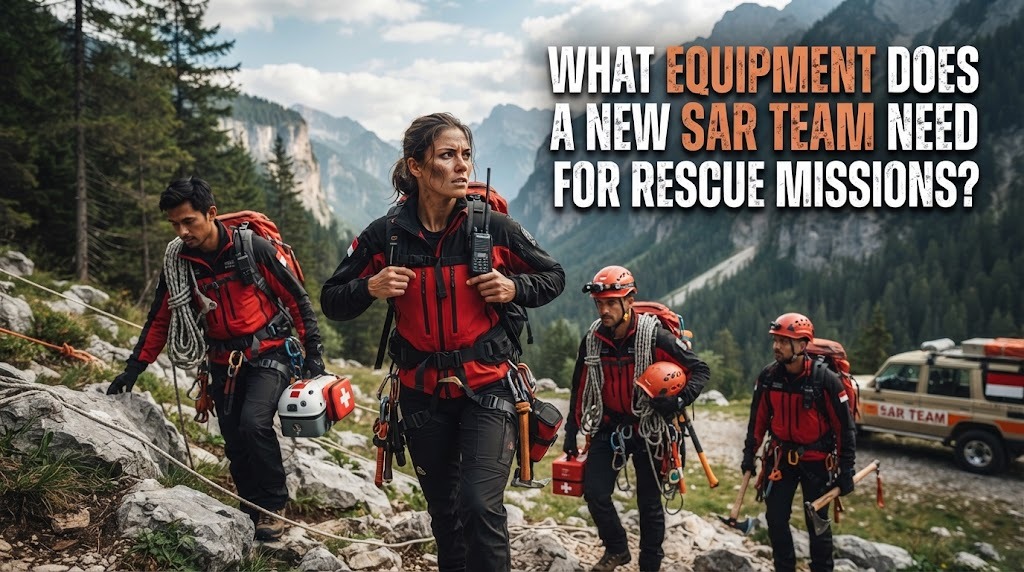
A new SAR team needs suitable equipment to support safe and organized rescue missions. Search and rescue work can take place in mountains, forests, rivers, disaster areas, or collapsed buildings, so equipment requirements can change depending on the mission. Basic resources usually include protective equipment, communication devices, medical supplies, navigation tools, and rescue gear. FEMA guidance also notes that personal protective equipment and communications should be selected according to the mission and working environment.
Equipment alone does not make a rescue team ready for deployment. Every member must understand how to use, inspect, maintain, and carry the equipment safely. A new search and rescue team should therefore build its equipment system together with training and clear operating procedures. Choosing equipment based on actual mission needs can also prevent unnecessary costs and reduce the risk of carrying unsuitable tools.
PERSONAL PROTECTIVE EQUIPMENT
Personal protective equipment or PPE is one of the first priorities for a new SAR team because rescuers may enter areas with physical and environmental hazards. Depending on the mission, basic PPE can include a helmet, gloves, protective footwear, eye protection, hearing protection, protective clothing, and a headlamp with spare batteries. FEMA resource guidance also lists rescue harnesses, personal medical kits, survival kits, and foul-weather clothing for certain SAR resources.
PPE should not be treated as a universal checklist because different environments create different risks. For example, flood operations may require a suitable personal flotation device and dry suit, while structural-collapse missions can require additional respiratory or protective equipment. Mission-specific PPE should therefore be selected after considering the environment, hazards, and role of each rescuer.
COMMUNICATION AND NAVIGATION EQUIPMENT
Reliable communication equipment helps SAR members share important information during an operation. A team may need two-way radios, mobile phones, chargers, and other communication devices to maintain contact between members and with command personnel. FEMA guidance also identifies portable radios and, when appropriate, alternative communication such as satellite phones based on mission requirements.
Navigation equipment is equally important, especially when rescuers work in remote or unfamiliar locations. Handheld GPS units, maps, compasses, and location-recording tools can help teams identify search areas and communicate positions more accurately. Electronic tools should be supported by basic navigation knowledge because field conditions can interfere with devices. A new SAR team should also test communication and navigation equipment during training rather than waiting for a real emergency.
MEDICAL AND FIRST AID SUPPLIES
A new SAR team should carry appropriate medical supplies for initial victim support. Basic equipment can include first aid materials, bandages, gloves, dressings, emergency blankets, and other supplies appropriate to the team's medical training. FEMA resource guidance includes an individual first aid kit among the equipment carried by certain SAR personnel.
Medical equipment should match the team's qualifications and operational responsibilities. Rescuers should only provide medical care that they are properly trained and authorized to perform. Supplies should be organized so important items can be reached quickly in the field. Regular inspections are also necessary to replace expired, damaged, or missing materials before an operation.
ROPE AND ACCESS RESCUE GEAR
Some rescue missions require specialized equipment for accessing difficult locations. Depending on the team's role, this may include life-safety ropes, rescue harnesses, rope-access hardware, stretchers, and other technical rescue equipment. FEMA resource definitions specifically identify life-safety rope and rope-access equipment for certain mass search and rescue resources.
Technical rescue equipment requires more than basic familiarity. Members should receive specialized training and supervised practice before using ropes or other access systems in real operations. Equipment must also be inspected according to the manufacturer's instructions and applicable standards. A new team should avoid using technical equipment simply because it is available without confirming that members are trained to operate it safely.
SEARCH AND RESCUE TOOLS
SAR teams may need different tools depending on what they are searching for and the environment involved. Basic tools can include hand tools, cutting tools, lighting equipment, stretchers, and other equipment used to access or assist victims. FEMA's mass search and rescue resource guidance includes tools such as shovels and bolt cutters, while other USAR equipment lists include additional cutting and access tools.
Large or specialized tools should only be included when they match the team's expected missions. Carrying too many tools can increase weight and complicate logistics. A practical SAR equipment checklist should distinguish between essential equipment and mission-specific equipment. This makes preparation more systematic and helps the team confirm that critical items are ready before deployment.
SPECIALIZED EQUIPMENT FOR DIFFERENT MISSIONS
Not every SAR mission requires the same equipment. A flood response may need personal flotation devices, water rescue gear, boats, and waterproof communication equipment, while structural-collapse operations may require protective helmets, respiratory protection, technical access tools, and specialized search equipment. FEMA guidance specifically lists dry suits, PFDs, rescue boats, rope rescue kits, and other tools for swiftwater or flood SAR resources.
This means a new team should first identify the types of emergencies it is expected to handle. The team can then develop equipment packages for mountain rescue, water rescue, urban search and rescue, missing-person searches, or disaster response as needed. Mission-based planning helps ensure that equipment supports actual operational requirements rather than simply creating a large inventory. It also makes maintenance, transportation, and training easier to manage.
EQUIPMENT CHECKS AND MAINTENANCE
Having the right equipment is only useful when the equipment is ready to function during an emergency. A new SAR team should create a routine for inspection, cleaning, maintenance, battery checks, inventory control, and equipment replacement. FEMA guidance highlights equipment condition, inventory systems, maintenance, logistics, and communications planning as important elements in certain SAR team capabilities.
Every training exercise can also be used to test whether equipment is practical and accessible. Team members should know where each item is stored and who is responsible for checking it. Faulty or damaged equipment should be removed from service until it has been properly repaired or replaced. Regular equipment readiness checks can help the team avoid preventable problems during real rescue operations.
CONCLUSION
A new SAR team needs more than a collection of rescue tools. It needs a carefully planned equipment system that includes PPE, communication devices, navigation tools, medical supplies, access equipment, and mission-specific rescue gear. The exact equipment should depend on the type of operation, working environment, hazards, and training level of the team.
The most important step is making sure every piece of equipment is suitable, maintained, and understood by the people who will use it. With regular inspections and practical training, a new search and rescue team can improve its readiness while reducing avoidable operational risks. Good equipment planning therefore becomes an important part of building a safe and effective rescue capability.
About the Author
Gusti Ayu Tita P
Author — STEKOM University
An active author focused on academic issues, educational technology, and human resource development in the campus environment.