What Equipment Is Needed for a Neighborhood Watch Post?
Gusti Ayu Tita P
18 September 2026
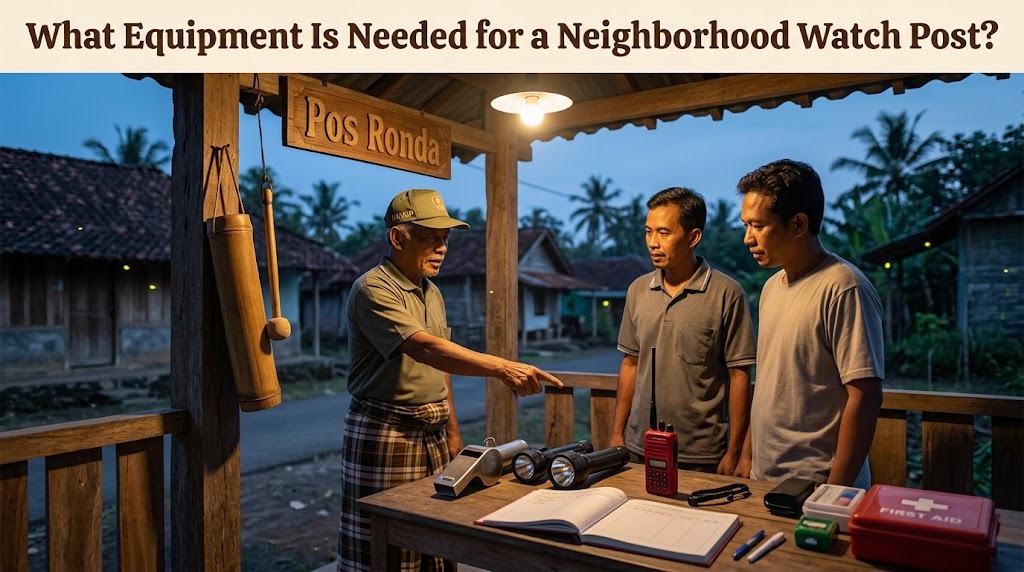
A neighborhood watch post is a shared facility that supports residents in maintaining community safety. To function effectively, the post needs equipment that helps residents communicate, observe the surroundings, record important information, and respond appropriately to security situations. The equipment does not always have to be expensive because many useful items are simple and affordable. What matters most is that the equipment is functional, accessible, and properly maintained. With suitable facilities, residents can carry out neighborhood watch activities in a more organized way.
BASIC EQUIPMENT FOR A NEIGHBORHOOD WATCH POST
The most basic equipment includes chairs, tables, lighting, and storage cabinets. Comfortable seating allows residents to stay at the post during scheduled security shifts, while adequate lighting helps improve visibility at night. A flashlight is also useful when residents need to inspect areas that are poorly illuminated. Other practical items can include a wall clock, stationery, notebooks, and a board for displaying important information.
A security logbook is particularly useful for recording patrol schedules, unusual incidents, visitors, and other relevant observations. Residents can also keep emergency contact information in an easily accessible location. These simple facilities help make activities more organized and ensure that important information can be passed between different shifts.
COMMUNICATION AND EMERGENCY EQUIPMENT
Effective communication is important when residents need to report an unusual situation or request assistance. A mobile phone can be used to contact local authorities, emergency services, neighborhood leaders, or other residents when necessary. Depending on local needs, a two way radio may also be useful for communication between patrol members. A whistle or other appropriate alert device can provide a simple way to attract attention during an urgent situation.
Emergency supplies should also be available at the post. A first aid kit can help residents provide basic assistance for minor injuries while waiting for professional medical help when necessary. Important emergency telephone numbers should be clearly displayed. The equipment should be checked periodically so that batteries, medical supplies, and communication devices remain ready for use.
LIGHTING AND VISIBILITY SUPPORT
Good lighting can improve visibility and awareness, especially during nighttime neighborhood watch activities. The post should have sufficient indoor and outdoor lighting so residents can see people and surroundings clearly. Solar powered lights may be considered in locations where reliable electricity is limited. Additional lighting can also be placed around entrances, pathways, or other areas that require better visibility.
A reflective vest can help identify residents who are conducting authorized community patrols. Identification is useful because it makes their role clear to other residents and helps prevent misunderstandings. However, residents should avoid taking unnecessary risks or approaching potentially dangerous situations. Neighborhood watch activities should focus on observation, communication, and reporting, rather than replacing trained law enforcement.
RECORD KEEPING AND SECURITY SUPPORT
Record keeping equipment helps residents maintain an organized history of neighborhood watch activities. A patrol logbook can contain information about patrol times, observations, maintenance issues, and incidents that need follow-up. Pens, clipboards, folders, and secure storage can make these records easier to manage. Digital records may also be used when residents have a suitable and secure system for maintaining information.
Some communities may also use security cameras to monitor shared areas. If cameras are installed, their use should follow applicable laws, privacy expectations, and community agreements. Residents should understand who can access recordings and how long information should be retained. Cameras should support responsible observation rather than encourage unnecessary surveillance of private spaces.
MAINTENANCE AND RESPONSIBLE USE
Equipment is only useful when it is properly maintained. Residents can create a simple checklist to inspect lighting, communication devices, first aid supplies, furniture, and other important facilities regularly. Damaged equipment should be repaired or replaced, while expired medical supplies and weak batteries should be renewed. Keeping the post clean and organized also makes it easier for residents to find equipment during an emergency.
The community should also establish clear rules for using the equipment. Items should remain available for legitimate neighborhood watch purposes and should be returned after use. Residents should receive basic guidance on how to use communication and emergency equipment safely. Clear responsibilities can help prevent equipment from being lost, damaged, or misused.
CONCLUSION
A well-equipped neighborhood watch post can support residents in maintaining a safer and more organized community. Essential equipment includes lighting, communication devices, first aid supplies, patrol logbooks, seating, stationery, and appropriate visibility tools. Additional technology such as security cameras can provide further support when used responsibly and in accordance with privacy requirements. However, equipment alone cannot guarantee community safety because effective neighborhood watch activities also depend on resident cooperation, regular schedules, responsible reporting, and good communication. By maintaining the facilities properly and using them responsibly, communities can make their neighborhood watch post a practical part of local safety efforts.
About the Author
Gusti Ayu Tita P
Author — STEKOM University
An active author focused on academic issues, educational technology, and human resource development in the campus environment.