What Factors Influence ASN Career Development And Professional Growth?
Gusti Ayu Tita P
10 Agustus 2026
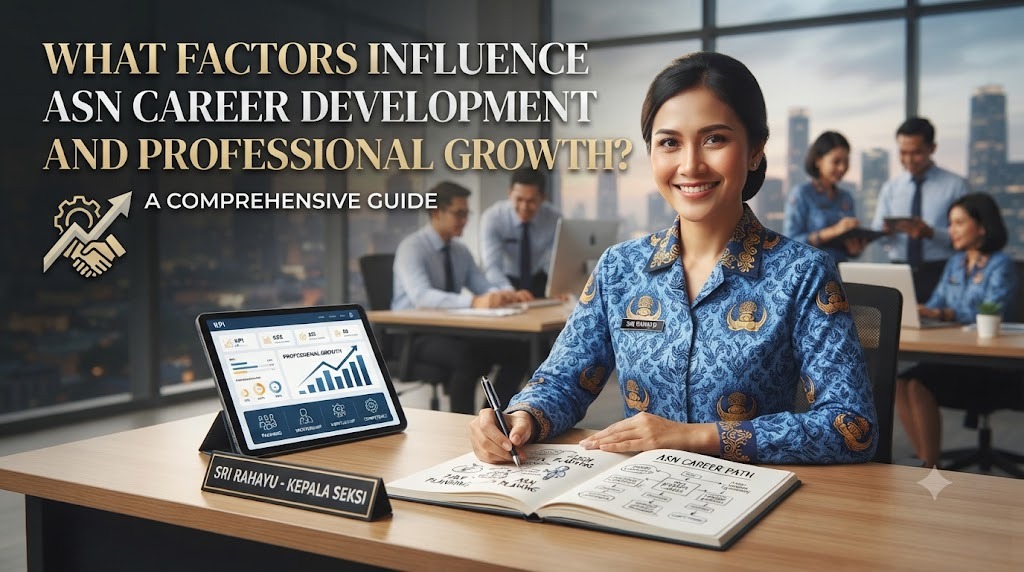
ASN career development is an important part of building a professional and effective government workforce in Indonesia. ASN employees consist of Civil Servants or PNS and Government Employees with Work Agreements or PPPK. Their professional growth is influenced by several factors, including qualifications, competence, performance, career planning, and organizational needs. Understanding these factors can help ASN employees prepare themselves for future responsibilities and opportunities.
Career growth is not simply about receiving a promotion or moving to a higher position. It also involves continuous learning, professional improvement, experience, integrity, and adaptability. Employees who understand how career development works can create more realistic goals and take appropriate steps to achieve them. A well planned career can also help employees contribute more effectively to public services.
QUALIFICATIONS AND EDUCATIONAL BACKGROUND
Educational qualifications are one of the important foundations of ASN career development. Certain positions require specific educational backgrounds that match the duties and responsibilities of the role. Employees who have relevant qualifications may have more opportunities to meet the requirements for particular career pathways. However, education alone does not guarantee career advancement.
Employees should continue developing their knowledge after completing formal education. Additional courses, professional training, certifications, and independent learning can strengthen their qualifications. Relevant education combined with practical competence can make an employee better prepared for changing job requirements. Therefore, education should be viewed as a foundation for continuous professional development.
COMPETENCE AND PROFESSIONAL SKILLS
Competence is one of the main factors influencing ASN career development. Employees need knowledge, skills, and professional behaviors that match their current responsibilities and future career goals. Strong competence helps employees perform their duties effectively and respond to increasingly complex public service challenges. It can also demonstrate readiness for greater responsibilities.
Competence can be developed through training, education, workplace experience, mentoring, and self directed learning. Employees should identify their competency gaps and select development activities that are relevant to their career plans. Continuous learning is particularly important because regulations, technology, and public expectations can change over time. Employees who consistently improve their skills are better prepared to adapt to these changes.
WORK PERFORMANCE AND ACHIEVEMENTS
Work performance is another important factor in professional growth. Employees are expected to complete their responsibilities effectively and contribute to organizational goals. Consistent performance can demonstrate an employee's ability to manage tasks and produce meaningful results. Performance evaluation can also provide information about strengths and areas that require improvement.
Good performance should involve more than completing tasks quickly. It should reflect quality, accountability, discipline, integrity, and public service orientation. Employees can strengthen their professional records by completing projects successfully and demonstrating measurable contributions. Strong and consistent performance can support career planning within a merit based management system.
CAREER PLANNING AND GOAL SETTING
Having a clear career plan helps ASN employees determine the direction they want to take. Employees can identify whether they are interested in managerial responsibilities or specialized professional roles. After selecting a direction, they can study the qualifications, competencies, experience, and other requirements associated with their target position. This makes career development more structured and realistic.
Career goals should also be divided into smaller and measurable steps. For example, an employee may plan to complete specific training, improve a technical skill, gain experience in a particular project, or participate in competency assessment. Regular evaluation allows employees to adjust their plans when organizational priorities or career interests change. A flexible plan can help employees remain prepared for new opportunities.
WORK EXPERIENCE AND PROFESSIONAL EXPOSURE
Work experience can significantly influence professional growth because employees learn how to apply knowledge in real situations. Assignments, projects, teamwork, and problem solving activities can provide valuable practical experience. Employees who handle different responsibilities may develop a broader understanding of organizational processes. Experience can therefore complement formal education and training.
Professional exposure can also improve decision making and adaptability. Employees may encounter situations that require them to communicate with different stakeholders or manage unexpected challenges. Practical experience builds confidence and professional judgment over time. For this reason, employees should treat challenging assignments as opportunities to learn rather than simply as additional workloads.
LEADERSHIP AND COMMUNICATION SKILLS
Leadership skills become increasingly important when employees take on greater responsibilities. Effective leaders need to communicate clearly, manage priorities, make responsible decisions, and support their teams. Leadership is not limited to employees who already hold managerial positions. Leadership potential can be developed through daily work, teamwork, and responsibility.
Communication skills are equally important because government work often requires coordination between different units and stakeholders. Employees who communicate clearly can reduce misunderstandings and improve collaboration. They should also learn to listen, accept constructive feedback, and explain information in a professional manner. Strong communication and leadership skills can support both managerial and nonmanagerial career pathways.
DIGITAL COMPETENCE AND ADAPTABILITY
Digital transformation is changing how government organizations operate and deliver services. ASN employees increasingly need to understand digital systems, data, online communication, and workplace technology. Digital competence can improve efficiency and help employees adapt to modern administrative processes. Employees who are comfortable with technology may also be better prepared for future changes in their work environment.
Digital skills should be developed alongside awareness of information security and responsible technology use. Employees should understand how to manage digital information carefully and follow applicable policies. Adaptability is important because digital tools and work processes can change rapidly. A willingness to learn new technology can therefore become an important part of long term professional growth.
INTEGRITY AND PROFESSIONAL VALUES
Career development should always be supported by strong professional values. Integrity, accountability, discipline, and ethical behavior are essential for employees who work in public institutions. Technical competence without integrity can create risks for organizations and the public. Therefore, professional growth should include both skill development and responsible behavior.
ASN employees are expected to prioritize public interests and carry out their responsibilities professionally. They should follow applicable regulations and avoid actions that could undermine public trust. Building a reputation for honesty and accountability can strengthen professional credibility. These values are important regardless of an employee's position or career level.
ORGANIZATIONAL NEEDS AND OPPORTUNITIES
Career development is influenced not only by individual ability but also by organizational needs. Government institutions require different competencies depending on their programs, services, and strategic priorities. An employee's career opportunities may therefore depend on whether their skills match the needs of the organization. Understanding these needs can help employees choose relevant development activities.
Organizational opportunities can include assignments, training programs, competency assessments, talent management initiatives, and career development programs. Employees should remain aware of opportunities available within their institutions. At the same time, career development should be based on objective considerations rather than personal connections. Merit based management supports the use of qualifications, competence, and performance in managing ASN careers.
TALENT MANAGEMENT AND CAREER DEVELOPMENT
Talent management can influence how employees are identified and prepared for future roles. It involves recognizing potential, developing competence, and aligning employee capabilities with organizational needs. A structured talent management approach can help institutions prepare employees for strategic positions. It can also encourage employees to actively improve their capabilities.
Employees should demonstrate their potential through consistent performance and professional development. Competency assessments and work achievements can provide useful information about strengths and development needs. Talent development works best when individual potential and organizational requirements are aligned. This approach can support a more sustainable career system within government institutions.
CONCLUSION
ASN career development is influenced by multiple interconnected factors, including educational qualifications, competence, work performance, career planning, experience, leadership, digital skills, integrity, and organizational needs. No single factor automatically guarantees career advancement. Employees need to combine professional competence with strong performance, continuous learning, and responsible behavior. Understanding organizational priorities can also help employees choose development activities that are relevant to future opportunities.
A successful ASN career requires a long term commitment to professional growth. Employees should regularly evaluate their abilities, improve relevant skills, gain meaningful experience, and maintain high professional standards. By combining personal development with organizational needs and merit based principles, ASN employees can build more sustainable careers while contributing to better public services.
About the Author
Gusti Ayu Tita P
Author — STEKOM University
An active author focused on academic issues, educational technology, and human resource development in the campus environment.