
What Is a Cabinet and What Is Its Role in Government?
Gusti Ayu Tita P
12 Agustus 2026
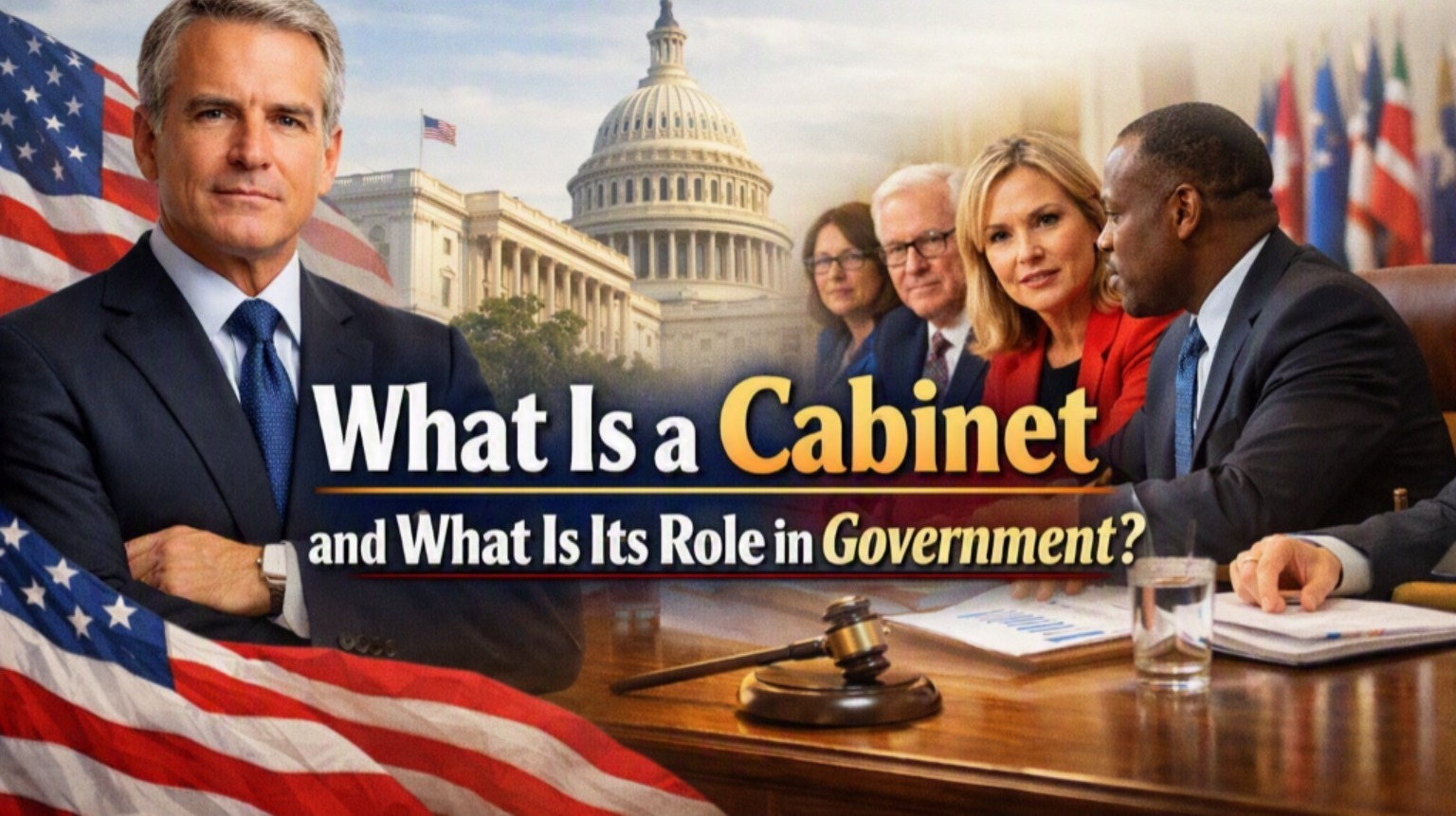
A government cabinet is a group of senior officials, usually led by the head of government, who are responsible for managing major areas of public administration. Cabinet members commonly lead ministries or government departments, such as finance, education, health, foreign affairs, and transportation. The exact structure and authority of a cabinet differ between countries because each government operates under its own constitution and political system. In parliamentary systems, cabinet ministers are often members of the legislature, while in presidential systems, ministers or secretaries may be appointed from outside the legislature.
The cabinet plays an important role in turning a government's priorities into practical public policies and programs. It helps coordinate decisions between different ministries so that government actions are consistent and effective. Cabinet discussions can also help the government respond to economic challenges, social needs, national security concerns, and other important issues. Understanding what a cabinet is can therefore help people better understand how government decisions are made.
WHAT IS A GOVERNMENT CABINET?
A government cabinet is a group of senior ministers or officials who work together to support the head of government in directing the country. Each cabinet member normally has responsibility for a particular area of government administration. For example, a finance minister may oversee public finances, while an education minister manages policies related to schools and education. The cabinet provides a forum where major government issues can be discussed and coordinated.
The composition of a cabinet depends on the country's political structure. In some countries, the cabinet is primarily made up of elected politicians, while in others, it can include appointed officials who have relevant professional expertise. Cabinet members are generally expected to work toward the government's overall objectives rather than focusing only on their individual ministries. This coordination is essential for maintaining effective government administration.
WHO LEADS THE CABINET?
The cabinet is generally led by the country's head of government, although the title and exact authority differ between political systems. In a parliamentary system, the prime minister commonly leads the cabinet and coordinates its overall direction. In a presidential system, the president may directly lead the executive branch and work with cabinet-level officials. The relationship between the leader and cabinet members is determined by the country's constitution and laws.
The leader of the cabinet usually sets broad priorities and ensures that ministers work together to achieve government objectives. Cabinet members may present proposals, discuss national problems, and advise the head of government before major decisions are made. This leadership structure helps establish clear responsibility within the executive branch. It also allows the government to coordinate policies across different sectors.
WHAT ARE THE MAIN ROLES OF A CABINET?
One of the main roles of a cabinet is to develop and coordinate government policies. Ministers bring their expertise and departmental responsibilities into discussions about national priorities. The cabinet can consider issues such as economic development, healthcare, education, infrastructure, employment, and public safety. By discussing these matters collectively, the government can reduce conflicts between ministries and create more coordinated policies.
Another important role is implementing government priorities. Once major policies are approved, individual ministries and government agencies usually carry out the necessary programs and actions. Cabinet members monitor their areas of responsibility and report on progress, challenges, and results. This process helps transform political commitments into practical government services and programs.
HOW DOES THE CABINET MAKE DECISIONS?
Cabinet decision-making usually involves discussion, consultation, and coordination among senior government officials. A minister may present a proposal that affects the ministry they lead, while other ministers consider how the proposal could influence their own areas of responsibility. Important proposals may require research, financial analysis, legal review, or consultation with relevant institutions before a final decision is reached. The exact process varies depending on the country's laws and established government procedures.
Cabinet decisions are often designed to create a unified government position on major issues. After a decision is made, ministers are generally expected to support and implement it within their areas of responsibility. Some governments operate under principles such as collective responsibility, meaning cabinet members publicly support agreed government decisions even when discussions involved different opinions. These practices help maintain stability and coordination within the executive branch.
WHY IS THE CABINET IMPORTANT FOR A COUNTRY?
A cabinet is important because modern governments manage many complex responsibilities at the same time. Areas such as the economy, education, healthcare, infrastructure, national security, and foreign relations are closely connected. Without effective coordination, decisions made by one ministry could create problems for another part of government. The cabinet provides a mechanism for cross-ministry coordination and collective decision-making.
The cabinet can also help the government respond to national challenges and emergencies. During economic difficulties, natural disasters, public health emergencies, or security threats, different government institutions may need to work together quickly. Cabinet-level coordination can help establish common priorities and allocate resources more effectively. However, the quality of government outcomes ultimately depends on factors such as leadership, institutional capacity, transparency, accountability, and the effectiveness of public administration.
WHAT IS THE DIFFERENCE BETWEEN A CABINET AND A MINISTRY?
A cabinet and a ministry are related but have different functions. The cabinet is a collective group of senior government leaders who discuss and coordinate major government policies. A ministry is an individual government organization responsible for a specific sector, such as finance, education, health, or transportation. In many systems, a cabinet minister leads a ministry while also participating in cabinet discussions.
This distinction is important because a ministry focuses on its particular responsibilities, while the cabinet considers broader national priorities. For example, an education ministry may develop education programs, but cabinet discussions can consider how education policy connects with employment, economic development, or national budgeting. Cooperation between ministries allows the government to address issues from a wider perspective.
HOW DOES A CABINET AFFECT CITIZENS?
Although cabinet meetings may seem distant from everyday life, their decisions can have a direct impact on citizens. Government policies can influence public education, healthcare services, taxation, transportation, employment programs, social protection, and infrastructure development. Decisions about national budgets can also determine how public resources are distributed among different sectors. As a result, cabinet decisions can affect both individuals and communities.
Citizens can also influence government priorities through elections, public participation, consultations, civil society activities, and other lawful democratic processes, depending on the country's political system. Government accountability is strengthened when people can access information and evaluate public policies. Transparent institutions and responsible leadership help citizens understand how public decisions are made. This connection between government institutions and society is an important part of effective governance.
CABINET AND GOOD GOVERNANCE
An effective cabinet should support good governance by promoting coordination, responsibility, transparency, and accountability. Ministers need to understand their responsibilities and work toward clear public objectives. Government decisions should be supported by reliable information, appropriate legal procedures, and consideration of their potential effects on society. Strong institutions can also help ensure that cabinet decisions are implemented fairly and efficiently.
However, a cabinet cannot guarantee good governance by itself. Effective government also depends on the rule of law, independent institutions, professional public services, responsible budgeting, public oversight, and citizen participation. A cabinet works within a broader system of government and must operate according to the country's constitutional and legal framework. When these elements function properly, government institutions are better positioned to serve the public interest.
CONCLUSION
A government cabinet is a central part of the executive branch in many countries and consists of senior officials who help lead important areas of government. Its responsibilities commonly include developing policies, coordinating ministries, advising the head of government, and overseeing the implementation of national priorities. The structure and authority of a cabinet vary according to each country's political and constitutional system. Nevertheless, its central purpose is generally to help the government make coordinated and effective decisions.
Understanding the role of a cabinet makes it easier to see how government policies move from ideas to action. Cabinet decisions can influence public services, economic policies, national development, and many aspects of daily life. When supported by strong institutions, accountability, transparency, and effective leadership, a cabinet can contribute significantly to good governance and national development.
About the Author
Gusti Ayu Tita P
Author — STEKOM University
An active author focused on academic issues, educational technology, and human resource development in the campus environment.















