
What Is Oversharing and Why Does It Often Happen on Social Media?
Gusti Ayu Tita P
18 September 2026
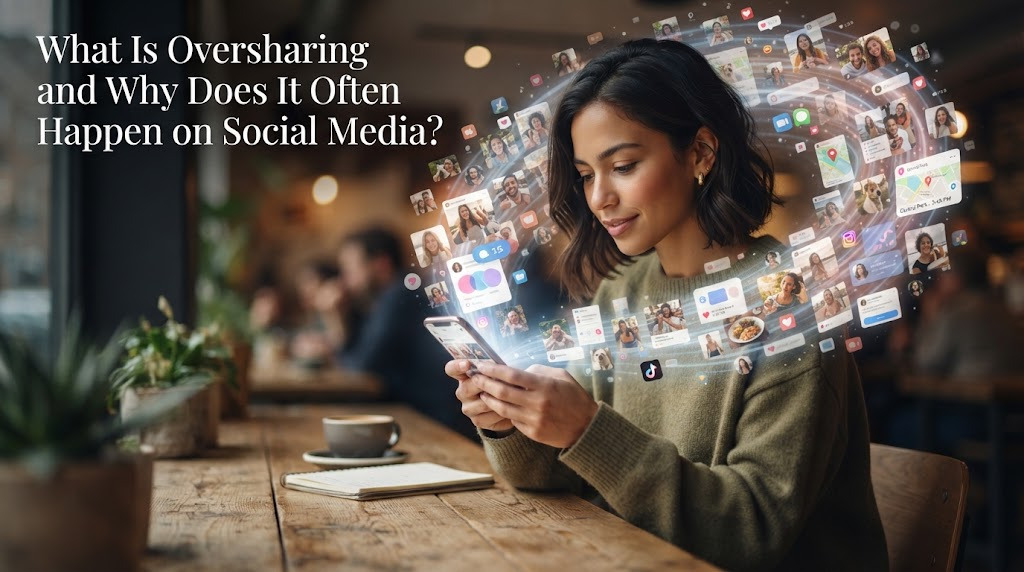
Oversharing refers to the habit of sharing too much personal information with other people, especially through social media. The information can include daily activities, family matters, relationships, personal problems, locations, or private experiences. Although sharing moments online can be a normal part of modern communication, excessive sharing may reduce personal privacy. Many people do not realize that information posted online can remain accessible for a long time. Understanding social media privacy can help users communicate more safely and responsibly.
WHAT DOES OVERSHARING MEAN?
Oversharing happens when someone shares information that is too personal, unnecessary, or inappropriate for a particular audience. This behavior can occur through posts, stories, comments, videos, or private messages. Some people share personal experiences because they want to express themselves or receive support from others. However, problems can arise when sensitive information is shared without considering who can access it. Therefore, users should think carefully before publishing personal content online.
Oversharing is not always intentional. A person may become excited, emotional, or comfortable while using social media and forget to consider the possible consequences. In some situations, users may also follow online trends that encourage them to share more details about their lives. This makes online privacy an important issue for social media users.
WHY DOES OVERSHARING HAPPEN ON SOCIAL MEDIA?
There are several reasons why people practice oversharing on social media. One common reason is the desire to receive attention, support, or validation from other people. Positive reactions such as likes, comments, and shares can make users feel appreciated. Another reason is the desire to stay connected with friends, family members, or online communities. Social media provides an easy space for people to express their thoughts and experiences.
Emotional situations can also influence oversharing. When someone feels happy, angry, disappointed, or stressed, they may post something immediately without thinking about the long-term effects. Emotional posting can sometimes reveal information that a person would not normally share in a face-to-face conversation. For this reason, taking time to think before posting can help reduce unnecessary exposure of personal information.
WHAT TYPES OF INFORMATION CAN BECOME OVERSHARING?
Oversharing can involve many types of information, including personal problems, family conflicts, financial situations, relationship issues, private conversations, and daily locations. Posting real-time travel information can also reveal where someone is currently staying or when their home may be empty. Sharing documents, phone numbers, addresses, or other sensitive details can create additional privacy risks. Even information that seems harmless may become sensitive when combined with other details.
Photos and videos can also contain information that users do not notice immediately. Background objects, school names, street signs, identification cards, or location data may reveal personal details. Therefore, practicing digital privacy means checking both the main content and the smaller details before posting. Users should consider whether the information is necessary and whether they would be comfortable if it reached a wider audience.
WHAT ARE THE RISKS OF OVERSHARING?
One major risk of oversharing is the loss of personal privacy. Information shared online can be copied, saved, forwarded, or viewed by people outside the intended audience. Once private information becomes public, controlling its distribution can be difficult. Oversharing may also lead to misunderstandings because other people may interpret a post differently from its original intention.
There can also be security risks when sensitive information is exposed. Details about locations, routines, personal documents, or family members may provide useful information to unwanted individuals. In professional or educational environments, old posts can sometimes affect how other people view a person's online presence. These risks show why responsible social media use is important for people of all ages.
HOW CAN PEOPLE AVOID OVERSHARING?
People can reduce oversharing by developing a simple think before you post habit. Before uploading something, users can ask themselves whether the information is necessary, whether it is appropriate for the audience, and whether they would be comfortable seeing it online in the future. Adjusting privacy settings can also help control who can view personal content. Users should regularly review their followers, friends, and account permissions.
Another useful approach is to avoid posting when experiencing strong emotions. Taking a short break before publishing emotional content can provide enough time to reconsider the message. Users should also avoid sharing sensitive personal information, such as passwords, financial details, private addresses, or confidential documents. These simple habits can make social media use safer and more responsible.
CONCLUSION
Oversharing is the excessive sharing of personal information, often through social media platforms. It can happen because of the desire for attention, emotional expression, social connection, or online validation. Although sharing experiences online can be positive, users need to understand the potential effects on privacy and digital security. Thinking before posting, controlling privacy settings, and protecting sensitive information are practical ways to reduce the risks. By practicing responsible social media use, people can continue communicating online while maintaining better control over their personal information.
About the Author
Gusti Ayu Tita P
Author — STEKOM University
An active author focused on academic issues, educational technology, and human resource development in the campus environment.



