
What Is the 1945 Constitution and Why Is It Important for Indonesia?
Gusti Ayu Tita P
4 Agustus 2026
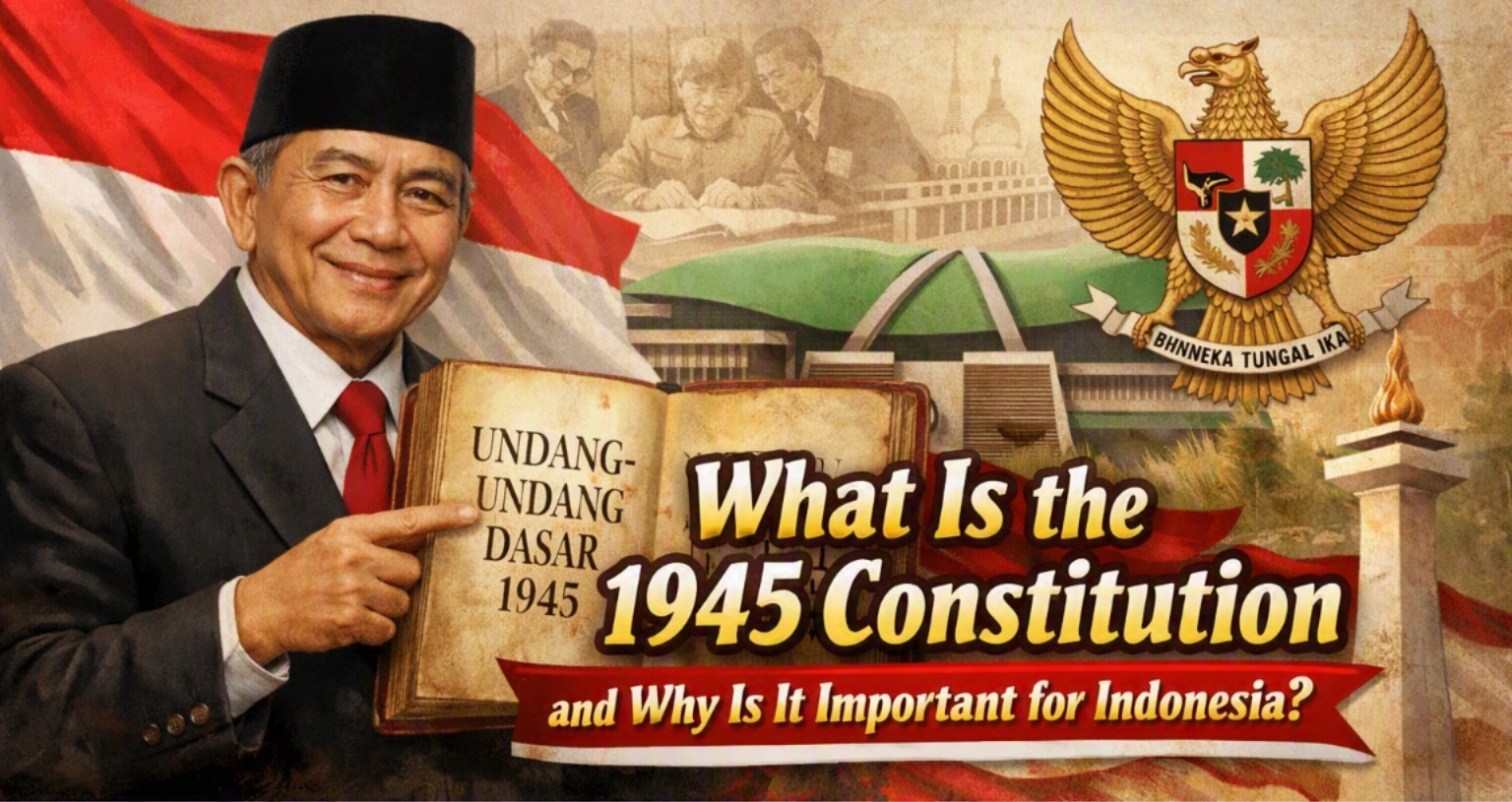
The 1945 Constitution is the highest legal foundation of the Republic of Indonesia. It serves as the main guideline for governing the country, protecting the rights of citizens, and maintaining the balance of power among state institutions. Since Indonesia declared its independence on August 17, 1945, the Constitution has played a vital role in shaping the nation's political, legal, and social systems. Understanding the 1945 Constitution helps people appreciate how Indonesia operates as a democratic and sovereign country.
WHAT IS THE 1945 CONSTITUTION?
The 1945 Constitution, also known as the Constitution of the Republic of Indonesia, is the supreme law that defines the structure of the Indonesian government and the relationship between the state and its citizens. It was officially adopted on August 18, 1945, one day after Indonesia proclaimed its independence. The Constitution establishes the country's fundamental principles, including democracy, justice, human rights, and the rule of law. Every law and regulation in Indonesia must comply with the Constitution to ensure legal consistency. As the nation's highest legal document, it provides a clear framework for maintaining order and stability.
The Constitution consists of a Preamble and several Articles that regulate various aspects of national governance. The Preamble contains the philosophical foundation of Indonesia, including the principles of Pancasila, while the Articles explain the powers of government institutions, citizens' rights, and state responsibilities. Over time, the Constitution has undergone several amendments to strengthen democratic governance and improve public accountability. Despite these changes, its primary purpose remains the same: to guide Indonesia toward a fair, prosperous, and united society.
WHY IS THE 1945 CONSTITUTION IMPORTANT FOR INDONESIA?
The 1945 Constitution is important because it serves as the legal basis for every government policy and national decision. It ensures that all branches of government operate according to established laws rather than individual interests. By defining the responsibilities of the President, Parliament, Judiciary, and other institutions, the Constitution promotes checks and balances within the political system. This framework helps prevent the abuse of power and supports transparency in public administration. As a result, the Constitution strengthens public trust in government institutions.
Another reason the Constitution is essential is that it guarantees the rights and freedoms of Indonesian citizens. It protects fundamental rights such as equality before the law, freedom of religion, education, and participation in democratic processes. These constitutional protections encourage social harmony and ensure that citizens can contribute to national development. By safeguarding both individual rights and public interests, the Constitution supports long-term national stability. It also provides legal certainty for businesses, investors, and international cooperation.
THE MAIN PRINCIPLES OF THE 1945 CONSTITUTION
One of the key principles of the 1945 Constitution is popular sovereignty, which means that governmental authority ultimately belongs to the people. Through democratic elections, citizens have the right to choose their leaders and representatives. This principle encourages public participation in decision-making and strengthens democratic values. It also promotes accountability because elected officials are responsible for serving the public interest. A healthy democracy depends on active citizen involvement and respect for constitutional rules.
Another important principle is the rule of law, which ensures that everyone is treated equally under the law. Government officials, institutions, and citizens must all obey the Constitution and existing legislation. The Constitution also emphasizes social justice, aiming to improve public welfare and reduce inequality across the country. In addition, it supports national unity by recognizing Indonesia's diversity while maintaining a shared national identity. These principles work together to create a stable and inclusive society.
HOW THE 1945 CONSTITUTION AFFECTS DAILY LIFE?
Although many people associate the 1945 Constitution with government institutions, its influence extends into everyday life. Constitutional rights allow citizens to access education, express their opinions responsibly, practice their religion freely, and receive equal legal protection. These rights shape the relationship between individuals and the state while promoting fairness and mutual respect. The Constitution also supports public services by providing the legal foundation for policies in healthcare, education, and economic development. Therefore, its impact can be seen in many aspects of daily living.
The Constitution also encourages responsible citizenship by reminding people of their rights and obligations. Citizens are expected to respect the law, protect national unity, and participate in democratic processes such as elections. Schools and educational institutions often teach the Constitution to help young people understand their role in society. This civic education builds awareness of democratic values and constitutional principles from an early age. As a result, the Constitution contributes to the development of informed, responsible, and active citizens.
CONCLUSION
The 1945 Constitution remains the highest legal foundation of Indonesia and continues to guide the country's democratic development. It establishes the structure of government, protects citizens' rights, promotes the rule of law, and supports national unity. Through its principles and legal framework, the Constitution helps maintain stability while encouraging justice, transparency, and accountability. Understanding the importance of the 1945 Constitution enables citizens to appreciate their rights and responsibilities within a democratic nation. As Indonesia continues to grow, the Constitution will remain a cornerstone of the country's governance and future progress.
About the Author
Gusti Ayu Tita P
Author — STEKOM University
An active author focused on academic issues, educational technology, and human resource development in the campus environment.















