
What Is the Connection Between Adiwiyata Schools and Eco-Friendly Lifestyles?
Gusti Ayu Tita P
15 September 2026
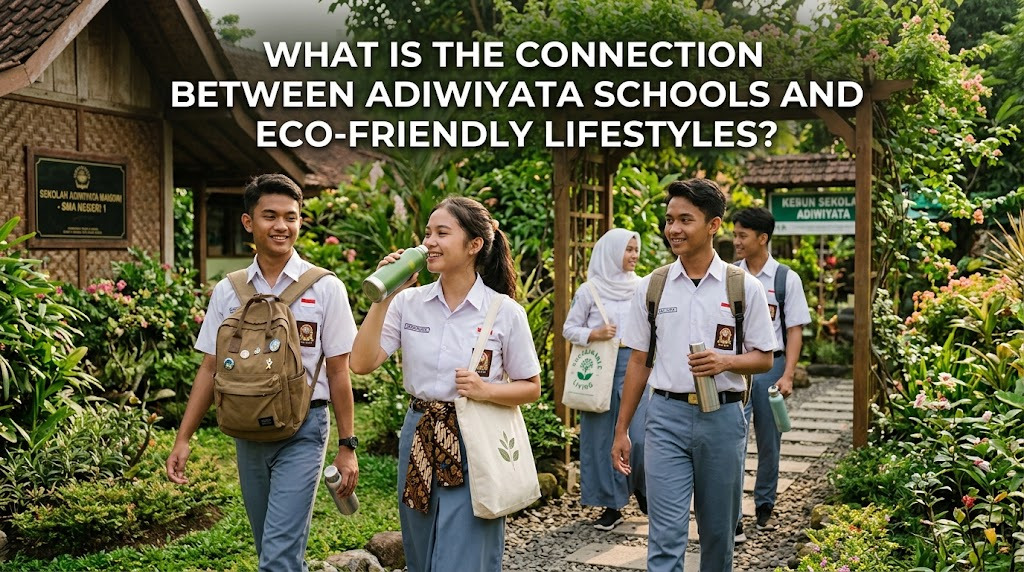
An Adiwiyata School is not only focused on keeping the school clean but also on developing environmental habits that students can apply in everyday life. The values taught through the Adiwiyata School Program can encourage students to understand the importance of protecting nature and using resources responsibly. These values are closely connected to an eco-friendly lifestyle, which focuses on making choices that reduce negative impacts on the environment. Students can learn to reduce waste, save water and energy, and care for plants through simple school activities. When these habits become consistent, students may continue practicing them at home and in their communities.
WHAT IS AN ECO-FRIENDLY LIFESTYLE?
An eco-friendly lifestyle is a way of living that considers the environmental impact of daily activities. It can include reducing unnecessary waste, using reusable products, conserving water, saving energy, and avoiding unnecessary consumption. People do not need to make extreme changes to live more responsibly toward nature. Small actions can become meaningful when they are practiced regularly. For students, these habits can be introduced naturally through activities at school.
An eco-friendly lifestyle also involves making thoughtful choices before and after using products. Students can learn to ask whether an item is necessary, whether it can be reused, and how it should be disposed of after use. This way of thinking can encourage responsible consumption and reduce unnecessary waste. Schools can provide practical examples through their environmental programs. As students become familiar with these habits, environmental responsibility can become part of their daily behavior.
HOW DOES THE ADIWIYATA PROGRAM TEACH ECO-FRIENDLY HABITS?
The Adiwiyata Program can introduce eco-friendly habits through environmental education and practical activities. Students can learn about waste management, water conservation, energy conservation, gardening, and cleanliness. These activities allow students to understand environmental issues while practicing solutions directly. Instead of learning only from explanations, students can experience how responsible actions affect their surroundings. This makes environmental education more relevant to their daily lives.
Schools can also establish routines that encourage students to make environmentally responsible choices. For example, students may be encouraged to use reusable bottles, place waste in appropriate containers, and turn off unnecessary electrical equipment. These actions may seem simple, but repeating them every day can help develop long-term habits. Teachers can explain why each action is important so students understand the purpose behind the rules. Over time, these practices can become part of a strong environmental culture.
HOW DOES WASTE MANAGEMENT SUPPORT AN ECO-FRIENDLY LIFESTYLE?
Waste management is one of the clearest connections between Adiwiyata Schools and eco-friendly living. Students can learn to reduce the amount of waste they produce by avoiding unnecessary disposable products. They can also learn to separate suitable waste materials and reuse items when it is safe and practical to do so. These practices can help students understand that waste does not simply disappear after it is thrown away. Responsible waste reduction and recycling can therefore become important parts of an environmentally friendly lifestyle.
Schools can make waste management more interesting through practical projects. Students can participate in recycling activities, create educational posters, or develop campaigns encouraging classmates to reduce waste. These projects can help students understand the environmental consequences of excessive consumption. They can also learn that recycling is useful but should be combined with reducing and reusing whenever possible. Such lessons can encourage students to make more thoughtful choices outside school.
WHY ARE WATER AND ENERGY CONSERVATION IMPORTANT?
Water and energy conservation are important parts of an eco-friendly lifestyle because natural resources should be used responsibly. Adiwiyata Schools can teach students simple habits such as closing water taps properly and avoiding unnecessary water use. Students can also be reminded to switch off lights, fans, computers, and other equipment when they are no longer needed according to school procedures. These habits can reduce unnecessary resource consumption and encourage students to think about their environmental impact. Water conservation and energy conservation can therefore become practical lessons in sustainability.
Schools can reinforce these habits through campaigns, classroom reminders, and environmental projects. Students can observe how resources are used around the school and identify simple ways to avoid waste. Teachers can then discuss the importance of these actions and encourage students to apply them consistently. Students can also bring these habits into their homes by reminding family members about responsible resource use. In this way, the lessons learned at school can influence the wider community.
HOW CAN SCHOOL ACTIVITIES SHAPE STUDENTS' DAILY LIFESTYLES?
School activities can have a strong influence on students because habits are often developed through repeated practice. Activities such as gardening, cleaning, recycling, and environmental campaigns can make students more familiar with responsible environmental behavior. Students can learn that caring for nature does not always require complicated actions. Simple habits practiced consistently can become part of their normal routine. This can help connect Adiwiyata activities with everyday lifestyle choices.
Students can also share what they learn with their families and friends. For example, a student who learns about waste separation at school may encourage family members to manage household waste more responsibly. Another student may introduce the habit of carrying a reusable bottle or saving electricity at home. These small changes can spread environmental awareness beyond the school. As a result, the influence of an environmentally friendly school can extend into the community.
HOW CAN ADIWIYATA SCHOOLS BUILD LONG-TERM ENVIRONMENTAL HABITS?
Building long-term habits requires consistency from students, teachers, school staff, and management. Environmental activities should not only be organized during special events but should also be included in everyday school routines. Teachers can provide positive examples and reminders, while school management can provide facilities that support responsible behavior. Students should also be encouraged to take responsibility rather than depending completely on teachers. This cooperation can strengthen a lasting sustainable lifestyle.
Schools can also evaluate their environmental programs regularly to determine whether students are developing positive habits. Feedback from students can help schools identify activities that are effective and areas that need improvement. When students are involved in the evaluation process, they may feel a stronger sense of responsibility for the program. Continuous improvement can help environmental values remain relevant as students' needs and school activities change. Through this process, the Adiwiyata Program can become a foundation for long-term environmental responsibility.
CONCLUSION
Adiwiyata Schools and eco-friendly lifestyles are closely connected because both encourage responsible behavior toward the environment. Through environmental education, waste management, resource conservation, school gardening, and daily cleanliness, students can learn practical ways to protect nature. Repeated activities can turn these practices into habits that students can apply at home and in their communities. Teachers and school staff can strengthen the process by providing guidance, positive examples, and suitable facilities. Ultimately, the Adiwiyata School Program can help students develop an eco-friendly lifestyle that supports a cleaner, healthier, and more sustainable future.
About the Author
Gusti Ayu Tita P
Author — STEKOM University
An active author focused on academic issues, educational technology, and human resource development in the campus environment.















