
What Is the Difference Between a Giveaway and a Contest?
Gusti Ayu Tita P
17 September 2026
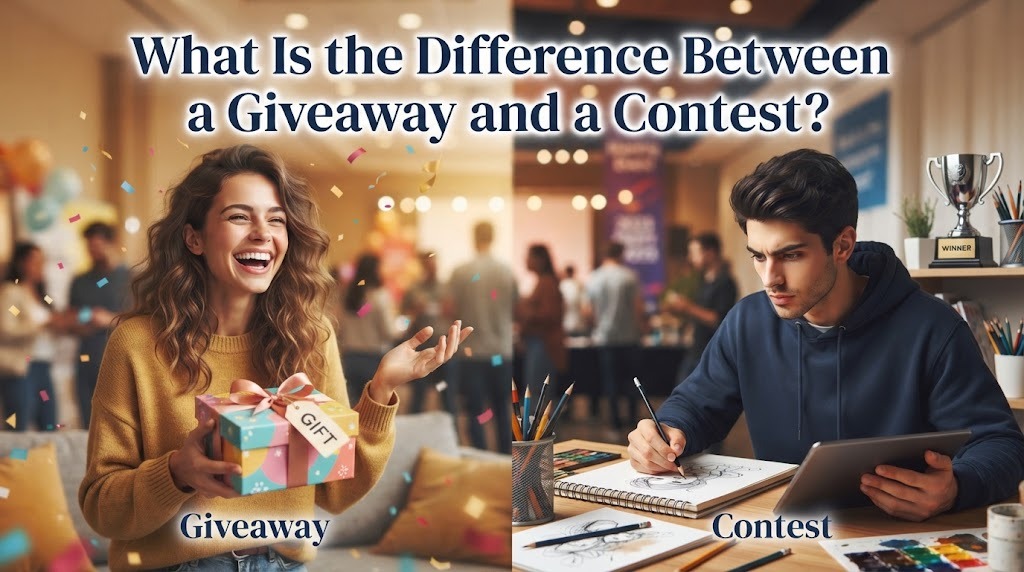
Giveaways and contests are two popular activities used to attract attention and engage audiences, especially on social media. Both can offer prizes to participants and help brands increase interaction with their audiences. However, they are different in how participants qualify and how winners are selected. A giveaway generally focuses on chance or random selection, while a contest usually evaluates participants based on skills, creativity, or performance. Understanding the difference between a giveaway and a contest can help participants know what to expect before joining.
WHAT IS A GIVEAWAY?
A giveaway is a promotional activity in which participants have an opportunity to receive prizes by following specific requirements. Participants may be asked to follow an account, leave a comment, share content, tag friends, or complete a simple form. Winners may be selected randomly or through another method explained by the organizer. Because giveaways generally do not require special skills, they can be accessible to a wide range of participants. Businesses often use giveaways to increase engagement and attract attention to their products or services.
The chances of winning a giveaway depend on the rules established by the organizer. Participants usually need to complete all required steps to become eligible. Information about the giveaway period, prizes, requirements, and winner announcement should be clearly provided. Participants should read these details before entering the giveaway. Doing so can prevent confusion about eligibility and the winner selection process.
WHAT IS A CONTEST?
A contest is an activity in which winners are generally selected based on skills, creativity, performance, or the quality of a specific result. Participants may be required to create something or complete a challenge based on a particular theme. Examples include video contests, writing contests, photography contests, design competitions, and creative challenges. Winners are often selected according to specific criteria, sometimes with the help of judges. Therefore, the participant’s performance or submission plays an important role in determining the result.
Contests can require more preparation than giveaways. Participants need to understand the judging criteria so their submissions follow the organizer’s expectations. The organizer should clearly explain the deadline, judging process, prizes, and eligibility requirements. Clear rules make it easier for participants to understand how the contest works. Transparency is also important for maintaining trust throughout the competition.
DIFFERENCES IN WINNER SELECTION
One of the main differences between a giveaway and a contest is how the winner is selected. Giveaways often use random draws or other chance-based mechanisms, meaning eligible participants may have an opportunity to win without demonstrating a particular skill. Contests generally evaluate participants based on their submissions, abilities, creativity, or performance. As a result, the quality of the participant’s work can have a direct role in determining the winner.
However, the exact mechanism can vary from one promotion to another. Not every giveaway uses a completely random draw, and not every contest uses the same judging system. For this reason, participants should not rely only on the label used by the organizer. The official rules should be checked to understand the actual winner selection process. This information can also help participants understand what they need to do to qualify.
DIFFERENCES IN PARTICIPATION REQUIREMENTS
Giveaways usually have relatively simple participation requirements. Participants may only need to follow an account, comment on a post, share content, or complete another specified action. Contests, on the other hand, often require participants to create something or complete a particular challenge. The submission may then be evaluated based on creativity, accuracy, quality, or other criteria. These different requirements create different experiences for participants.
Participants should also pay attention to the deadline. A giveaway may only require participants to complete several actions before the closing date. A contest may require more time because participants need to prepare a submission or complete a task. Failing to meet a requirement can make a participant ineligible. Therefore, carefully reading the official rules is important for both giveaways and contests.
DIFFERENCES IN PURPOSE
Giveaways are commonly used as promotional strategies to increase engagement, reach, and awareness of an account, brand, product, or service. Their simple participation process can encourage many people to take part. Contests can also support promotional goals, but they may additionally encourage audiences to demonstrate creativity, knowledge, or specific skills. The type of activity selected usually depends on the organizer’s marketing or community goals. As a result, giveaways and contests can serve different purposes even when both offer prizes.
From a participant’s perspective, a giveaway may be suitable for people who prefer a simple activity without creating a special submission. A contest may appeal more to people who want to demonstrate their creativity or abilities. However, the right choice depends on the specific rules and requirements of each program. Participants should consider the amount of time, effort, and skill required before entering.
HOW CAN YOU TELL A GIVEAWAY FROM A CONTEST?
The easiest way to distinguish a giveaway from a contest is to examine how participants have a chance to win. If participants mainly complete simple requirements and winners are selected through a random draw or another chance-based method, the activity is generally a giveaway. If participants need to create a submission or demonstrate a particular ability that is evaluated, it is generally closer to a contest. However, the name used by the organizer is not always enough to determine the type of activity. The official terms and conditions should remain the primary source of information.
You should also check whether the organizer provides judging criteria. Contests usually explain how submissions will be evaluated, while giveaways generally focus on participation requirements and eligibility. Look for information about judges, scoring systems, or random selection procedures when available. Understanding these details can help participants identify the type of promotion they are entering. It can also help them complete the requirements correctly.
CONCLUSION
Giveaways and contests can both provide prizes and increase audience engagement, but they use different participation and winner selection mechanisms. Giveaways generally involve simple requirements and may select winners through random draws or other chance-based methods. Contests usually require participants to demonstrate skills, creativity, or performance that can be evaluated using specific criteria. They can also differ in their purpose, preparation time, and participation requirements. Before joining either activity, participants should always read the official rules to understand how the program works.
About the Author
Gusti Ayu Tita P
Author — STEKOM University
An active author focused on academic issues, educational technology, and human resource development in the campus environment.















