
What Is the Difference Between a Regular Passport and an Electronic Passport?
Gusti Ayu Tita P
24 Agustus 2026
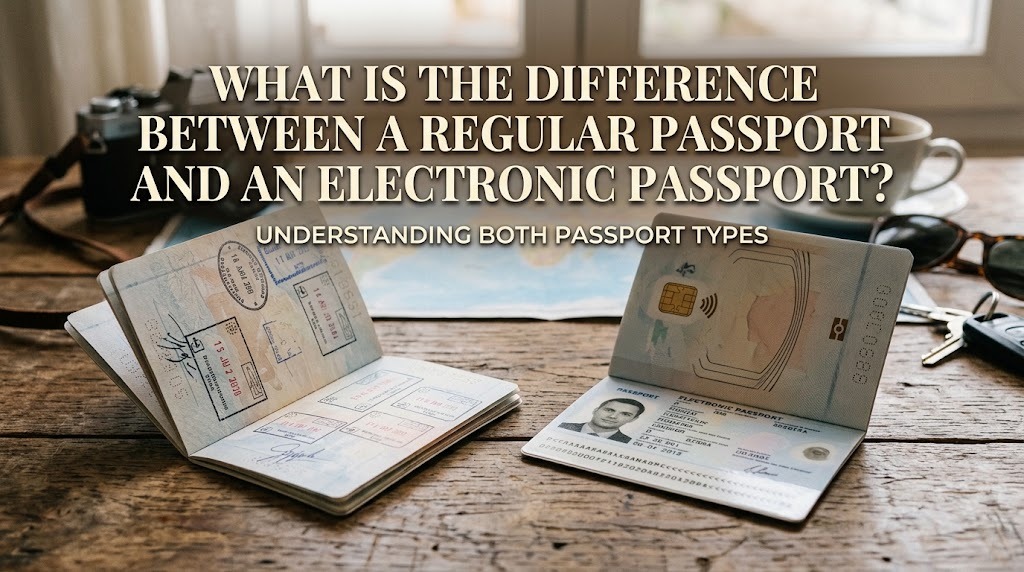
A passport is an essential travel document for anyone planning to travel internationally. Today, travelers may encounter different passport types, including the regular passport and the electronic passport, often called an ePassport. Both documents are used to establish a traveler’s identity and nationality when crossing international borders. However, an electronic passport contains additional technology that can make identity verification more efficient. Understanding the differences can help travelers choose the passport type that best suits their travel needs.
WHAT IS A REGULAR PASSPORT?
A regular passport is a government issued travel document that contains important information about its holder. It normally includes the traveler’s name, date of birth, nationality, photograph, passport number, and expiration date. This information is printed or stored on the passport’s identification page and is checked by immigration officers when the traveler enters or leaves a country. A regular passport can generally be used for international travel as long as it meets the destination country’s entry requirements. Travelers should always check the passport validity requirements of their destination before departure.
A regular passport does not necessarily contain an embedded electronic chip for storing identity information. As a result, some parts of the inspection process may depend more heavily on visual checks and document verification. However, a regular passport remains an official and valid travel document when issued by the appropriate government authority. Its acceptance depends on international agreements and the immigration rules of the destination country. Having a regular passport does not automatically prevent a traveler from entering another country, provided all applicable travel requirements are fulfilled.
WHAT IS AN ELECTRONIC PASSPORT?
An electronic passport, commonly known as an ePassport, is a passport that contains an embedded electronic chip. The chip stores specific personal and biometric information according to the passport system and applicable international standards. This technology allows border authorities with compatible systems to electronically verify information contained in the passport. The passport also has a machine readable zone that supports automated processing at border checkpoints. The electronic component is designed to help strengthen document authentication and reduce the risk of passport fraud.
The presence of a chip does not mean that an ePassport is completely different from a traditional passport in appearance or purpose. It still functions as an official passport and contains many of the same basic identity details. The main difference is the additional electronic security and verification capability provided by the chip. Travelers should handle an ePassport carefully because damage to the document or its electronic components may affect its usability. An ePassport should also be kept secure because it remains an important identity and travel document.
KEY DIFFERENCES BETWEEN REGULAR AND ELECTRONIC PASSPORTS
The biggest difference between the two passport types is the technology used to store and verify information. A regular passport primarily relies on printed information and security features, while an ePassport uses an electronic chip in addition to physical security features. Depending on the country and airport, ePassport holders may also be able to use automated border control gates or other electronic immigration services. However, access to these facilities depends on the destination, airport, traveler’s eligibility, and local immigration regulations. Therefore, an ePassport does not guarantee faster immigration processing in every country.
Another important difference is the level of electronic authentication available to border authorities. The chip in an ePassport can help authorities compare the information stored electronically with the information presented in the physical document. This can provide an additional layer of security during identity verification. Both passport types can be valid for international travel, but travelers must comply with visa rules, passport validity periods, blank-page requirements, and other entry conditions. The best choice therefore depends on the passport options offered by the traveler’s government and the requirements of the countries they plan to visit.
BENEFITS OF USING AN ELECTRONIC PASSPORT
One major benefit of an electronic passport is its additional security features. The electronic chip can support identity verification and make unauthorized alteration or duplication more difficult. In countries and airports that provide compatible automated systems, ePassport holders may also benefit from a more streamlined border inspection process. This can be particularly useful for people who travel internationally on a regular basis. However, travelers should remember that automated processing is not available at every border and may have specific eligibility requirements.
An ePassport can also provide greater convenience when traveling through modern immigration facilities. Electronic verification may reduce the need for some manual checks, although immigration officers can still conduct additional inspections when necessary. An ePassport does not replace visas or other required travel documents, so travelers must still research the rules of their destination. Its benefits are therefore most noticeable when the passport, airport systems, and immigration procedures are technologically compatible. Before traveling, it is wise to check whether the destination supports ePassport facilities and whether any additional conditions apply.
HOW TO CHOOSE THE RIGHT PASSPORT TYPE
Choosing between a regular passport and an ePassport depends primarily on the options provided by the traveler’s government. If both types are available, travelers should consider their travel frequency, destination requirements, convenience, security features, and application costs. People who travel internationally often may find the electronic features of an ePassport useful, particularly when visiting airports with automated border control systems. Travelers who rarely go abroad may find that a regular passport adequately meets their needs. The important point is to select a passport that is officially recognized and suitable for the intended travel.
Travelers should also compare the validity period, application process, fees, and eligibility requirements before applying. Passport rules vary from one country to another, so information from the relevant passport or immigration authority should always take priority over general travel advice. It is also important to ensure that the passport remains valid for the required period after the planned arrival or departure date. Checking visa and entry requirements in advance can help prevent unexpected problems at the airport. By understanding the differences between passport types, travelers can make a more informed decision and prepare for international travel with greater confidence.
CONCLUSION
The main difference between a regular passport and an electronic passport is the electronic chip used in an ePassport to support identity verification and additional security. A regular passport remains a legitimate international travel document and can be sufficient for many travelers. An ePassport offers extra technological features and may provide access to automated border control facilities where these systems are available. However, neither passport automatically guarantees entry into another country because travelers must still meet visa, validity, and immigration requirements. Checking official travel information before departure is the safest way to determine which passport is appropriate for your journey.
About the Author
Gusti Ayu Tita P
Author — STEKOM University
An active author focused on academic issues, educational technology, and human resource development in the campus environment.















