What Is the Difference Between Community Night Watch and Neighborhood Security?
Gusti Ayu Tita P
18 September 2026
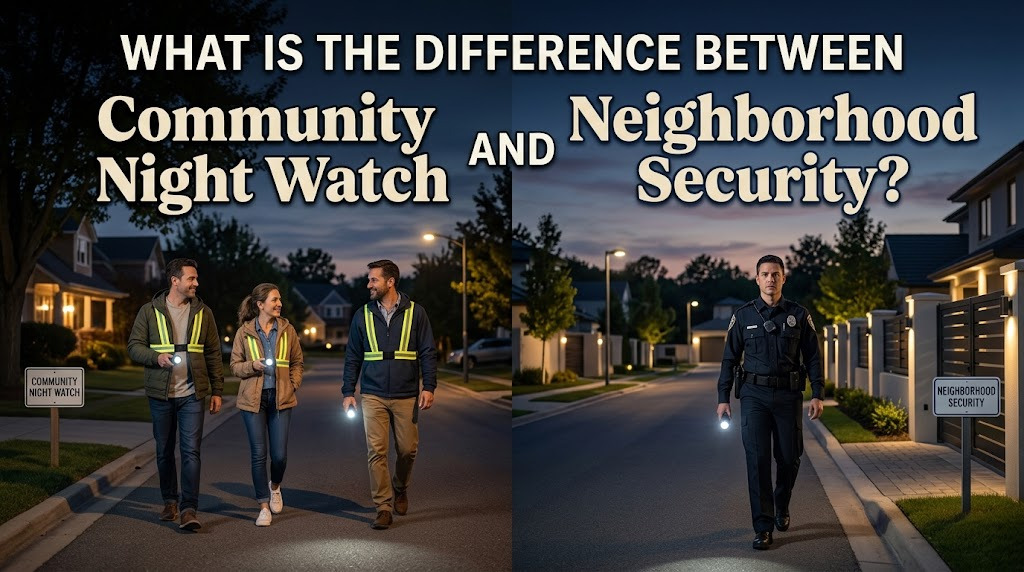
Community Night Watch and neighborhood security are related to maintaining a safe local environment, but they can have different roles and responsibilities. Community night watch generally relies on residents who participate voluntarily according to an agreed schedule. Neighborhood security may involve broader systems, facilities, procedures, or professional personnel. Understanding the difference can help residents know how each approach supports neighborhood safety.
UNDERSTANDING COMMUNITY NIGHT WATCH
Community Night Watch is a community-based activity where residents take turns observing their neighborhood during agreed hours. The main focus is usually awareness, communication, and cooperation between neighbors. Participants can monitor general conditions and report relevant concerns when necessary. The activity is typically organized through a shared night watch schedule.
Residents participating in community watch should prioritize safety and avoid direct confrontation. They are not expected to act as professional security officers or handle serious incidents independently. If a dangerous situation occurs, volunteers should move to a safe location and contact the appropriate authorities. This makes community watch primarily a form of community participation.
UNDERSTANDING NEIGHBORHOOD SECURITY
Neighborhood security can refer to a broader approach to protecting an area and its residents. Depending on the local system, it may include security personnel, access controls, lighting, cameras, alarms, or other safety measures. These elements can operate alongside community activities. The goal is generally to reduce risks and support a secure environment.
Unlike a resident-based watch activity, some forms of neighborhood security may involve trained or professionally assigned personnel. Their responsibilities depend on their organization, local regulations, and specific duties. Technology can also play an important role in monitoring and protecting certain areas. Community residents can support these systems by communicating relevant information appropriately.
COMPARING THEIR ROLES AND RESPONSIBILITIES
The main difference between Community Night Watch and neighborhood security is often the way responsibilities are organized. Community watch generally emphasizes voluntary participation and cooperation between residents. Neighborhood security can involve formal systems, equipment, or designated security personnel. Both approaches can contribute to overall community safety.
The two approaches do not have to operate separately. Residents can participate in a Neighborhood Watch program while also using available security facilities or coordinating with professional personnel. For example, residents may report concerns while security staff handle situations that require specialized assistance. Cooperation between different safety measures can create a more organized system.
THE IMPORTANCE OF COMMUNITY COOPERATION
Regardless of the system used, community cooperation remains important for maintaining neighborhood safety. Residents can help by following agreed procedures, communicating relevant information, and taking reasonable care of shared spaces. Good cooperation can also improve communication between residents and security personnel. This can make responses to local concerns more coordinated.
A clear division of responsibilities can prevent misunderstandings. Community watch participants should know what they are expected to do, while professional security personnel should handle matters within their assigned duties. Residents should not attempt to replace trained professionals during serious situations. Cooperation works best when each group understands its role and limitations.
CONCLUSION
Community Night Watch is primarily a resident-based activity focused on observation, communication, and shared participation. Neighborhood security can involve a broader combination of personnel, technology, facilities, and procedures. Both can support neighborhood safety, but their responsibilities and methods may differ. The exact arrangement depends on the needs and systems of each community.
These approaches can also complement each other when properly coordinated. Residents can contribute through responsible observation and communication, while professional personnel or appropriate authorities can address situations requiring specialized assistance. A clear night watch schedule and defined responsibilities can improve organization. With strong community cooperation, different safety efforts can work together to support a safer neighborhood.
About the Author
Gusti Ayu Tita P
Author — STEKOM University
An active author focused on academic issues, educational technology, and human resource development in the campus environment.