
What Is the Difference Between Legal and Illegal Online Loans According to OJK?
Gusti Ayu Tita P
24 Agustus 2026
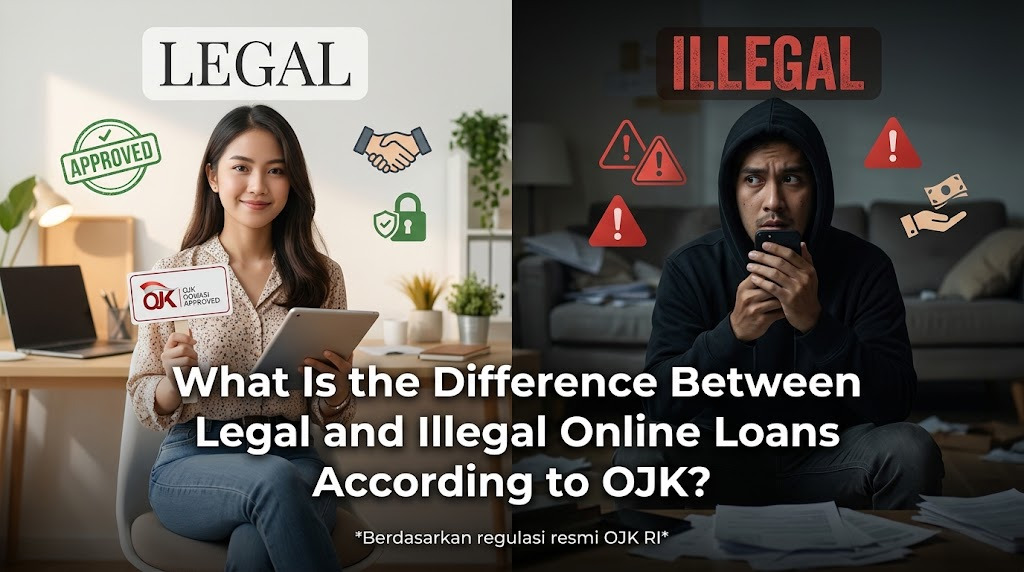
The development of digital technology has made online loans easier to access. People can submit applications through websites or mobile applications without visiting a physical office. However, the convenience of online lending is also accompanied by the growth of illegal lending services. Understanding the difference between legal and illegal online loans is important before borrowing money.
LEGAL STATUS AND OJK SUPERVISION
The most fundamental difference is the legal status of the provider. A legal online lending provider operates under the applicable regulatory framework and has the required status according to OJK regulations. Consumers can verify the provider's information through official OJK sources.
Illegal online lenders, on the other hand, operate without the required authorization or status. They may still present themselves as professional financial companies through websites, applications, or social media. An attractive appearance does not prove legality. Consumers should always verify the provider independently.
TRANSPARENCY OF INFORMATION
Legal online lending providers are expected to provide clear information about their products and services. Borrowers should be able to understand the applicable costs, repayment obligations, terms, and other important provisions. This information allows consumers to make more informed decisions.
Illegal lenders may provide incomplete or confusing information. Important costs can sometimes be revealed only after the borrower has started using the service. If the provider avoids explaining the total financial obligation, consumers should be cautious. Transparency is an important factor when evaluating a financial service.
LOAN COSTS AND REPAYMENT TERMS
Another important difference concerns the cost and repayment structure. Legal providers operate within applicable rules regarding their products and consumer treatment. Borrowers should still read the agreement carefully and understand all applicable charges.
Illegal lenders may use unclear, excessive, or changing charges. A borrower may receive repeated demands for additional payments without a clear explanation. Consumers should calculate the total amount they are required to repay before accepting any loan. Never accept financial obligations that you do not understand.
PERSONAL DATA PROTECTION
Legal financial service providers are subject to requirements concerning consumer protection and personal data handling under applicable regulations. Consumers should still take responsibility for protecting their passwords, PINs, and OTP codes. Sensitive security information should never be given to another person.
Illegal lenders may request excessive access to personal information or use inappropriate methods to obtain data. This can create risks beyond financial losses. Before installing an application, check the permissions it requests and understand why they are needed. Personal data should always be treated as confidential.
COLLECTION PRACTICES
The way a lender handles debt collection is another important distinction. Legal providers must operate according to applicable rules and consumer protection requirements. Borrowers who experience problems should use official communication channels to discuss their obligations.
Illegal lenders may use threats, intimidation, harassment, or other inappropriate collection methods. They may also contact people around the borrower to create pressure. If such behavior occurs, save evidence such as messages, phone numbers, and screenshots. The evidence can be useful when submitting a complaint or report.
LOAN APPLICATION PROCESS
Legal online lending services generally have identifiable procedures for application, verification, agreement, and disbursement. The borrower should be able to understand how the process works before accepting the loan. Clear procedures help consumers understand their responsibilities.
Illegal lenders may advertise loans with extremely easy requirements and guaranteed approval. They may promise that no verification is necessary or that money can be obtained immediately. While speed can be convenient, an easy application should not replace legal verification. Always check the provider before applying.
PAYMENT REQUESTS
Consumers should be cautious when a lender suddenly requests an upfront payment before releasing a loan. Fraudulent operators may describe the payment as a verification fee, security deposit, insurance payment, or administrative charge. Such requests should be independently verified before any money is transferred.
Check the official payment procedure through the provider's verified communication channel. Avoid transferring funds to personal accounts without clear and verifiable justification. Do not send money simply because someone pressures you to act quickly.
USE OF OJK NAME AND LOGO
Illegal lenders sometimes use the OJK name or logo to make their services appear legitimate. They may display fake certificates or claim that they are registered. Consumers should not accept these claims without checking official information.
Search for the provider through official OJK information and compare the exact legal identity. If the information does not match, stop the application process. An OJK logo on a website or application is not proof of legality.
COMPLAINT AND CONSUMER PROTECTION
Consumers using legal financial services generally have access to formal complaint mechanisms provided by the relevant company and applicable regulatory framework. If a problem occurs, borrowers can first contact the provider through its official complaint channel and use other available mechanisms when necessary.
With illegal lenders, consumers may not have the same protections because the provider is operating outside the applicable authorization framework. This makes verification before borrowing particularly important. If a suspected illegal lender is encountered, consumers can use official OJK channels to seek information or report the activity.
HOW TO DISTINGUISH LEGAL AND ILLEGAL ONLINE LOANS
Consumers can use several simple questions before applying for an online loan. First, can the provider's legal status be verified through official OJK information? Second, are the company identity, costs, repayment terms, and data practices clearly explained? Third, does the provider use professional and appropriate communication when dealing with consumers?
If the answers are unclear, postpone the application. Do not be influenced by promises of fast approval or large amounts of money. Verification should always come before borrowing. Taking a few minutes to check the provider can help prevent much greater problems later.
CONCLUSION
The main difference between legal and illegal online loans according to OJK lies in the provider's legal status, regulatory compliance, transparency, consumer protection, and how the lending service operates. Legal providers operate within the applicable regulatory framework, while illegal lenders operate without the required authorization and may expose consumers to greater risks.
Before using an online lending service, always verify the provider through official OJK information, understand the loan agreement, calculate the repayment obligation, and protect personal data. Be cautious of guaranteed approval, unclear fees, suspicious payment requests, and threatening collection. Choosing a verified provider is an important step toward safer and more responsible borrowing.
About the Author
Gusti Ayu Tita P
Author — STEKOM University
An active author focused on academic issues, educational technology, and human resource development in the campus environment.















