What Is the Difference Between Sharing a Story and Oversharing?
Gusti Ayu Tita P
18 September 2026
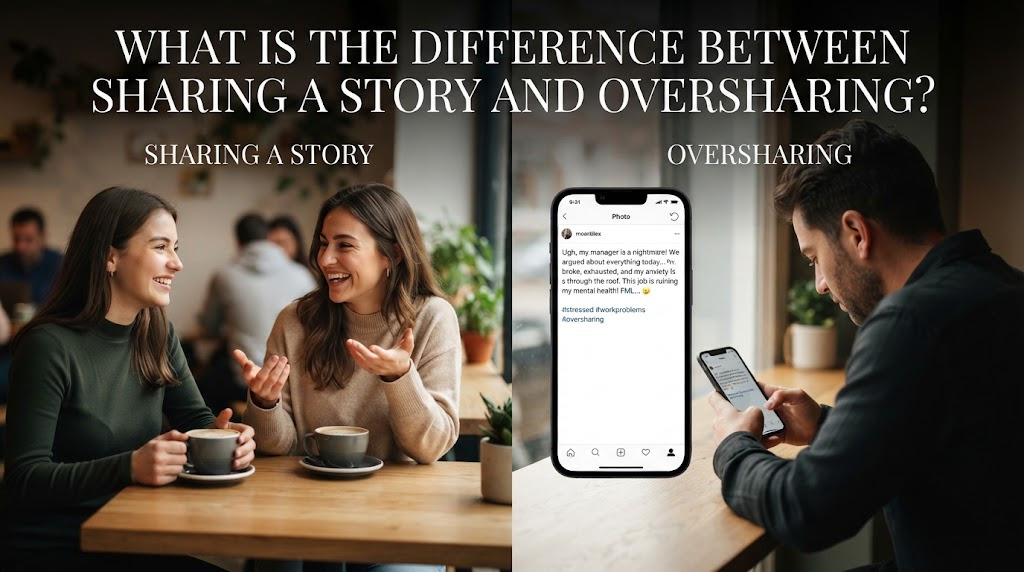
Sharing personal stories is a normal part of communication because it helps people express experiences, emotions, and ideas. However, there is an important difference between healthy storytelling and oversharing. Sharing a story usually considers the situation, audience, and amount of information being revealed. Oversharing happens when someone provides more personal or sensitive information than is appropriate or necessary.
WHAT DOES IT MEAN TO SHARE A PERSONAL STORY?
Sharing a personal story means telling others about an experience, feeling, event, or opinion that may be relevant to the conversation. Stories can help people build connections, communicate experiences, and understand each other. For example, someone may describe a memorable trip, a school experience, or an interesting lesson they learned. The information shared is usually appropriate for the audience and situation.
Healthy storytelling also involves considering other people's privacy. A person can tell a meaningful story without revealing sensitive details about themselves or someone else. Choosing relevant information can make communication more comfortable and respectful. Good storytelling includes awareness of personal boundaries.
WHAT IS OVERSHARING?
Oversharing happens when someone reveals too much personal, private, or sensitive information. The information may involve relationships, family problems, finances, health, conflicts, passwords, or other private matters. Oversharing can happen during face-to-face conversations, group chats, or social media interactions. The main issue is not simply the amount of information but whether the information is appropriate for the audience and situation.
People may overshare because they are excited, emotional, comfortable with someone, or looking for support and attention. Sometimes they may not realize that the information is too personal until after sharing it. Once private information has been revealed, it may be difficult to take it back. Developing awareness before sharing can help prevent unnecessary disclosure.
HOW CAN YOU TELL THE DIFFERENCE BETWEEN SHARING AND OVERSHARING?
The difference can often be identified by considering purpose, relevance, audience, and privacy. Sharing a story usually has a clear purpose and provides information that fits the conversation. Oversharing often includes unnecessary details that are too private or unrelated to the situation. Asking whether the information needs to be shared can help people recognize the difference.
Another useful question is whether the information could create discomfort or problems if other people knew about it. If the answer is yes, it may be better to leave out certain details. People should also consider whether the story includes another person's private information. Respecting personal boundaries is an important part of healthy communication.
WHY DOES THE AUDIENCE MATTER WHEN SHARING A STORY?
The same story can be appropriate in one situation but inappropriate in another. A private conversation with a trusted person may allow more personal discussion than a public social media post. Sharing sensitive details with a large or unknown audience can create greater privacy risks. Therefore, people should consider who will receive the information before sharing it.
Audience awareness is especially important online because social media content can spread quickly. A story intended for friends may become visible to other people through sharing, screenshots, or reposting. Before posting, users should check their audience settings and consider whether the information is suitable for that group. Choosing the right audience can help reduce accidental oversharing.
HOW CAN EMOTIONS LEAD TO OVERSHARING?
Strong emotions can influence how much personal information someone shares. During moments of sadness, anger, excitement, or stress, people may reveal details that they would normally keep private. This can lead to impulsive oversharing because the person focuses on expressing the emotion rather than considering the consequences.
Taking a pause can help people make better decisions about what to share. Writing thoughts privately first or waiting until emotions become calmer can provide time to reconsider the information. If support is needed, choosing a trusted person may be more appropriate than sharing sensitive details publicly. Emotional awareness can make communication safer and more thoughtful.
HOW CAN YOU SHARE STORIES WITHOUT OVERSHARING?
People can share meaningful stories without revealing every private detail. One approach is to focus on the main experience, lesson, or feeling instead of including sensitive information. Personal details that identify another person, reveal private situations, or expose confidential information can be removed. This allows the story to remain interesting while protecting privacy.
It is also helpful to review a story before sharing it, especially online. Ask whether the information is necessary, whether everyone mentioned has given permission, and whether you would be comfortable with the story being shared further. When uncertain, keeping some details private is usually a safer choice. Practicing thoughtful storytelling and digital awareness can create healthier communication habits.
CONCLUSION
The difference between sharing a story and oversharing depends on context, relevance, audience, and privacy. Sharing a story can strengthen relationships and help people communicate their experiences, while oversharing may reveal unnecessary or sensitive information. By considering who will receive the information, controlling emotional reactions, and removing unnecessary private details, people can communicate more responsibly. Healthy storytelling allows self-expression while still respecting personal boundaries and privacy.
About the Author
Gusti Ayu Tita P
Author — STEKOM University
An active author focused on academic issues, educational technology, and human resource development in the campus environment.