
What Is The Main Purpose Of A Study Tour For Students?
Gusti Ayu Tita P
15 September 2026
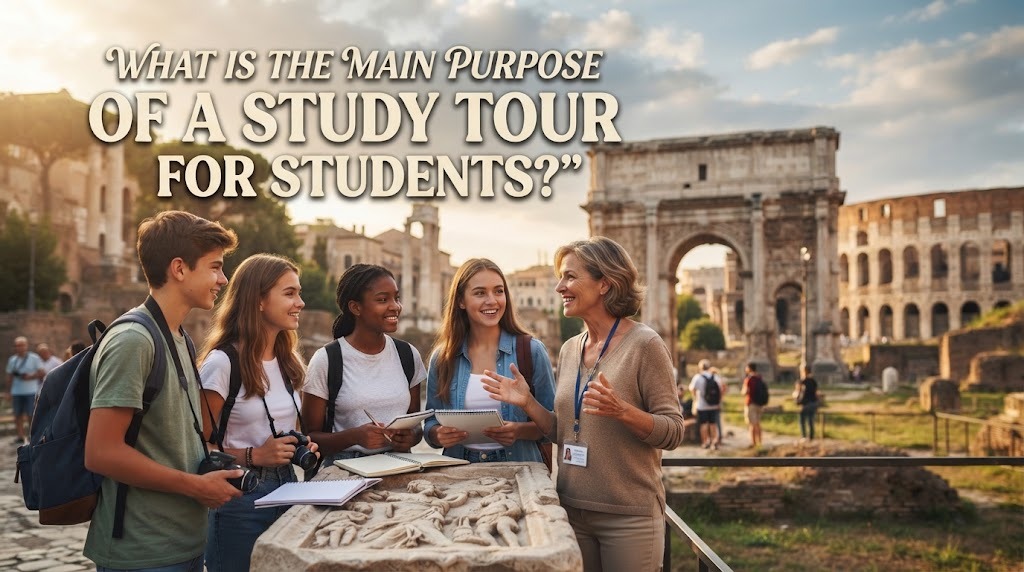
A study tour is an educational activity that allows students to learn outside the regular classroom. Students visit places that are connected to their subjects, such as museums, companies, cultural centers, historical sites, or educational institutions. The main purpose is to give students direct learning experiences that can support what they learn at school. Through this activity, learning can become more practical, interesting, and meaningful.
PROVIDING REAL WORLD LEARNING
One of the main purposes of a study tour is to help students connect classroom lessons with real life. Students can see objects, activities, and situations that are related to the topics they have studied. For example, a history lesson can become clearer when students visit a historical site. A business lesson can also be supported by visiting a company and observing how it operates. This direct experience can make information easier to understand and remember.
EXPANDING STUDENTS KNOWLEDGE
Study tours give students opportunities to gain new knowledge beyond textbooks and classroom materials. Each destination can introduce students to different information about history, culture, science, technology, business, or society. Students may discover facts and ideas that they have never encountered before. They can also ask questions and learn from guides, teachers, professionals, or local communities. This can help students develop a broader understanding of the world.
MAKING LEARNING MORE INTERESTING
Another purpose of a study tour is to create a more engaging learning environment. Studying in a different location can give students a break from the usual classroom routine. They can learn through observation, discussion, practice, and interaction instead of only listening to explanations. A more active learning process can make students feel more interested in the subject. It may also encourage them to participate more actively in future lessons.
DEVELOPING OBSERVATION SKILLS
During a study tour, students can be encouraged to observe their surroundings carefully. They may need to identify important objects, record information, or pay attention to how a particular process works. These activities teach students how to collect information directly from their environment. Observation skills are useful when students conduct assignments, projects, or research. They can also help students become more careful when analyzing information.
ENCOURAGING CURIOSITY AND QUESTIONS
New places often encourage students to develop curiosity and ask meaningful questions. They may see something unfamiliar and want to understand its history, purpose, or function. Teachers and guides can use these questions to create discussions during or after the visit. Students can also search for additional information when they return to school. This process can develop a stronger habit of learning independently.
DEVELOPING SOCIAL AND TEAMWORK SKILLS
Study tours are often organized as group activities, so they can support communication and teamwork. Students need to cooperate with classmates, follow group schedules, and complete activities together. They learn how to share responsibilities and respect different opinions. Group experiences can also help students become more confident when communicating with others. These skills are useful in school, future workplaces, and everyday life.
INTRODUCING CULTURAL DIVERSITY
Some study tours are designed to introduce students to different cultures, traditions, and lifestyles. Visiting cultural sites or communities allows students to learn about customs that may be different from their own. This can teach them to respect differences and understand the reasons behind various traditions. Cultural experiences can also help students become more open-minded. In the long term, this understanding can support positive interactions with people from different backgrounds.
BUILDING INDEPENDENCE AND RESPONSIBILITY
A study tour can also help students develop independence and responsibility. They need to take care of their belongings, follow rules, manage their time, and complete assigned tasks. Students learn that their actions can affect themselves and the people around them. These responsibilities can strengthen discipline and self-management. Such experiences can prepare students to handle responsibilities in other areas of life.
SUPPORTING FUTURE GOALS
Study tours can introduce students to different careers, industries, and educational opportunities. A visit to a company, university, workshop, or professional workplace can give students a clearer picture of possible future paths. They may discover fields that match their interests and abilities. Students can also learn about the skills needed for certain careers. This experience can encourage them to think more seriously about their future education and career plans.
CONCLUSION
The main purpose of a study tour is to provide students with meaningful learning experiences outside the classroom. It can expand knowledge, connect lessons with real life, develop observation and social skills, and encourage curiosity. Study tours can also introduce students to cultural diversity and possible future careers. When planned according to clear educational goals, a study tour can support academic learning while helping students grow personally and socially.
About the Author
Gusti Ayu Tita P
Author — STEKOM University
An active author focused on academic issues, educational technology, and human resource development in the campus environment.















