
What Is the Rh Factor and Why Is It Important to Know?
Gusti Ayu Tita P
14 September 2026
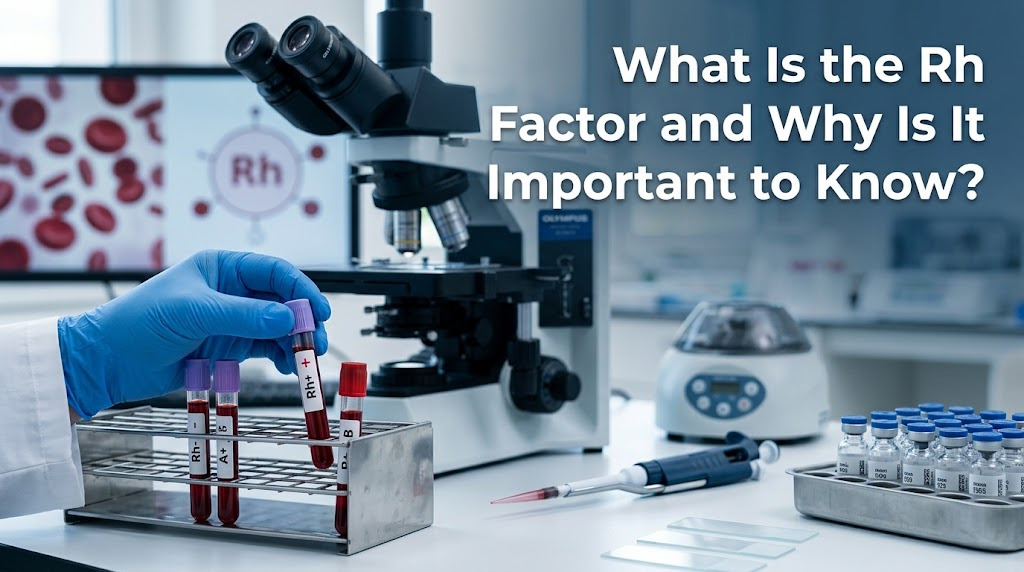
The Rh factor is an important part of a person's blood type. It refers to a group of proteins, or antigens, found on the surface of red blood cells, with the RhD antigen being the most important one in routine blood typing. If the RhD antigen is present, the person is usually classified as Rh-positive. If it is absent, the person is classified as Rh-negative.
The Rh factor is usually written together with the ABO blood group to describe a person's complete blood type. For example, someone can have A-positive, B-negative, AB-positive, or O-negative blood. Knowing Rh status is important because it can affect blood transfusion compatibility and pregnancy care. It also helps healthcare professionals assess the risk of developing antibodies against RhD.
WHAT DOES RH-POSITIVE AND RH-NEGATIVE MEAN?
A person is Rh-positive when their red blood cells carry the RhD antigen. Most people have this antigen, although the frequency varies among populations. A person is Rh-negative when their red blood cells do not carry RhD. Being Rh-negative is a normal inherited characteristic and is not a disease.
The terms positive and negative do not describe whether someone's blood is healthy or unhealthy. They simply identify whether the RhD antigen is present. A person can therefore be completely healthy with either Rh-positive or Rh-negative blood. The distinction becomes particularly important when blood is transferred between people or during certain pregnancies.
HOW DOES THE RH FACTOR AFFECT BLOOD TRANSFUSIONS?
The Rh factor is important during a blood transfusion because an Rh-negative person can become sensitized after exposure to Rh-positive red blood cells. If sensitization occurs, the person's immune system may produce anti-D antibodies. These antibodies can react with RhD-positive red blood cells during a later exposure.
For this reason, healthcare professionals generally try to give Rh-negative patients Rh-negative red blood cells when practical. Rh-positive patients can usually receive Rh-positive red blood cells and may also receive Rh-negative blood when appropriate. The actual decision depends on the patient's condition, blood availability, and other compatibility results. Blood typing and additional laboratory testing remain essential before transfusion.
WHY IS THE RH FACTOR IMPORTANT DURING PREGNANCY?
The Rh factor can become especially important when an Rh-negative mother carries an Rh-positive baby. During pregnancy or delivery, some fetal red blood cells may enter the mother's bloodstream. If the fetus is Rh-positive, the mother may become exposed to the RhD antigen and develop anti-D antibodies.
These antibodies can cross the placenta during a later pregnancy and attack Rh-positive fetal red blood cells. This condition is known as hemolytic disease of the fetus and newborn and can cause anemia or other complications. Modern prenatal care includes blood type and antibody screening to identify mothers who may be at risk.
HOW CAN RH SENSITIZATION BE PREVENTED?
Healthcare professionals can often reduce the risk of Rh sensitization by giving eligible Rh-negative pregnant patients Rh immune globulin, commonly known as anti-D immune globulin. It helps prevent the mother's immune system from becoming sensitized to RhD-positive red blood cells. The timing and use of treatment depend on medical circumstances and local clinical guidelines.
Rh immune globulin may be recommended during pregnancy and after events that could cause fetal blood to enter the mother's circulation. This can include delivery, certain pregnancy complications, or some procedures. Proper prenatal screening helps doctors determine who needs preventive treatment. With appropriate care, many Rh-related pregnancy complications can be successfully prevented.
IS THE RH FACTOR INHERITED FROM PARENTS?
Yes, the Rh factor is determined mainly by genetics and is inherited from parents. Genetic differences influence whether a person has the RhD antigen on their red blood cells. Because children inherit genetic information from both parents, their Rh status depends on the particular combination of inherited variants.
This means parents and children do not always have the same Rh status. A child may be Rh-positive even when one parent is Rh-negative, depending on the genetic contribution of the other parent. The exact inheritance pattern can be more complex than a simple positive-or-negative rule. Laboratory blood typing is therefore the most reliable way to determine an individual's Rh status.
CAN A PERSON'S RH FACTOR CHANGE?
For most people, the Rh factor remains stable throughout life because it is an inherited characteristic. Diet, exercise, stress, and ordinary lifestyle changes do not normally change a person's Rh status. A person who is Rh-positive does not become Rh-negative because of changes in health or daily habits.
Rare medical situations can make blood typing more complicated. Certain stem cell or bone marrow transplants can replace a person's blood-forming system with that of a donor, potentially resulting in a different blood group being detected. Some medical conditions can also make laboratory testing more difficult. These situations are uncommon and should be evaluated by medical professionals.
WHY SHOULD YOU KNOW YOUR RH STATUS?
Knowing your Rh status can be useful for medical records, blood donation, transfusion planning, and pregnancy care. It helps healthcare professionals understand an important part of your blood compatibility profile. This is particularly relevant for people who are Rh-negative because exposure to Rh-positive blood can sometimes lead to antibody formation.
However, knowing your Rh status does not mean you can independently decide which blood is safe to receive. Hospitals use ABO and Rh typing, antibody screening, and crossmatching when necessary. These procedures provide more complete information about compatibility. Accurate professional testing is always more important than relying on memory or an old record.
CONCLUSION
The Rh factor is a blood group characteristic based mainly on whether the RhD antigen is present on red blood cells. People with the antigen are Rh-positive, while those without it are Rh-negative. Rh status is important because it can influence blood transfusion compatibility and can play a major role in certain pregnancy situations.
Knowing your Rh status can help provide useful medical information, especially for pregnancy care and blood transfusion planning. Rh-negative individuals may develop anti-D antibodies after exposure to Rh-positive blood, but preventive treatment can greatly reduce the risk of serious pregnancy complications. As with all blood group information, professional testing and medical guidance are essential.
About the Author
Gusti Ayu Tita P
Author — STEKOM University
An active author focused on academic issues, educational technology, and human resource development in the campus environment.















