What Is the Role of Hobby Communities in Improving Creativity?
Gusti Ayu Tita P
28 September 2026
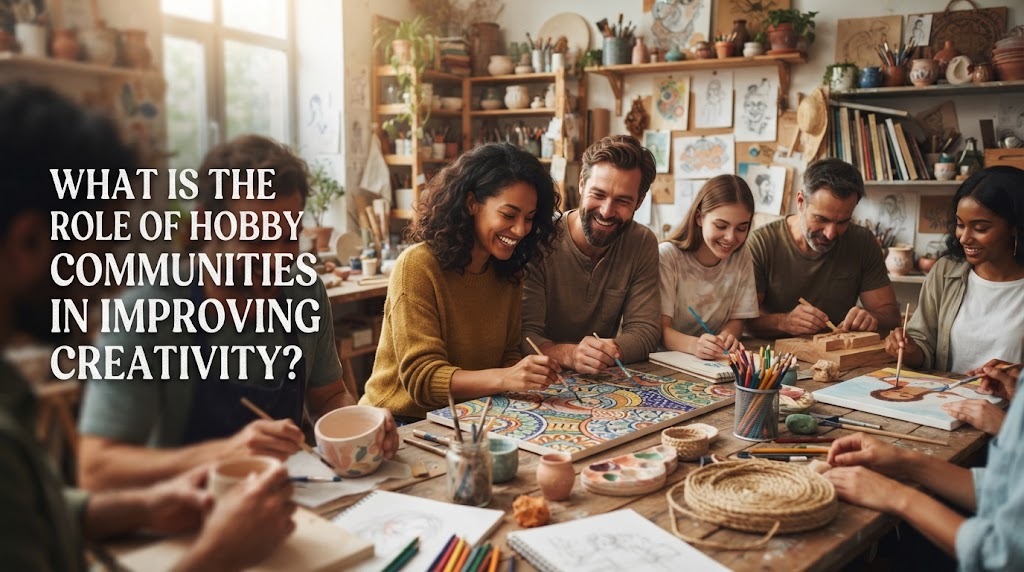
Hobby communities are groups of people who share similar interests and activities, such as photography, writing, music, painting, cooking, gaming, or crafts. These communities can provide more than friendship because they also create opportunities to exchange ideas and explore new ways of thinking. Regular interaction with people who have different experiences can encourage members to see familiar activities from new perspectives. As a result, hobby communities can play an important role in improving creativity. They provide a supportive environment where people can experiment, practice, and develop original ideas.
ENCOURAGING THE EXCHANGE OF IDEAS
One important role of hobby communities is creating a space where members can exchange ideas. Each person may have a different way of approaching the same hobby, which can introduce others to new perspectives. For example, members of a photography community may use different techniques for lighting, composition, or editing. Seeing these different approaches can encourage individuals to experiment with methods they have never tried before. The continuous exchange of ideas can make the learning process more interesting and creative.
Discussions can also help members develop ideas that they might not create when working alone. A simple conversation about a project can lead to new concepts or improvements. Members can ask questions, share suggestions, and provide feedback based on their experiences. This interaction allows creative ideas to grow through collaboration. Over time, members may become more comfortable expressing their thoughts and trying unusual approaches.
PROVIDING A SUPPORTIVE CREATIVE ENVIRONMENT
Creativity often develops more easily when people feel comfortable expressing their ideas. Hobby communities can create a supportive environment where members can share unfinished projects and receive constructive feedback. Knowing that other members have similar interests can reduce the fear of making mistakes. This can encourage people to experiment instead of always choosing familiar methods. A positive environment can therefore help members become more confident in their creative abilities.
Support from other members can also motivate individuals to continue developing their ideas. When someone receives useful suggestions or encouragement, they may feel more motivated to complete a difficult project. Community members can also celebrate progress, even when the final result is not perfect. This creates an atmosphere where learning and experimentation are valued. Such an environment can help creativity develop gradually through regular practice.
INSPIRING EXPERIMENTATION AND NEW APPROACHES
Hobby communities expose members to different techniques, styles, tools, and creative processes. This exposure can encourage individuals to experiment with new approaches. A writer, for example, may discover a different storytelling technique after reading the work of another community member. Similarly, a craft enthusiast may learn a new design method by watching another person's process. Trying unfamiliar approaches can expand creative thinking.
Experimentation also helps people understand that there may be multiple ways to solve a creative problem. Not every experiment will produce the desired result, but unsuccessful attempts can provide useful lessons. Members can discuss what worked and what did not work with other people who understand the activity. This makes mistakes part of the learning process rather than something that should always be avoided. Over time, repeated experimentation can lead to more flexible and original thinking.
DEVELOPING CREATIVE PROBLEM SOLVING
Creativity is closely connected to the ability to solve problems in different ways. Hobby communities often give members challenges that require them to find practical and creative solutions. For example, a cooking community may discuss how to replace an unavailable ingredient, while a gaming community may explore different strategies for completing a difficult challenge. These situations require members to consider several possibilities before choosing a solution.
Working with other people can make creative problem solving even more effective. Members can combine different perspectives and identify solutions that one person might not consider alone. Group discussions can also help people question their usual assumptions and look at problems from another angle. This process strengthens flexible thinking and encourages members to become more open to alternative solutions.
INCREASING CONFIDENCE TO EXPRESS CREATIVE IDEAS
Confidence can influence how willing people are to express and develop creative ideas. Some individuals may have interesting ideas but hesitate to share them because they are worried about criticism. A hobby community can provide a place where members gradually become more comfortable presenting their work. Positive feedback and respectful suggestions can make the process of sharing ideas less intimidating. As confidence increases, members may become more willing to take creative risks.
Confidence can also grow through small achievements. Completing a project, learning a new technique, or receiving useful feedback can demonstrate personal progress. These experiences can encourage members to attempt more challenging creative activities. Over time, repeated participation can help individuals trust their own ideas while remaining open to improvement.
LEARNING THROUGH COLLABORATIVE PROJECTS
Collaborative projects are another way hobby communities can improve creativity. When several people work together, they bring different skills and perspectives to the same project. A community might organize a photography exhibition, create a group video, produce a music project, or hold a creative workshop. Each member can contribute ideas while learning from the approaches of others. This combination can result in creative outcomes that may be difficult to achieve individually.
Collaboration also teaches members how to balance personal ideas with group objectives. They need to listen, negotiate, adapt, and sometimes modify their original concepts. These experiences can improve creative flexibility because members learn that an idea can change as a project develops. Working with others can therefore strengthen both individual creativity and collaborative creativity.
EXPANDING CREATIVE KNOWLEDGE
Hobby communities can introduce members to information and techniques that they may not encounter independently. Experienced members can share tutorials, resources, references, tools, and examples of their work. Beginners can use these resources to understand the basics, while more advanced members can explore new techniques. This continuous access to knowledge gives people more materials to use when developing creative ideas.
A wider knowledge base can also make it easier to connect different concepts. Someone who learns several techniques may combine them to create a new style or approach. For example, a person interested in digital art may combine illustration, photography, and graphic design techniques. Creativity often becomes stronger when people have more knowledge and experiences to connect. Hobby communities can support this process by exposing members to diverse creative practices.
CONCLUSION
Hobby communities play an important role in improving creativity by encouraging idea exchange, experimentation, collaboration, and continuous learning. They provide supportive environments where members can share their work, receive feedback, and become more confident in expressing original ideas. Community activities can also strengthen creative problem solving by exposing people to different perspectives and approaches. With active participation, a hobby community can become a valuable space for developing creativity and discovering new possibilities.
About the Author
Gusti Ayu Tita P
Author — STEKOM University
An active author focused on academic issues, educational technology, and human resource development in the campus environment.