What Is the Role of Ministers in a Government Cabinet?
Gusti Ayu Tita P
12 Agustus 2026
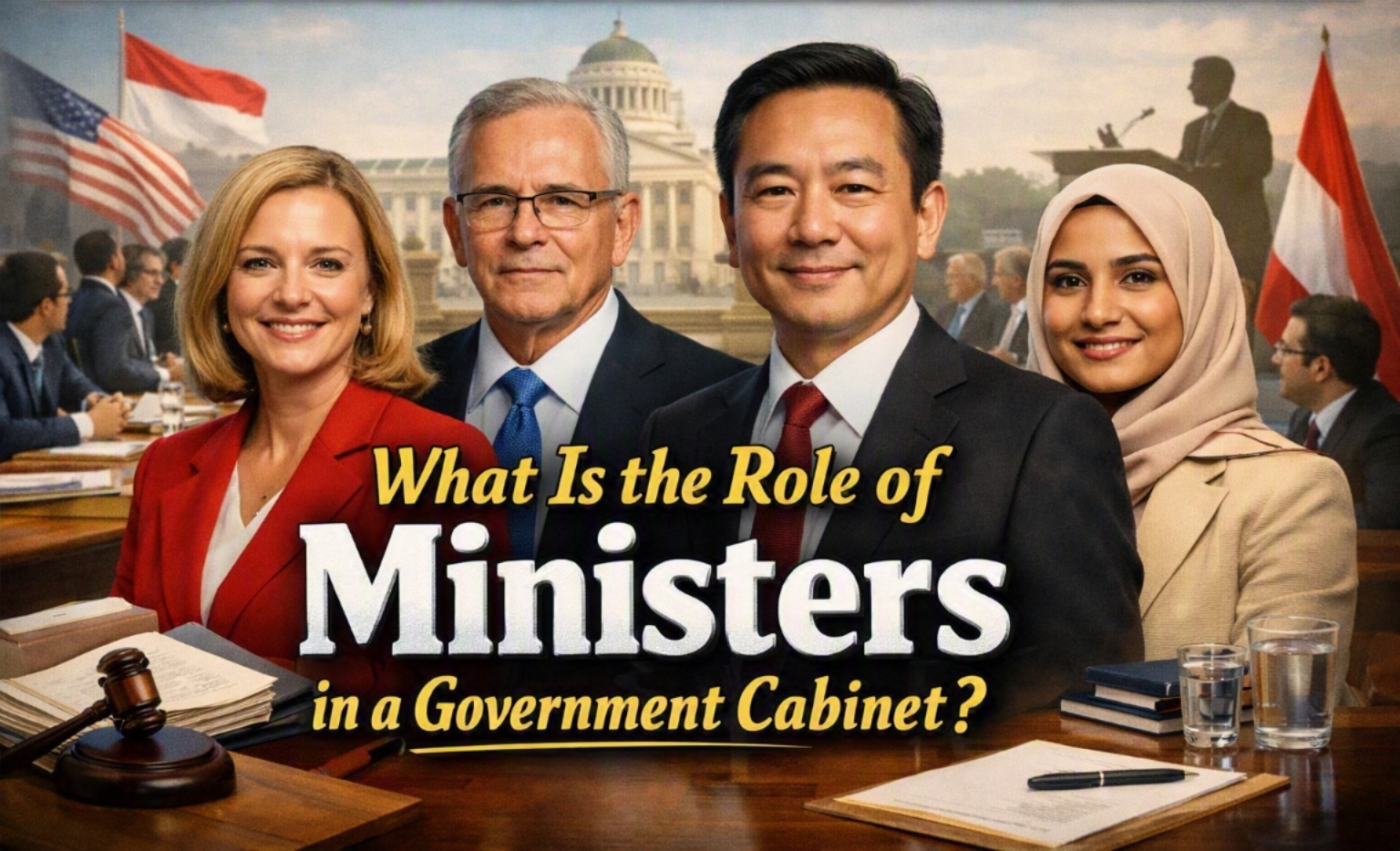
A government cabinet is a group of senior government officials who help the head of government manage national affairs and implement public policies. In many countries, ministers lead specific government departments or ministries, such as education, finance, health, transportation, or foreign affairs. Their responsibilities can differ depending on a country's political system, constitution, and government structure. However, ministers generally have an important role in turning government priorities into practical programs and services. Understanding their duties helps people see how government decisions are developed and implemented.
WHAT IS A GOVERNMENT CABINET?
A government cabinet is generally made up of ministers who are responsible for major areas of public administration. The cabinet usually works under the leadership of a president or prime minister, depending on the country's system of government. Ministers bring knowledge and experience from their respective areas when discussing national policies and government priorities. Cabinet meetings allow ministers to coordinate policies and consider how decisions in one sector may affect other sectors. This coordination is important because national problems often involve several areas of government at the same time.
The structure and authority of a cabinet are not identical in every country. In a presidential system, ministers or secretaries commonly serve as senior executive officials under the president, while in a parliamentary system, ministers are often closely connected to the legislature and may be accountable to parliament. Some countries also have different arrangements based on their constitutional traditions. Despite these differences, cabinets generally exist to support effective executive government and coordinated decision making.
WHAT IS THE MAIN ROLE OF A MINISTER?
The main role of a minister is to lead and oversee a particular area of government policy and administration. A finance minister, for example, may be responsible for public finances, while an education minister may oversee policies related to schools and education. Ministers provide political direction while working with public officials and government agencies to put approved policies into practice. They also need to monitor whether programs under their responsibility are achieving their intended goals. This makes ministers important links between broad government objectives and practical public services.
Ministers must also understand the needs and challenges within their sectors. They may review reports, consult experts, meet stakeholders, and consider evidence before recommending or implementing policies. In many governments, ministers must balance public needs, available resources, legal requirements, and political priorities. Their decisions can therefore influence the quality and direction of government services. Effective ministers need leadership, communication, coordination, and decision making skills.
HOW DO MINISTERS HELP MAKE GOVERNMENT POLICY?
Ministers contribute to policy development by identifying problems, discussing possible solutions, and recommending actions within their areas of responsibility. They may work with civil servants, researchers, experts, local authorities, and other stakeholders to understand an issue before proposing a policy. Cabinet discussions then provide an opportunity to examine major proposals from a broader national perspective. Ministers must consider how proposed policies may affect different groups and sectors. This process helps the government make decisions that are more coordinated and practical.
Cabinet decision making also requires ministers to work together rather than focus only on their individual ministries. A policy involving economic development, for instance, may also affect education, infrastructure, employment, and environmental management. Cabinet coordination helps reduce conflicting policies and encourages different ministries to work toward shared national objectives. Once major decisions are approved, the responsible ministries normally take steps to implement them according to applicable laws and government procedures. Ministers remain important in monitoring progress and addressing problems that arise during implementation.
HOW DO MINISTERS MANAGE GOVERNMENT DEPARTMENTS?
Ministers provide political leadership for their ministries, while professional civil servants and other government officials generally handle much of the day to day administration. They may set priorities, approve strategic directions, review performance, and communicate government objectives to their departments. Ministers also have to ensure that their ministries operate within the law and follow relevant government policies. Good management requires them to understand both policy goals and the practical capacity of their organizations. Cooperation between ministers and public officials is therefore essential for effective administration.
Managing a ministry can involve overseeing large budgets, public programs, agencies, and thousands of employees. Ministers may also need to respond quickly when their sectors face major challenges or unexpected events. Accountability and transparency are important because government resources are generally intended to serve the public interest. Depending on the country's system, ministers may have to explain their decisions to the president, prime minister, parliament, courts, oversight institutions, or the public. These responsibilities help ensure that government power is exercised responsibly.
WHY IS COORDINATION BETWEEN MINISTERS IMPORTANT?
Government ministries often have responsibilities that are closely connected. For example, improving public transportation can involve transportation policy, infrastructure investment, environmental considerations, public finance, and regional development. If each ministry works without coordination, policies may overlap, conflict, or use resources inefficiently. Ministers therefore need to communicate and cooperate when their responsibilities intersect. Cross ministry coordination helps the government pursue consistent and comprehensive solutions.
Cabinet discussions provide a formal setting for ministers to exchange information and consider national priorities together. Ministers can raise concerns, propose adjustments, and evaluate the wider consequences of government decisions. This process can improve the consistency of national policy and reduce unnecessary duplication between government institutions. Coordination is especially important for complex issues that cannot be solved by a single ministry. Ultimately, effective cooperation can contribute to better government performance and public services.
HOW ARE MINISTERS ACCOUNTABLE TO THE PUBLIC?
Ministers are generally expected to exercise their authority according to the constitution, laws, and established government procedures. Their decisions may be subject to oversight through parliament, auditing institutions, courts, administrative mechanisms, or other authorized bodies, depending on the country. Public accountability also means that ministers may need to explain government policies and respond to questions about their performance. Transparency allows citizens to better understand how public decisions are made and how government resources are used. These mechanisms are important for maintaining public confidence in government.
Accountability can take different forms because political systems vary. In parliamentary governments, ministers may face questioning in parliament and can have direct political responsibility to the legislature. In presidential systems, ministers generally serve under the executive authority of the president and may be subject to different oversight arrangements. Ministers may also communicate with the public through official statements, reports, consultations, and public appearances. Strong accountability helps encourage responsible leadership and keeps government action focused on the public interest.
WHAT SKILLS SHOULD AN EFFECTIVE MINISTER HAVE?
An effective minister needs strong leadership and communication skills because the position involves directing policy while working with many different groups. Ministers must be able to explain complicated issues in language that citizens can understand. They also need to listen to experts, government officials, stakeholders, and members of the public before making important decisions. Strategic thinking is valuable because government policies can produce effects over many years. A good minister should therefore consider both immediate challenges and long term national goals.
Ministers also benefit from integrity, accountability, negotiation, and problem solving skills. Government decisions often involve competing interests, limited resources, and difficult trade offs. Ministers must be able to evaluate evidence and make decisions while respecting legal and institutional boundaries. They also need to cooperate with other ministers when national priorities cross departmental responsibilities. These qualities can help ministers perform their roles more effectively and contribute to a well coordinated government.
WHY DO MINISTERS MATTER IN A GOVERNMENT CABINET?
Ministers are important because they connect government leadership, public policy, and administration. They help transform political priorities into policies and programs that can affect people's everyday lives. Through cabinet discussions, ministers also contribute different perspectives to major national decisions. Their work can influence areas such as economic management, education, healthcare, infrastructure, security, and social development. The effectiveness of these responsibilities can have a direct impact on government performance.
A cabinet can function effectively when ministers understand their responsibilities and cooperate across government institutions. Strong ministers do not simply manage individual departments but also consider how their decisions contribute to broader national objectives. Their work requires responsible leadership, coordination, and accountability. Although the exact powers of ministers differ from one country to another, their central purpose is generally to help the government develop and implement effective public policies. For this reason, ministers remain a key part of modern executive government.
CONCLUSION
Ministers play a central role in a government cabinet by leading ministries, developing policies, coordinating government action, and overseeing public administration. They work with other ministers and government officials to address national priorities and provide public services. Their responsibilities also include managing resources, explaining policies, and meeting standards of accountability. The exact authority of a minister depends on the country's constitution and political system. Nevertheless, effective ministers are essential for turning government goals into coordinated and responsible action.
Understanding the role of ministers also helps citizens understand how government decisions move from policy discussions to implementation. Ministers must balance national priorities with legal requirements, public needs, available resources, and the practical realities of administration. When ministers cooperate effectively and remain accountable, they can help improve the quality and consistency of government performance. Their role is therefore not limited to leading a ministry but also includes contributing to the wider direction of the country. A well coordinated cabinet can support more effective governance and better outcomes for society.
About the Author
Gusti Ayu Tita P
Author — STEKOM University
An active author focused on academic issues, educational technology, and human resource development in the campus environment.