
What Is Village BLT and Who Is Eligible to Receive It?
Gusti Ayu Tita P
9 September 2026
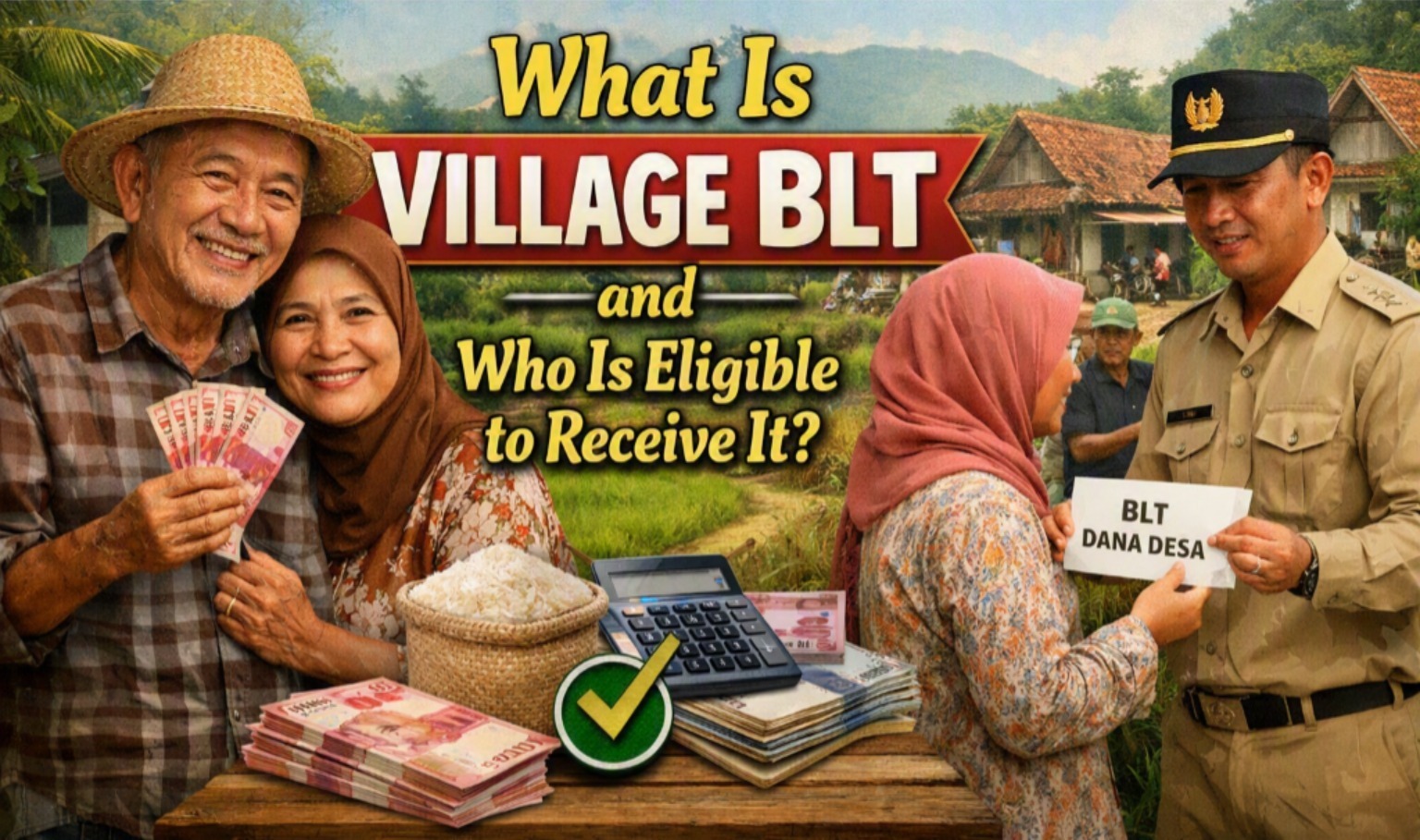
Village BLT or Bantuan Langsung Tunai Desa is a cash assistance program funded through Indonesia’s Village Fund to help vulnerable families and support efforts to address extreme poverty. In simple terms, the program provides direct financial support to families who meet the applicable requirements and are selected through a village-level process. For 2026, the use of Village Funds for Village BLT is prioritized as part of the government’s strategy to tackle extreme poverty. The current guidance is set out in Minister of Villages and Development of Disadvantaged Regions Regulation Number 16 of 2025, which provides operational guidance for the use of Village Funds in 2026. (JDIH Kemendesa)
The program is not intended to be distributed automatically to every low-income resident. Eligibility, available government data, village deliberations, and an official decision by the village head all play important roles in determining recipients. Understanding these requirements can help residents know whether their household may qualify and how the selection process works.
WHAT IS VILLAGE BLT?
Village BLT is a form of direct cash assistance provided using Village Fund resources. Its main purpose is to support families experiencing poverty and extreme poverty, particularly those who are vulnerable to economic difficulties. The program is part of the broader focus of Village Fund utilization for 2026, with extreme poverty reduction listed as one of its priorities. (JDIH Kemendesa)
For 2026, the assistance is set at a maximum of Rp300,000 per family per month. The payment may be made for up to three months at once, depending on the implementation arrangements. This means the amount and payment schedule should not be assumed to be identical in every village because implementation must follow the applicable rules and local decisions. (Scribd)
WHO IS ELIGIBLE FOR VILLAGE BLT?
The main priority is poor families who live in the relevant village, using government-designated data as a reference. Under the 2026 guidance, government data can prioritize families in desil 1, which represents the lowest welfare group in the targeting data for extreme poverty elimination. If the village does not have families listed in desil 1, families in desil 2 to desil 4 may be considered according to the applicable provisions. (Scribd)
If the village does not have the relevant government data, the village head may identify potential beneficiaries using specific vulnerability criteria. These include families that have lost their source of livelihood, families with members who have chronic or long-term illnesses or disabilities, and households with a single elderly member. Another criterion covers women who are heads of poor households. The regulation also includes consideration of households that do not receive assistance from the Family Hope Program or PKH, under the specified circumstances. (Scribd)
HOW ARE VILLAGE BLT RECIPIENTS SELECTED?
The selection process is designed to involve the village community rather than relying solely on an individual decision. The proposed list of Keluarga Penerima Manfaat or KPM is discussed and agreed upon through a Village Deliberation. This process provides an opportunity to review whether the proposed households meet the applicable criteria and local conditions. The final list is then established through an official decision of the village head. (Scribd)
This mechanism is important because poverty conditions can change over time. A household that previously needed assistance may no longer have the same level of vulnerability, while another household may experience a sudden loss of income or livelihood. Therefore, government data and local verification can work together to improve targeting. Residents who believe their household meets the criteria should follow information and verification procedures provided by their village government.
HOW MUCH VILLAGE BLT CAN RECIPIENTS RECEIVE?
For the 2026 fiscal year, Village BLT can be provided at a maximum of Rp300,000 per KPM per month. The assistance can be paid for a maximum period of three months at one time, according to the applicable implementation arrangements. Therefore, residents should not assume that every recipient will receive a fixed annual amount or that payments will always arrive on the same date. (Scribd)
The actual payment process is handled according to the village's approved program and applicable administrative procedures. Payments may be made through cash or non-cash methods, depending on the mechanism used. Because Village BLT is funded from public resources, its distribution must be properly documented and accountable. The village government is also expected to ensure that the program follows the relevant planning and reporting requirements.
WHAT SHOULD RESIDENTS DO IF THEY BELIEVE THEY ARE ELIGIBLE?
Residents who believe they meet the requirements should first contact or monitor information from their village government. They can ask about the beneficiary verification process, required administrative information, and the schedule for village deliberations. It is important to provide accurate household information because beneficiary targeting depends on reliable data. Residents should also avoid assuming that poverty status automatically guarantees Village BLT eligibility.
The final decision remains part of the village-level determination process under the applicable regulations. If a household is proposed as a beneficiary, its eligibility may be reviewed through village deliberation before the final decision is issued. Residents should therefore pay attention to official announcements and use legitimate government channels when seeking information. This approach helps reduce misunderstandings and supports a transparent and targeted Village BLT distribution.
WHY IS VILLAGE BLT IMPORTANT FOR POOR FAMILIES?
Village BLT can provide immediate financial support to households facing serious economic pressure. Even a relatively modest cash payment can help families meet essential daily needs when income is unstable. The program also serves as part of the broader effort to address extreme poverty at the village level. By targeting households based on data and vulnerability, the assistance can be directed toward people who need it most. (JDIH Kemendesa)
However, Village BLT should be understood as social protection support, not as a permanent replacement for household income. Long-term poverty reduction also requires access to employment, healthcare, education, food security, and opportunities to improve household income. For this reason, the 2026 Village Fund priorities extend beyond BLT to areas such as health services, food security, village economic institutions, infrastructure, and digital development. (Scribd)
CONCLUSION
Village BLT is a direct cash assistance program financed through the Village Fund and prioritized in 2026 to support extreme poverty reduction. The main beneficiaries are poor families living in the relevant village, with government welfare data serving as an important reference. Where the required data is unavailable, specific vulnerability conditions may also be considered. The beneficiary list must go through Village Deliberation and be formally established by the village head. (Scribd)
For 2026, the assistance is provided at a maximum of Rp300,000 per family per month and may be paid for up to three months at once. Residents should rely on official information from their village government rather than assuming that every low-income household will automatically receive the benefit. Understanding the rules and selection process can help communities make better use of this social protection program.
About the Author
Gusti Ayu Tita P
Author — STEKOM University
An active author focused on academic issues, educational technology, and human resource development in the campus environment.















