
What Items Are Not Allowed on Airplanes from the Airport?
Gusti Ayu Tita P
10 Agustus 2026
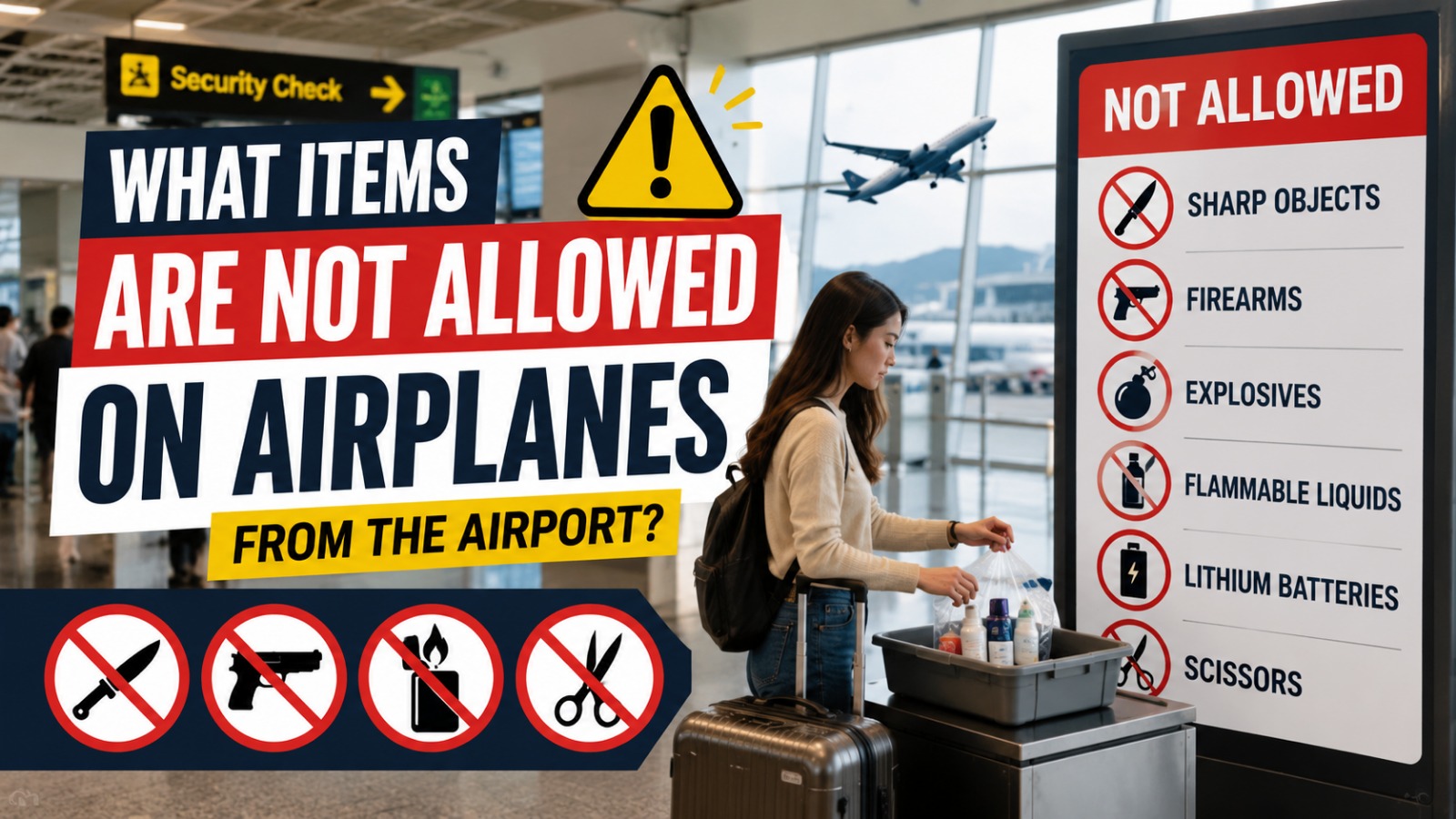
Knowing what items are not allowed on airplanes is important before traveling from the airport. Some objects are restricted because they can create safety risks during the flight or at the airport. Rules can vary depending on the country, airport, airline, and whether the item is carried in cabin baggage or checked baggage. Understanding these restrictions in advance can help passengers avoid delays, confiscation, or problems during security screening.
SHARP OBJECTS
Sharp objects are generally restricted in carry-on baggage because they can potentially injure passengers or crew members. Items such as knives, large scissors, razor blades, and certain tools may not be allowed inside the aircraft cabin. Small personal grooming items can have different rules depending on the airport and country. Passengers should always check the specific regulations before packing sharp objects.
Some sharp objects may be permitted in checked baggage when properly packed. However, placing a restricted item in checked baggage does not automatically make every type of object acceptable. Items designed as weapons can remain prohibited regardless of where they are packed. Checking the airline and airport rules before departure is therefore essential.
FLAMMABLE ITEMS
Flammable substances can create serious fire risks during air travel and are heavily regulated. Examples include gasoline, lighter fuel, certain paints, fuels, and other highly flammable liquids. Many of these materials are prohibited in both carry-on and checked baggage. Passengers should never pack an unknown chemical simply because it is stored in a small container.
Some everyday products may have specific exceptions under aviation regulations. For example, certain toiletry or medical products can be permitted in limited quantities when they meet applicable requirements. Because regulations differ by item and jurisdiction, passengers should verify the exact product before traveling. Never assume that a household product is automatically safe to bring on an airplane.
EXPLOSIVES AND FIREWORKS
Explosives are among the most strictly prohibited items on commercial aircraft. Fireworks, flares, detonators, and similar explosive materials are generally not permitted in passenger baggage. These items can create fire, blast, or pressure risks that are especially dangerous inside an aircraft. They should never be placed in either cabin baggage or checked luggage.
Passengers should also avoid packing items that contain explosive or highly reactive components without checking the rules. Security officers may inspect baggage when they detect suspicious materials. Attempting to conceal prohibited items can result in serious consequences. When in doubt, contact the airline or relevant airport authority before traveling.
WEAPONS AND SELF DEFENSE ITEMS
Weapons and certain self defense devices are subject to strict aviation restrictions. Firearms, ammunition, and other weapons cannot be carried casually in cabin baggage. Rules for legally transporting firearms may exist in some countries, but they normally require specific procedures, packaging, declarations, and approval. Passengers should never bring a weapon to the security checkpoint without first checking the applicable requirements.
Some self defense products can also be restricted or prohibited. Examples may include certain stun devices, chemical sprays, and other objects designed to incapacitate or injure people. The rules can differ between countries, so international travelers need to check the regulations at every relevant point of their journey. If an item has a defensive or weapon-like purpose, verify its status before packing it.
LIQUIDS AND GELS
Liquids, aerosols, and gels are commonly subject to restrictions in carry-on baggage. Many airports apply a limit on the amount of liquid that can be carried through security, although exact procedures may vary. Toiletries such as shampoo, lotion, toothpaste, and similar products may therefore need to meet the airport's screening requirements. Larger containers may need to be placed in checked baggage when permitted.
Passengers should also remember that the rules concern more than drinks. Creams, gels, sprays, pastes, and other substances can fall under liquid restrictions. Certain medicines, baby products, and special dietary items may receive exemptions under applicable rules. Always check the airport's current security requirements before packing liquids in cabin baggage.
BATTERIES AND ELECTRONIC DEVICES
Electronic devices are generally allowed on airplanes, but batteries require special attention. Spare lithium batteries and power banks are commonly required to be carried in cabin baggage rather than checked baggage. Damaged, defective, or recalled batteries can present a fire risk and may be prohibited. Battery capacity limits and airline requirements can also apply.
Passengers should protect spare batteries from short circuits by keeping them in suitable packaging or protective cases. Large battery-powered equipment may require additional approval from the airline. Do not pack loose batteries together with metal objects such as coins or keys. Checking the airline's battery policy before departure can prevent problems at the airport.
COMPRESSED GAS CONTAINERS
Compressed gases can be dangerous because pressure changes and leakage may create safety hazards. Gas cylinders, camping gas cartridges, and similar containers are therefore heavily restricted. Many types are prohibited from passenger baggage altogether. Even seemingly small gas containers should not be packed without checking the applicable aviation rules.
Some specialized equipment may be permitted under specific conditions. Medical equipment, for example, can have different requirements depending on its purpose and design. Passengers carrying regulated equipment should contact the airline before traveling. Proper documentation or advance approval may be required in some circumstances.
CHEMICAL AND TOXIC SUBSTANCES
Toxic, corrosive, radioactive, or highly reactive chemicals can pose serious risks to passengers, crew, aircraft, and airport personnel. Examples include certain industrial chemicals, strong acids, poisons, and radioactive materials. These substances are generally prohibited from passenger baggage. A normal household container does not make a hazardous chemical safe for air travel.
Passengers should be particularly careful when traveling with cleaning chemicals, laboratory materials, or industrial products. If a substance has warning labels indicating serious hazards, it should not be packed without professional guidance. Contact the airline or relevant dangerous goods authority for specific information. Proper identification of the substance is important before determining whether transportation is permitted.
OVERSIZED OR SPECIAL ITEMS
Some large or unusual items may not be suitable for standard cabin baggage even when they are not dangerous. Sports equipment, musical instruments, large tools, and certain recreational equipment may require special handling. Airlines often have their own size, weight, packaging, and transportation requirements. Passengers should therefore check the airline's baggage policy before arriving at the airport.
An item that cannot fit safely in the cabin may need to be checked or transported through a specialized service. Some items may also require advance arrangements because of their size or shape. Never assume that paying an additional baggage fee automatically makes an item acceptable. The airline must still permit the item under its safety and handling rules.
CHECK THE RULES BEFORE GOING TO THE AIRPORT
The safest way to avoid problems is to check the rules before packing. Start by reviewing the airline's baggage policy and the security requirements of the departure airport. International travelers should also consider the rules of connecting airports and destination countries. Regulations can change, so using current official information is better than relying on old travel advice.
If you are unsure about an item, contact the airline or airport security authority before leaving home. Describe the item clearly, including its purpose, size, material, and battery or chemical contents if applicable. This can prevent unnecessary delays at the security checkpoint. A few minutes of preparation can make the airport experience much smoother.
CONCLUSION
Knowing what items are not allowed on airplanes helps passengers prepare their luggage safely and avoid problems at airport security. Sharp objects, explosives, flammable materials, certain weapons, hazardous chemicals, and some batteries or compressed gases are subject to strict restrictions. Liquids and special equipment may also have specific requirements depending on the airport and airline. Because regulations vary, passengers should always check current official rules before traveling. Proper preparation makes the security process faster, safer, and more comfortable for everyone.
About the Author
Gusti Ayu Tita P
Author — STEKOM University
An active author focused on academic issues, educational technology, and human resource development in the campus environment.















