What Makes Students More Attractive to Employers?
Gusti Ayu Tita P
3 September 2026
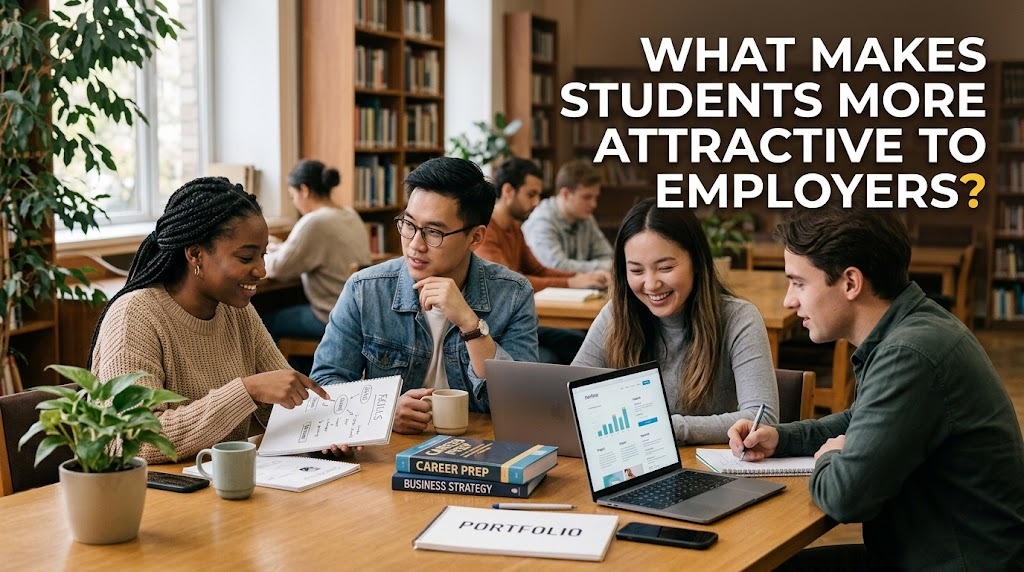
Entering the job market can be challenging for students, especially when they compete with many other applicants. Employers usually look beyond academic grades when choosing potential employees. They also consider skills, experience, communication, attitude, and adaptability. Students who prepare these qualities before graduation can have a stronger position when applying for jobs. So, what makes students more attractive to employers?
RELEVANT SKILLS FOR THE WORKPLACE
One of the most important factors that makes students attractive to employers is having relevant workplace skills. Students should develop technical skills that match the career field they want to enter. For example, students interested in marketing can learn digital marketing, social media management, content creation, and basic data analysis. These skills show employers that candidates have prepared themselves for real workplace responsibilities. Skills that are relevant to a specific position can make a student more valuable to a company.
Students should also develop soft skills because technical knowledge alone is not always enough. Communication, teamwork, problem solving, time management, and adaptability are useful in almost every workplace. Employers often prefer candidates who can work well with others and handle tasks responsibly. Developing these abilities while still studying can help students become more confident and professional.
PRACTICAL EXPERIENCE
Academic knowledge becomes more valuable when students can apply it through practical experience. Internships, part time jobs, volunteer activities, school projects, and organizational activities can help students understand how work is done in real situations. These experiences can also teach students how to manage deadlines, communicate with different people, and solve practical problems. Even small projects can demonstrate a student's willingness to learn and take responsibility.
Students should document their experiences and explain what they learned from them. Instead of simply listing activities on a resume, they can describe the skills, responsibilities, and results they gained. This gives employers a clearer picture of what a student can contribute. Practical experience can therefore help reduce the gap between classroom learning and workplace expectations.
STRONG COMMUNICATION SKILLS
Communication skills are highly important because employees need to exchange information clearly with coworkers, customers, supervisors, and other professional contacts. Students can improve communication by practicing presentations, discussions, writing, and active listening. Good communication is not only about speaking confidently but also about understanding other people's ideas. Students who communicate clearly can make a more professional impression during recruitment.
Communication skills are especially important during job interviews. Candidates need to explain their education, experience, strengths, and career goals in a clear way. They should answer questions honestly and provide relevant examples when possible. Good communication can help employers understand a student's potential and personality more easily.
PROFESSIONAL ATTITUDE AND RESPONSIBILITY
A student's professional attitude can strongly influence an employer's decision. Employers generally value candidates who are responsible, respectful, punctual, honest, and willing to learn. Students can demonstrate these qualities through their behavior at school, during internships, and while participating in projects. A positive attitude shows that a candidate understands the importance of professionalism.
Responsibility is also important because employers need people who can be trusted to complete their duties. Students should learn to meet deadlines, follow instructions, accept feedback, and take responsibility for mistakes. These habits can help build a strong professional reputation. Even without extensive work experience, a student with a mature attitude can still attract an employer's attention.
ADAPTABILITY AND WILLINGNESS TO LEARN
The workplace continues to change because of technology, new business practices, and changing customer needs. For this reason, employers often appreciate candidates who are willing to learn new things. Students should not depend only on knowledge gained in the classroom. They can take online courses, attend workshops, read professional materials, or practice new tools independently.
Adaptability is equally important when students face unfamiliar tasks or changing situations. A flexible employee can adjust to new responsibilities and learn from different experiences. Students who show curiosity and a willingness to improve can demonstrate strong long term potential. Employers may see these qualities as signs that a candidate can continue developing after being hired.
A GOOD RESUME AND PORTFOLIO
A well prepared resume helps students present their qualifications clearly. It should include relevant education, skills, experience, achievements, and other information connected to the position. Students should avoid adding unnecessary details and should adjust their resume to match the job they are applying for. A clear and organized resume can make it easier for recruiters to recognize a candidate's strengths.
For students in creative or practical fields, a portfolio can be equally valuable. A portfolio can contain school projects, designs, writing samples, marketing campaigns, videos, or other work that demonstrates ability. Showing real examples can give employers stronger evidence than simply claiming to have a particular skill. Therefore, students should start collecting and improving their best work before graduation.
CONFIDENCE AND PROFESSIONAL PRESENTATION
Confidence can help students make a positive impression during interviews and professional meetings. Confidence does not mean acting superior or pretending to know everything. Instead, it means being able to explain one's abilities honestly while remaining open to learning. Students can build confidence by practicing interviews, preparing answers, and understanding their own strengths.
Professional presentation also matters because employers often form an initial impression during recruitment. Appropriate clothing, polite behavior, good body language, and clear communication can support a professional image. Students should also prepare by researching the company and understanding the position they are applying for. Good preparation can make candidates appear more serious and ready for the workplace.
CONCLUSION
Students become more attractive to employers when they combine relevant skills, practical experience, communication abilities, professional attitudes, and a willingness to learn. Academic achievement can be useful, but it is only one part of career preparation. Employers also want candidates who can solve problems, work with others, adapt to change, and take responsibility. Students can begin developing these qualities through school projects, internships, organizations, courses, and personal practice.
The best time to prepare for a career is before graduation. By building a strong combination of skills, experience, confidence, and professionalism, students can become better prepared to compete in the job market. These qualities can also help them adapt and grow after they enter the workplace.
About the Author
Gusti Ayu Tita P
Author — STEKOM University
An active author focused on academic issues, educational technology, and human resource development in the campus environment.