
What Makes the Oldest Child Different from Younger Siblings?
Gusti Ayu Tita P
7 September 2026
THE UNIQUE POSITION OF THE OLDEST CHILD
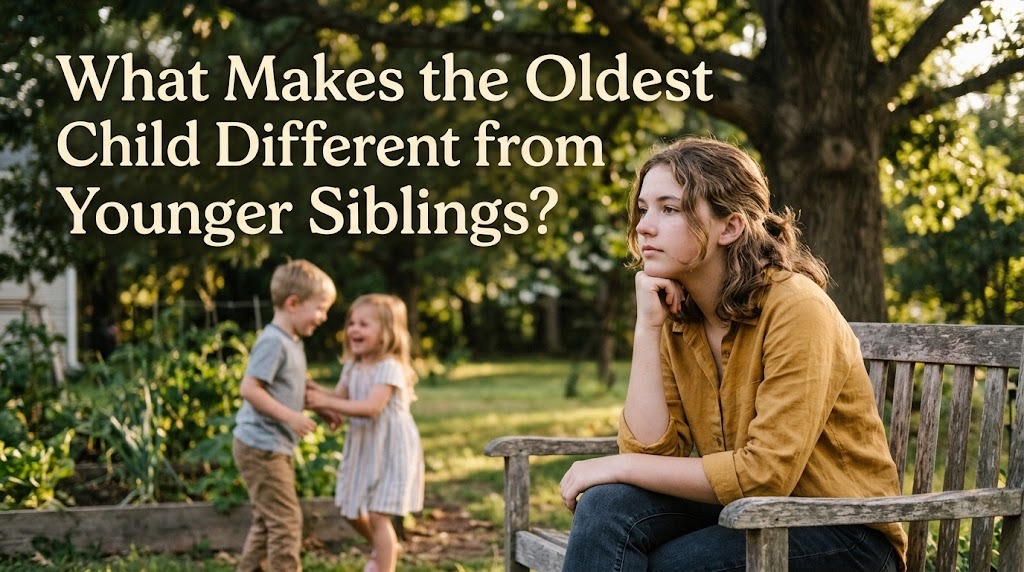
The oldest child often has a unique position within a family because they are the first to experience many important stages of family life. Parents usually learn how to raise children for the first time through their firstborn, which can make their early experiences different from those of younger siblings. They may receive more attention during their early years because there are no other children competing for their parents’ time. As younger siblings arrive, the firstborn may gradually experience changes in attention, family routines, and responsibilities. These experiences can contribute to the development of a distinct personality and perspective.
Being the firstborn does not automatically mean that a child will have a specific personality. Family environment, parenting style, age differences, and individual temperament also play important roles in shaping a child's development. Some oldest children become confident and independent, while others may be quiet or sensitive. Their position in the family can influence their experiences, but it does not completely determine who they will become.
HOW FAMILY RESPONSIBILITIES CAN SHAPE FIRSTBORN CHILDREN
One reason the oldest child may seem different is the possibility of receiving more responsibilities as they grow. Parents may ask them to help younger siblings, organize simple household tasks, or become an example for the children who come after them. These responsibilities can teach useful skills such as patience, organization, communication, and problem-solving. When responsibilities are appropriate for their age, they can become valuable opportunities for personal growth. However, children should still have enough time to play, rest, learn, and enjoy their childhood.
The firstborn may also become more aware of family needs because parents sometimes depend on them for small forms of assistance. This can encourage independence and responsibility, especially when parents provide clear guidance and appreciation. However, expecting the oldest child to behave like a second parent can create unnecessary pressure. Parents should make sure that responsibilities remain reasonable and do not interfere with the child's emotional or social development.
FIRSTBORN CHILDREN AND THE DEVELOPMENT OF LEADERSHIP SKILLS
The oldest child may have more opportunities to practice leadership skills because younger siblings sometimes look to them for guidance. They may help explain family rules, organize activities, or show younger children how to complete simple tasks. Through these experiences, they can develop communication, decision-making, and cooperation skills. These abilities may later become useful at school, in friendships, and in professional environments. Nevertheless, leadership should develop through positive experiences rather than pressure.
Parents can support this development by allowing the firstborn to make age-appropriate decisions and learn from mistakes. Giving a child opportunities to solve problems independently can strengthen confidence and critical thinking. At the same time, parents should avoid assuming that the oldest child must always lead or be correct. Healthy leadership includes listening to others, accepting different opinions, and knowing when to ask for help.
COMMON TRAITS OF THE OLDEST CHILD
Some firstborn children are described as responsible, organized, protective, and ambitious. They may take schoolwork seriously, try to meet family expectations, or feel comfortable helping younger siblings. Other firstborn children may develop strong communication skills because they interact with adults before younger siblings enter the family. These patterns can make them appear mature compared with their younger brothers or sisters. However, these traits are not universal and should not be treated as fixed characteristics of every firstborn child.
The behavior of an oldest child is also influenced by their individual experiences. A supportive family may help them develop confidence without creating excessive pressure. In contrast, constant comparison with younger siblings can cause frustration or insecurity. Birth order is only one factor among many that influence personality and behavior. Education, friendships, culture, family relationships, and personal experiences can have equally important effects.
CHALLENGES THAT FIRSTBORN CHILDREN MAY EXPERIENCE
Although being the oldest can provide valuable experiences, it can also bring certain emotional challenges. Some firstborn children may feel that they must always behave well because younger siblings are watching them. They may also worry about disappointing their parents or failing to meet high expectations. When responsibilities become excessive, a child may feel that they have less freedom than their siblings. These feelings can become stronger when parents frequently compare children or expect the firstborn to set a perfect example.
Another challenge is adjusting to changes in family attention. A firstborn may initially receive their parents' full attention, but this naturally changes when younger siblings are born. Some children may experience jealousy, confusion, or feelings of being less important. Open communication and emotional support can help them adjust to these changes. Parents should reassure their firstborn that having younger siblings does not reduce the love and attention they receive.
HOW PARENTS CAN SUPPORT THEIR FIRSTBORN CHILD
Parents can support their oldest child by recognizing that they are still a child, even when they appear mature and responsible. Giving them household responsibilities can be beneficial, but those tasks should be suitable for their age and abilities. Parents should also provide individual attention so the firstborn does not feel forgotten after younger siblings arrive. Simple activities such as talking together, spending time alone, or asking about their feelings can strengthen the parent-child relationship. Most importantly, parents should avoid placing unrealistic expectations on the oldest child.
A healthy family environment allows every child to develop according to their own personality and abilities. Parents should appreciate the firstborn's efforts without comparing them with their siblings. They can encourage independence while also making it clear that asking for help is completely acceptable. Fair treatment does not always mean identical treatment, because children may have different ages and needs. With balanced guidance, the oldest child can develop responsibility and confidence without feeling that they must carry the entire family.
CONCLUSION
The oldest child can have a different experience from younger siblings because they are the first to navigate many family changes and expectations. Their position may provide opportunities to develop responsibility, independence, communication, and leadership skills. At the same time, excessive expectations can create emotional pressure and make them feel responsible for everyone around them. Birth order can influence family experiences, but it does not completely determine personality or future behavior. Ultimately, supportive parenting, healthy communication, and balanced responsibilities can help firstborn children grow into confident and emotionally healthy individuals.
About the Author
Gusti Ayu Tita P
Author — STEKOM University
An active author focused on academic issues, educational technology, and human resource development in the campus environment.















