
What Personality Traits Are Commonly Associated With Middle Children?
Gusti Ayu Tita P
8 September 2026
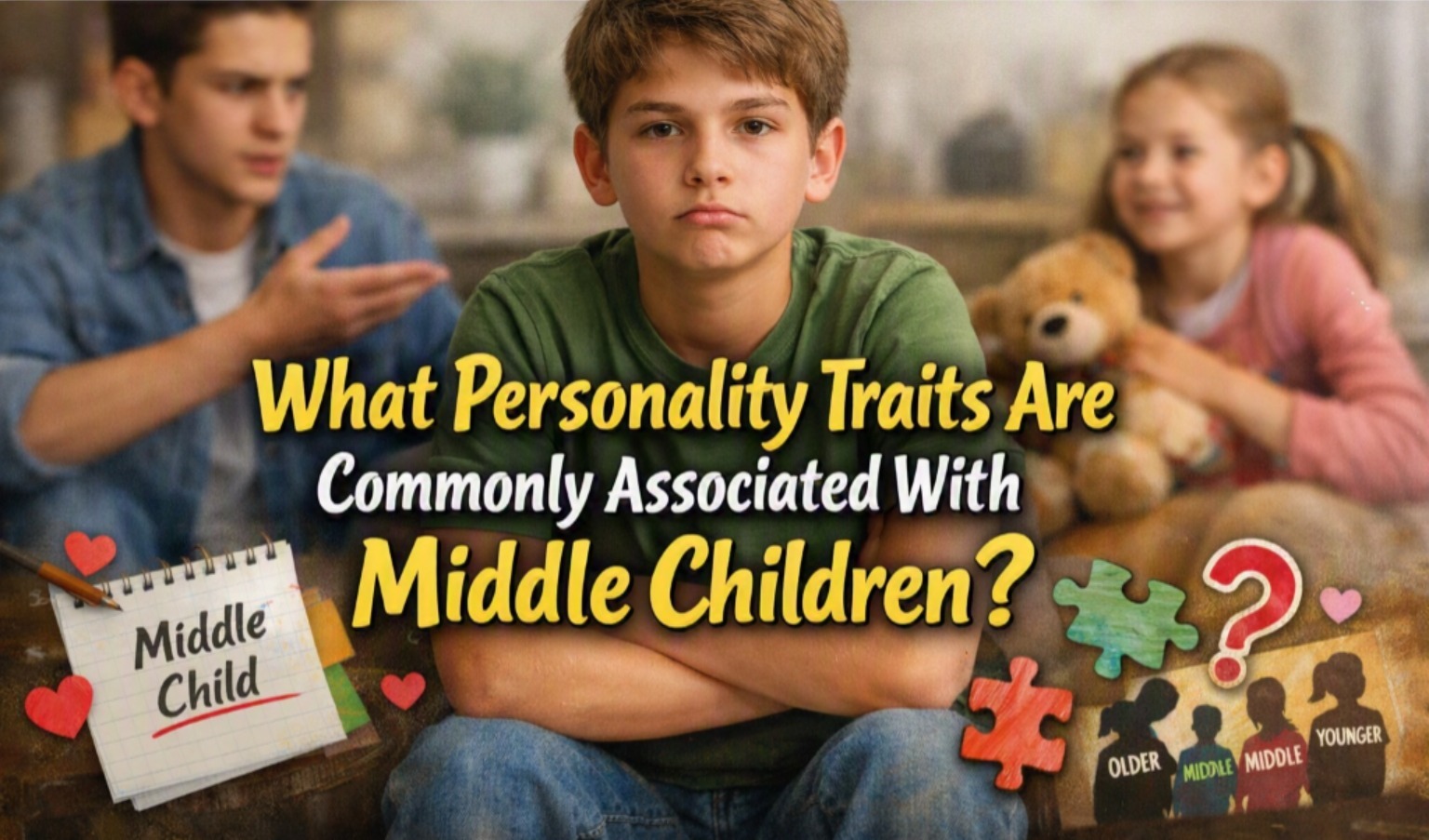
Birth order has long been discussed in psychology and popular culture, especially when people try to understand why siblings may develop different personalities. Middle children are often described as adaptable, cooperative, and socially skilled because they grow up between older and younger siblings. However, these descriptions are general tendencies rather than fixed personality rules. A person's character is also influenced by parenting, relationships, culture, experiences, and individual temperament.
Research on birth order does not support the idea that every middle child will have the same personality. In fact, differences between siblings are often more complex than birth position alone. Still, the middle-child experience can provide useful insight into certain behaviors and family dynamics. Understanding these patterns can help explain why some middle children may develop particular social and emotional strengths.
ADAPTABILITY AND FLEXIBILITY
Adaptability is one of the personality traits commonly associated with middle children. Growing up between siblings can expose them to different ages, interests, expectations, and family roles. They may learn to adjust their behavior depending on whether they are interacting with an older sibling or a younger one. This experience can encourage flexibility when dealing with changing situations.
Middle children may also become comfortable with compromise because they often need to share attention, space, and family resources. They can learn that not every situation will happen according to their preferences. Over time, this may contribute to an ability to adjust without becoming overly frustrated. However, adaptability is not guaranteed, because every family environment is different.
STRONG SOCIAL AND COMMUNICATION SKILLS
Another trait frequently linked to middle children is the ability to build relationships with different kinds of people. They may spend significant time observing and interacting with both older and younger siblings. This can give them opportunities to practice communication, negotiation, and cooperation from an early age. Some middle children may therefore become comfortable moving between different social groups.
Their position within the family can also encourage them to understand different perspectives. For example, they may recognize the expectations of an older sibling while also understanding the needs of a younger sibling. This can support social awareness and make compromise easier. Nevertheless, these abilities depend heavily on the child's experiences rather than birth order alone.
COOPERATIVE AND DIPLOMATIC BEHAVIOR
Cooperation is another quality often associated with the middle-child role. Middle children may become accustomed to sharing attention and negotiating with siblings who have different needs. In some families, they may naturally take part in resolving disagreements between their siblings. This can encourage a more diplomatic approach to relationships.
Some middle children may also become good at finding solutions that satisfy several people at once. Instead of insisting on getting their own way, they may prefer to maintain harmony within the family. This does not mean that middle children always avoid conflict or are naturally peaceful. Rather, repeated experiences with sibling relationships may give some of them more opportunities to practice conflict resolution.
INDEPENDENCE AND A DESIRE FOR IDENTITY
Middle children are sometimes described as independent because they may search for ways to distinguish themselves from their siblings. An older sibling may already occupy a particular family role, while a younger sibling may receive attention for being the youngest. A middle child may therefore explore different interests, talents, or social groups to establish a unique identity.
This desire for individuality can encourage self-reliance and personal exploration. Some middle children may become comfortable making decisions without constantly seeking approval from family members. They may also develop interests that are noticeably different from those of their siblings. However, independence should not automatically be interpreted as a consequence of birth order, since personality develops through many interacting factors.
SENSITIVITY TO FAIRNESS AND ATTENTION
Middle children are sometimes portrayed as being especially sensitive to fairness and recognition. When several siblings are growing up together, children may compare how much attention, responsibility, or freedom each sibling receives. A middle child may become particularly aware of whether family rules appear consistent. This can make fairness an important part of how they understand relationships.
Some may also become skilled at expressing their needs because they realize that attention is shared among siblings. Others may respond differently and become quieter when they feel overlooked. These reactions are not universal, and the idea of the neglected middle child is better understood as a cultural stereotype than a psychological certainty. Healthy parenting and supportive family relationships can strongly influence how a child experiences their position.
CREATIVE AND INDIVIDUALISTIC TENDENCIES
Some middle children may develop creative interests as a way to establish their own place within the family. Having siblings with established personalities can encourage them to experiment with hobbies, activities, or ways of expressing themselves. They may enjoy discovering something that feels personally meaningful rather than simply following the path of another sibling.
This can sometimes lead to individualistic behavior, particularly when the child values having a distinct identity. Creativity may provide a positive way to gain recognition without directly competing with siblings. However, creativity is not a defining characteristic of middle children. It is shaped by opportunities, encouragement, personality, and the environment in which the child grows up.
ARE MIDDLE CHILDREN REALLY MORE LIKELY TO HAVE THESE TRAITS?
The idea that birth order determines personality is too simplistic. Modern psychological research suggests that birth order has limited influence on broad personality characteristics, while factors such as family environment and individual experiences can be much more important. Two middle children from different families may have completely different personalities despite occupying the same birth-order position.
For this reason, traits such as adaptability, cooperation, independence, communication skills, and fairness awareness should be viewed as possible patterns rather than predictions. A middle child's personality cannot be accurately determined simply by knowing that they are the second, third, or another child between older and younger siblings. Birth order can provide context, but it does not define who someone becomes.
CONCLUSION
Middle children are commonly associated with adaptability, cooperation, diplomacy, social awareness, independence, and a strong sense of individuality. These characteristics may develop through everyday interactions with siblings and the different roles children experience within a family. Some middle children may also become attentive to fairness and skilled at navigating disagreements.
Still, birth order does not determine personality. Parenting style, family relationships, culture, life experiences, and individual temperament all contribute to personality development. Therefore, the most accurate way to understand middle children is to recognize common patterns without treating them as universal characteristics.
About the Author
Gusti Ayu Tita P
Author — STEKOM University
An active author focused on academic issues, educational technology, and human resource development in the campus environment.















