
What Should Mountain Kids Prepare Before Hiking?
Gusti Ayu Tita P
22 September 2026
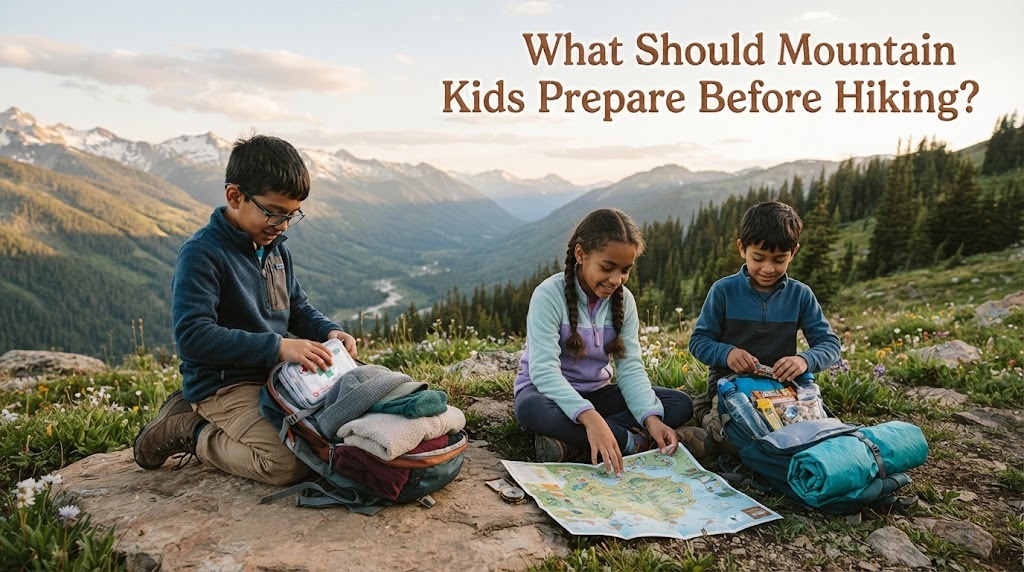
Hiking can be an exciting way for mountain kids to explore nature and enjoy outdoor activities. However, a safe and comfortable trip requires good preparation before leaving. Hikers need to consider the route, weather, physical condition, equipment, food, and water. Proper preparation can help reduce avoidable problems during the journey.
CHECKING THE HIKING ROUTE
Before hiking, mountain kids should learn about the route and trail conditions. They should know the distance, estimated hiking time, difficulty level, elevation changes, and available rest areas when this information is provided. Understanding the route helps hikers prepare for the physical demands of the journey. It can also reduce the chance of getting lost.
Hikers should use reliable maps or official trail information whenever possible. They should also check whether there are any temporary closures, restricted areas, or important local instructions. If the route is unfamiliar, learning about possible hazards in advance is especially useful. Good route planning helps the group make safer decisions throughout the hike.
CHECKING THE WEATHER
Mountain weather can change quickly, so checking the weather forecast is an important part of preparation. Rain, strong winds, extreme heat, or poor visibility can affect trail conditions and hiking safety. Mountain kids should check reliable weather information before starting their trip. They should also remain prepared for conditions to change during the journey.
If the forecast shows dangerous conditions, changing the hiking plan may be the safest choice. Hikers should never feel that they must continue simply because the trip has already been planned. Choosing another day or a safer route can prevent unnecessary risks. Flexible planning is an important part of responsible hiking.
PREPARING SUITABLE CLOTHING
The right clothing can provide comfort and protection during a hike. Mountain kids should choose clothing based on the weather, trail conditions, and length of the journey. Lightweight and comfortable clothing can make movement easier, while additional layers may help in colder environments. Rain protection can also be useful when wet weather is possible.
Hikers should avoid wearing clothing that becomes uncomfortable after getting wet or limits movement. Good footwear with suitable grip is especially important on uneven or slippery trails. Socks should also be comfortable and appropriate for walking. Choosing suitable clothing and footwear can reduce discomfort and help hikers move more safely.
BRINGING ENOUGH FOOD AND WATER
Mountain kids need enough water and nutritious food to support their physical activity. The amount needed depends on factors such as the route, weather, duration, and individual needs. Hikers should bring sufficient water and avoid assuming that natural water sources are automatically safe to drink. If water from a natural source must be used, appropriate treatment is necessary.
Food can provide energy during a long or demanding hike. Simple snacks can be useful during rest breaks, especially when hikers begin to feel tired. It is also important to pack food securely and carry all packaging back out. Proper food and water planning helps hikers maintain their energy throughout the trip.
PACKING IMPORTANT EQUIPMENT
Before hiking, mountain kids should prepare essential equipment based on the route and conditions. Useful items may include a map or navigation device, phone, headlamp, first aid supplies, rain protection, sun protection, and extra clothing. A whistle can also be useful for signaling in an emergency. The exact equipment needed depends on the environment and length of the hike.
Hikers should check their equipment before leaving to make sure everything works properly. A fully charged phone and backup power source can be helpful, although hikers should not depend entirely on mobile signals. Equipment should be packed in a way that keeps frequently needed items easy to access. Good organization can save time when something is needed during the hike.
PREPARING PHYSICALLY
Hiking can require considerable physical effort, especially on steep or long trails. Mountain kids should understand their own fitness level before choosing a route. Regular walking or other suitable physical activities can help prepare the body for longer hikes. Resting properly before the trip is also important.
Hikers should not choose a difficult route simply because others can complete it. Knowing personal limits can help prevent excessive fatigue and injury. If someone feels unwell before the trip, reconsidering the plan may be appropriate. Physical preparation should always be combined with realistic expectations.
TELLING OTHERS ABOUT THE HIKING PLAN
Mountain kids should tell a trusted person about their hiking plan before leaving, especially when traveling in remote areas. The information can include the destination, route, group members, and expected return time. This gives someone outside the group an idea of where the hikers are going. Such information can be useful if an emergency occurs.
When hiking with a group, members should also agree on communication and meeting plans. Everyone should know the general route and what to do if someone becomes separated. Clear planning can reduce confusion during unexpected situations. Good communication is an important part of hiking safety.
PREPARING TO PROTECT NATURE
Preparation should not focus only on personal safety. Mountain kids should also prepare to leave nature clean and undisturbed. They can bring reusable containers, rubbish bags, and other items that help reduce unnecessary waste. Hikers should plan to carry their rubbish out when no suitable disposal facilities are available.
Responsible preparation also means understanding local environmental rules and trail regulations. Hikers should avoid damaging plants, disturbing wildlife, or taking natural objects from the area. Staying on appropriate trails can help protect vegetation and reduce erosion. Preparing with environmental responsibility makes outdoor activities more sustainable.
CONCLUSION
Before hiking, mountain kids should prepare the route, weather information, clothing, food, water, equipment, physical condition, and communication plan. They should also understand their personal limits and learn how to protect the natural environment. Good preparation does not guarantee that every hike will be problem-free, but it can reduce avoidable risks. With careful planning and responsible habits, mountain kids can enjoy a safer and more comfortable hiking experience.
About the Author
Gusti Ayu Tita P
Author — STEKOM University
An active author focused on academic issues, educational technology, and human resource development in the campus environment.



