
What Should Travelers Know Before the 2026 Return Rush?
Gusti Ayu Tita P
10 Agustus 2026
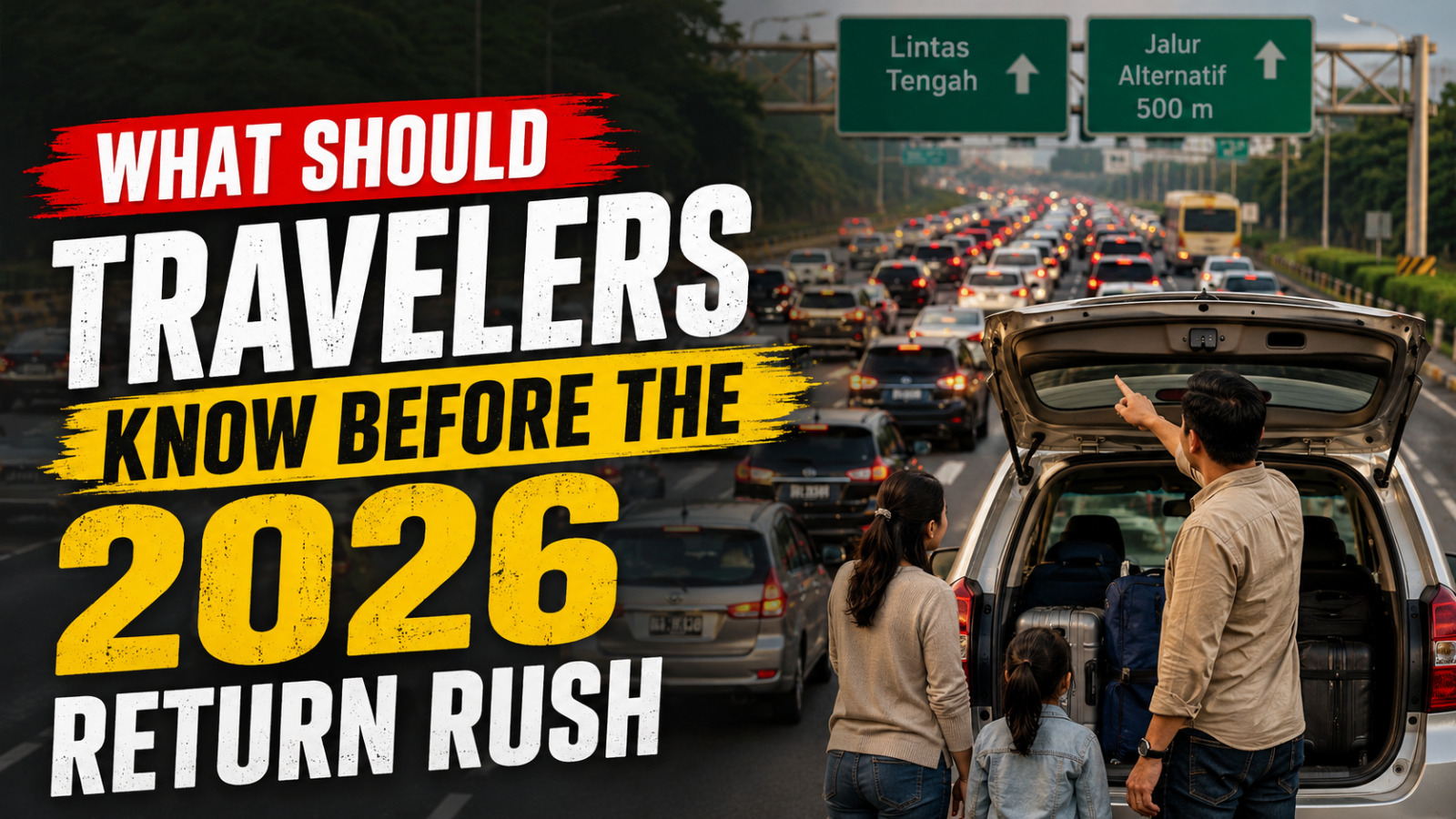
The 2026 holiday return rush is an important period for travelers in Indonesia, especially those returning to cities after spending their holidays in their hometowns or tourist destinations. During this period, roads can become much busier because thousands of travelers may begin their journeys at nearly the same time. Careful preparation can help travelers avoid unnecessary delays, reduce driving risks, and make the trip more comfortable.
Understanding traffic conditions, departure times, vehicle readiness, and alternative routes is essential before starting the journey. Travelers should also prepare food, drinking water, rest stops, and important travel documents. With proper planning, the return trip can be safer and less stressful for individuals and families.
UNDERSTAND THE RETURN TRAVEL RUSH
The return travel rush happens when large numbers of people leave holiday destinations and travel back to their homes within a limited period. In Indonesia, this situation can create heavy traffic on major highways, toll roads, arterial roads, and routes connecting popular holiday areas to large cities. The level of congestion can vary depending on the holiday calendar, weather, road conditions, and travel patterns.
Travelers should understand that the busiest period is not always limited to one specific day. Traffic may increase before the expected peak because many people try to leave earlier. Others may travel later to avoid congestion, which can create another wave of traffic. Checking official traffic updates before departure is therefore an important part of return trip planning.
CHOOSE THE RIGHT DEPARTURE TIME
Departure time can have a significant effect on the overall travel experience. Travelers should consider leaving outside the expected peak travel period when possible. Early morning or late evening departures may sometimes provide a smoother journey, although road conditions and personal driving ability must also be considered.
Travelers should not choose a departure time based only on traffic expectations. Driver condition is equally important, especially when planning a long-distance journey. A driver who is tired or has not had enough sleep may face a higher risk of losing concentration. It is better to travel at a suitable time when the driver is alert and prepared.
CHECK TRAFFIC AND WEATHER CONDITIONS
Before leaving, travelers should check the latest information about traffic congestion, road closures, accidents, weather, and temporary traffic arrangements. Traffic conditions can change quickly, particularly during major holiday periods. A route that appears convenient on a map may become heavily congested because of an accident or road restriction.
Weather is another important factor to consider. Heavy rain can reduce visibility and make roads slippery, while flooding may affect certain routes. Travelers should monitor reliable information and be ready to change their route if necessary. Flexible travel planning can help reduce the impact of unexpected road conditions.
PREPARE THE VEHICLE BEFORE DEPARTURE
A vehicle should be checked carefully before beginning a long return journey. Important components include tires, brakes, engine oil, lights, battery, windshield wipers, and cooling systems. Tire pressure should also be checked according to the manufacturer's recommendations.
Drivers should not wait until a problem appears before checking their vehicles. Small mechanical problems can become more serious during long trips or heavy traffic. Travelers should also make sure that emergency equipment, such as a warning triangle and basic tools, is available when appropriate. A roadworthy vehicle provides an important foundation for a safer journey.
PLAN REST STOPS AND DRIVER CHANGES
Long-distance travel requires proper rest planning. Drivers should avoid forcing themselves to continue driving when they feel sleepy, exhausted, or unable to concentrate. Taking regular breaks can help maintain alertness and reduce fatigue during the journey.
Families traveling together should identify suitable rest areas before departure. If more than one person is qualified and comfortable to drive, they may consider sharing driving responsibilities. However, every driver should be properly rested before taking the wheel. Safety should always be more important than arriving at the destination quickly.
PREPARE ESSENTIAL ITEMS FOR THE JOURNEY
Travelers should prepare essential supplies before entering potentially congested roads. Drinking water, simple food, medicines that are normally needed, phone chargers, and personal documents can be useful during unexpected delays. Families traveling with children may also need extra snacks, clothing, and entertainment items.
It is also wise to make sure that mobile phones are sufficiently charged before departure. Navigation applications can help travelers monitor their routes, but drivers should not use phones while driving. The person behind the wheel should remain focused on the road at all times.
CONSIDER ALTERNATIVE ROUTES CAREFULLY
Alternative routes can be useful when major roads become severely congested. However, choosing a smaller road without understanding its conditions can create new problems. Some alternative roads may be narrow, poorly lit, crowded, or unfamiliar to drivers.
Travelers should compare routes before making a decision. An alternative route is useful only when it is reasonably safe and practical. Drivers should avoid sudden route changes simply because a navigation application shows a shorter distance. Road safety, traffic conditions, weather, and driver familiarity should all be considered.
DRIVE PATIENTLY DURING HEAVY TRAFFIC
Heavy traffic can make drivers frustrated, especially when travel times become much longer than expected. However, aggressive driving, sudden lane changes, and unsafe overtaking can increase the risk of accidents. Drivers should maintain a safe distance from other vehicles and follow traffic regulations.
Patience is especially important when traveling with family members. Arriving safely is more important than saving a few minutes on the road. Drivers should remain calm when traffic stops or moves slowly. A responsible driving attitude can help protect everyone inside the vehicle and other road users.
CONCLUSION
The 2026 return rush may bring challenging traffic conditions, but travelers can reduce many risks through proper preparation. Checking traffic and weather information, choosing a suitable departure time, inspecting the vehicle, and planning rest stops are important steps before starting the journey.
Travelers should also prepare essential supplies and remain flexible when road conditions change. Most importantly, drivers need to prioritize safety, concentration, patience, and adequate rest throughout the trip. With thoughtful planning, the holiday return journey can become safer, more comfortable, and better organized.
About the Author
Gusti Ayu Tita P
Author — STEKOM University
An active author focused on academic issues, educational technology, and human resource development in the campus environment.















