
What Skills Can Students Develop Through Class Meeting Events?
Gusti Ayu Tita P
31 Juli 2026
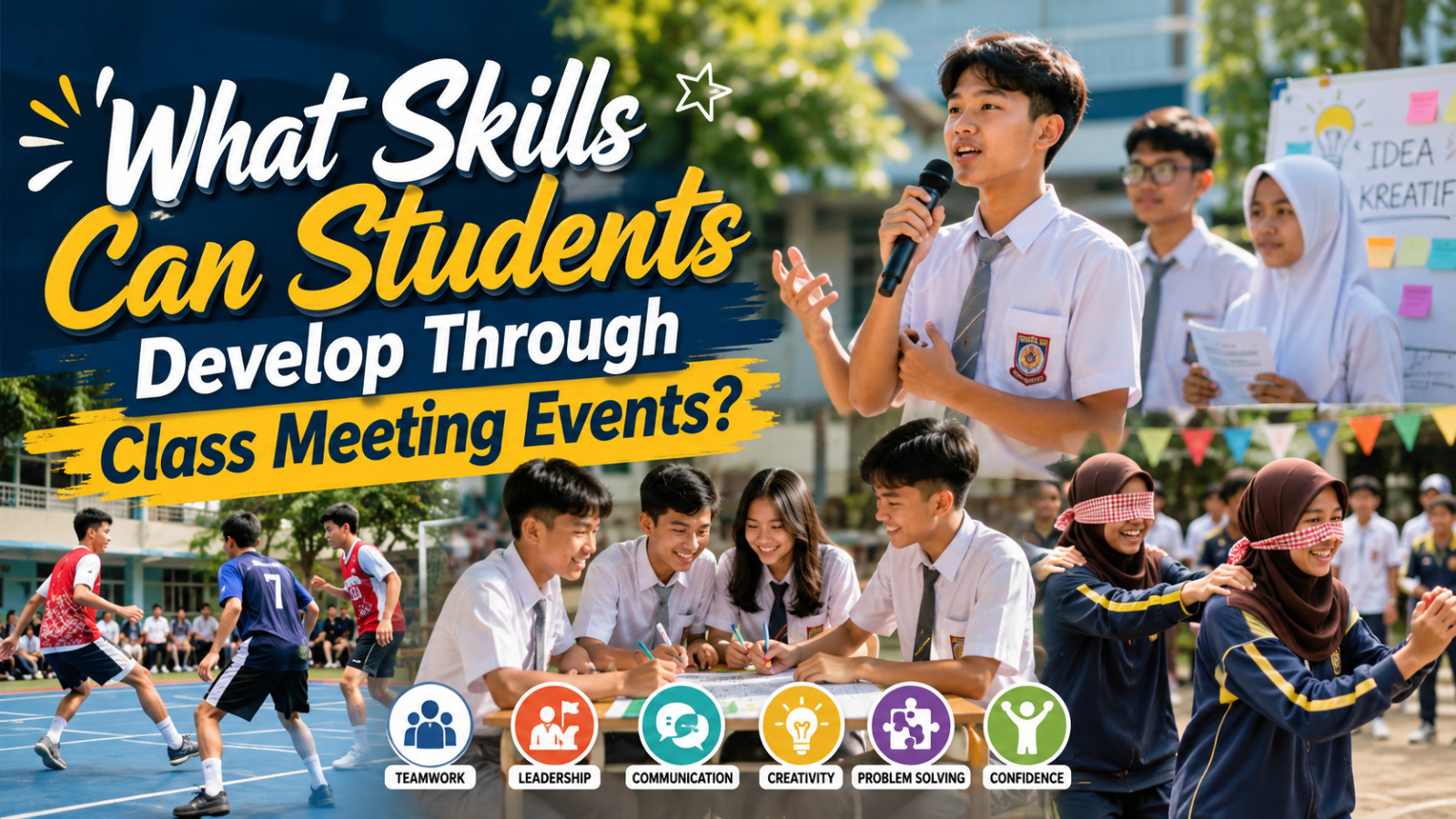
Class meeting events are more than just exciting school activities. They provide students with valuable opportunities to learn practical skills, build confidence, and strengthen friendships in a fun and supportive environment. Through competitions, teamwork, and creative challenges, students gain experiences that cannot always be taught in the classroom.
Whether participating in sports, talent shows, debates, or group projects, every student has a chance to grow. These events encourage responsibility, communication, leadership, and problem-solving while creating unforgettable memories. As a result, class meetings become an important part of personal and social development.
DEVELOPING TEAMWORK AND COLLABORATION
One of the most valuable skills students gain through class meeting events is teamwork. Many activities require participants to work together toward a shared goal, making cooperation essential. Students learn how to divide responsibilities, trust one another, and support teammates during challenges. These experiences help everyone understand that success often comes from working together rather than competing alone.
Working in groups also teaches students how to respect different opinions and appreciate individual strengths. They practice listening carefully, solving disagreements peacefully, and encouraging one another. These collaboration skills become useful not only in school but also in future workplaces and everyday life. Strong teamwork helps students become more responsible and dependable individuals.
IMPROVING COMMUNICATION SKILLS
Class meeting events encourage students to communicate clearly and confidently. Whether discussing strategies, presenting ideas, or cheering for teammates, students constantly practice expressing themselves. They learn how to speak politely, listen actively, and respond appropriately in different situations. These communication experiences build confidence in both formal and informal settings.
Students also improve their public speaking abilities through activities such as hosting events, giving presentations, or performing on stage. They become more comfortable speaking in front of others while learning to organize their thoughts effectively. Better communication allows students to develop stronger friendships and perform better in academic activities.
BUILDING LEADERSHIP AND RESPONSIBILITY
Many class meeting activities give students opportunities to become leaders. They may organize competitions, manage schedules, coordinate team members, or solve unexpected problems. Taking on these responsibilities teaches students how to make thoughtful decisions and guide others with confidence. Leadership develops naturally through real experiences rather than theory alone.
Responsibility is another important lesson gained from these events. Students understand the importance of completing assigned tasks, arriving on time, and keeping commitments. They also realize that their actions affect the success of the entire team. These habits prepare students for future leadership roles in education, careers, and community life.
ENHANCING CREATIVITY AND PROBLEM-SOLVING
Creative competitions encourage students to think beyond ordinary solutions. Decorating classrooms, designing costumes, creating performances, or producing presentations require creative thinking and innovation. Students learn how to turn simple ideas into meaningful projects while working within available resources. This process strengthens both imagination and practical skills.
Unexpected challenges often arise during competitions, requiring students to solve problems quickly and effectively. They practice analyzing situations, discussing possible solutions, and making decisions under pressure. These experiences help students become more adaptable and confident when facing future obstacles in school and everyday life.
DEVELOPING CONFIDENCE AND SPORTSMANSHIP
Participating in class meeting events helps students build self-confidence. Every performance, competition, or presentation gives them the courage to step outside their comfort zones. Even when they make mistakes, they gain valuable learning experiences that improve their confidence over time. Success becomes more meaningful because it is achieved through effort and persistence.
Students also develop sportsmanship, one of the most important values in any competition. They learn to respect opponents, accept both victory and defeat gracefully, and celebrate achievements without arrogance. Good sportsmanship creates a positive atmosphere where everyone feels respected and motivated to improve.
STRENGTHENING TIME MANAGEMENT AND ORGANIZATION
Preparing for class meeting events teaches students how to manage their time effectively. They must balance academic responsibilities with practice sessions, meetings, and event preparations. This encourages them to create schedules, prioritize important tasks, and avoid procrastination. Good time management becomes an essential habit for future success.
Students also improve their organizational skills while planning activities and coordinating with classmates. They learn how to arrange resources, monitor progress, and ensure every task is completed on schedule. These organizational abilities are highly valuable in education, employment, and personal life.
CONCLUSION
Class meeting events are much more than school entertainment. They provide students with opportunities to develop teamwork, communication, leadership, creativity, problem-solving, confidence, and responsibility through enjoyable experiences. These practical skills support both academic achievement and personal growth.
By participating actively in class meetings, students prepare themselves for future challenges while building lasting friendships and unforgettable memories. Every activity becomes a valuable lesson that helps shape responsible, confident, and capable individuals ready for success in school and beyond.
- Problem Solving
- Creativity
Meta Description:
About the Author
Gusti Ayu Tita P
Author — STEKOM University
An active author focused on academic issues, educational technology, and human resource development in the campus environment.















