
What Strategies Can Game Developers Use To Increase Player Satisfaction?
Gusti Ayu Tita P
5 Agustus 2026
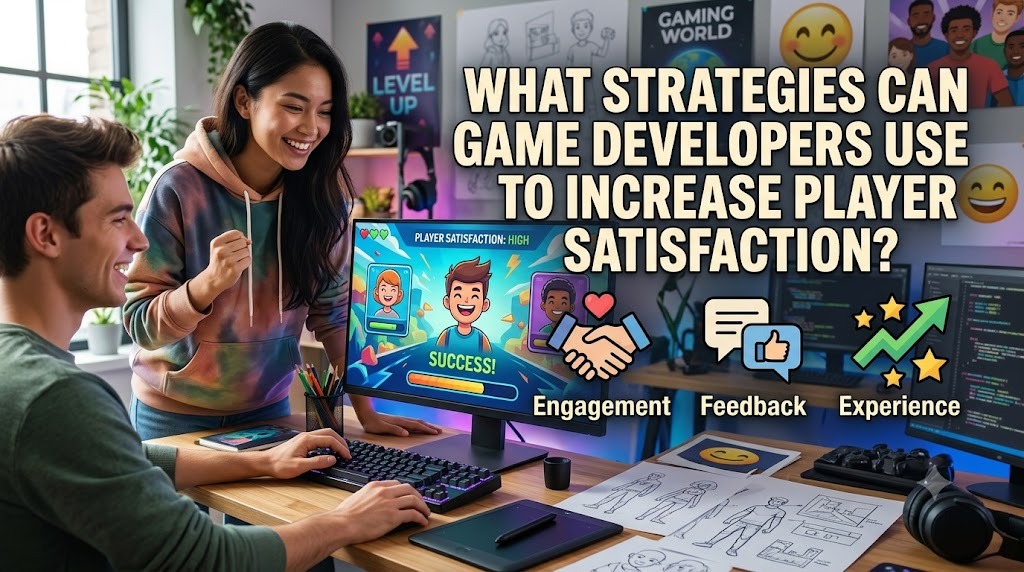
Player satisfaction is one of the most important factors in the success of a video game. A game may have impressive graphics and advanced technology, but players are more likely to stay when they have a fun, comfortable, and meaningful experience. Game developers therefore need to understand what players expect and how different design decisions influence their enjoyment. Improving player satisfaction can also encourage positive reviews, stronger communities, and longer player engagement.
There is no single strategy that works for every type of game. Different players have different preferences depending on the genre, platform, age group, and gaming habits. Developers should combine good game design, responsive controls, fair progression, technical stability, accessibility, and player feedback to create a better overall experience. The following strategies can help developers increase player satisfaction effectively.
UNDERSTANDING PLAYER EXPECTATIONS
The first step toward improving player satisfaction is understanding the target audience. Developers should identify who the game is designed for and what those players expect from the experience. Research can include surveys, interviews, community discussions, competitor analysis, and playtesting. This information helps developers make decisions based on actual player needs rather than assumptions.
Developers should also understand that players may value different things. Some players prefer challenging gameplay, while others enjoy exploration, storytelling, creativity, or social interaction. Player expectations should match the game's design goals so that the experience feels consistent. Understanding the audience early can prevent major design problems later in development.
CREATING FUN AND ENGAGING GAMEPLAY
Gameplay quality is one of the strongest factors influencing player satisfaction. Players need activities that are enjoyable, understandable, and rewarding. Game mechanics should provide meaningful challenges without becoming unnecessarily confusing or frustrating. Developers can use prototypes and playtests to determine whether the core gameplay is enjoyable.
Good gameplay also benefits from variety and progression. Repeating the same activity without meaningful changes can make players lose interest over time. Developers can introduce new challenges, mechanics, environments, objectives, or abilities while keeping the core experience consistent. The goal is to create a gameplay loop that encourages players to continue because they are genuinely enjoying the experience.
PROVIDING RESPONSIVE CONTROLS
Responsive controls can significantly improve how players experience a game. When controls react quickly and predictably, players feel that their actions are directly connected to the outcome. Delayed input, confusing button layouts, or inconsistent movement can create unnecessary frustration. Developers should therefore test controls across different devices and playing conditions.
Controls should also be appropriate for the target platform. A game designed for a keyboard and mouse may require different input considerations from a mobile game using a touchscreen. Clear control schemes and customizable options can help accommodate different player preferences. Developers should also make important actions easy to understand, especially for new players.
BALANCING CHALLENGE AND DIFFICULTY
A good difficulty system should challenge players without making them feel unfairly punished. If a game is too easy, players may become bored, while excessive difficulty can cause frustration and abandonment. Developers can use gradual difficulty progression to introduce new challenges as players improve their skills. This approach allows players to learn the game's systems before facing more demanding situations.
Difficulty can also be made more flexible through different modes or adjustable settings. However, difficulty should not simply mean increasing enemy strength or reducing player resources. Developers should consider how challenges are presented and whether players understand why they failed. Fair challenges and clear feedback can make difficult gameplay feel satisfying rather than discouraging.
DESIGNING FAIR REWARDS AND PROGRESSION
Players often feel more satisfied when their time and effort produce meaningful results. A well-designed progression system can give players a sense of achievement as they unlock abilities, items, levels, story content, or other rewards. Progression should feel connected to player actions rather than being unnecessarily slow. Developers need to ensure that rewards support the game's goals.
Reward systems should also be fair and predictable. Players may become frustrated if important progress depends too heavily on random outcomes or excessive repetition. In games with monetization, developers should be particularly careful that purchases do not create an unfair advantage when competitive balance is important. Fair progression builds trust and can contribute to a healthier long-term player experience.
IMPROVING GAME PERFORMANCE AND STABILITY
Technical performance has a direct effect on player satisfaction. Frequent crashes, long loading times, severe frame-rate problems, and connection issues can negatively affect even an otherwise excellent game. Developers should conduct quality assurance testing and performance optimization throughout development rather than waiting until the final stage. Testing on different hardware can also reveal problems that may not appear on development machines.
Stability is particularly important for games that require an internet connection. Network problems, server downtime, or synchronization issues can interrupt gameplay and damage player trust. Developers should monitor technical performance after release and respond to serious problems as quickly as practical. A stable game gives players confidence that their time and progress are being respected.
BUILDING A STRONG PLAYER COMMUNITY
A healthy community can improve the long-term experience surrounding a game. Developers can encourage positive interaction through community events, developer updates, discussions, competitions, and social features. A strong community gives players opportunities to share experiences, strategies, creative content, and feedback. This can make players feel that they are part of something larger than the game itself.
Community management should also address harmful behavior. Toxicity, harassment, cheating, and disruptive behavior can discourage players from participating. Clear rules and appropriate moderation can help create a safer environment. Developers who actively support their communities can build stronger relationships and encourage long-term engagement.
AVOIDING EXCESSIVE MONETIZATION PRESSURE
Monetization can be necessary for many games, but aggressive monetization can reduce player satisfaction. Excessive advertisements, unclear purchases, expensive items, or systems that pressure players to spend money can create negative experiences. Developers should make monetization transparent and appropriate for the game's audience. Players should understand what they are purchasing and what they will receive.
In competitive games, developers should also carefully consider whether paid features affect gameplay fairness. Cosmetic purchases and optional content can provide revenue without necessarily changing competitive outcomes. The best monetization strategy depends on the game's genre, audience, and business model. Player trust should remain an important consideration when designing monetization systems.
CONTINUOUSLY IMPROVING THE GAME
Player satisfaction should be treated as an ongoing goal rather than something that ends at launch. Developers can analyze player behavior, feedback, technical data, and community discussions to identify areas that need improvement. Updates can address bugs, balance problems, usability issues, performance concerns, and other important areas. The frequency and size of updates should match the resources and needs of the project.
Developers should also avoid changing features without considering their wider effects. A balance adjustment may improve one part of the game while creating problems somewhere else. Careful testing and gradual implementation can reduce these risks. Continuous improvement works best when developers have clear priorities and understand what their players value most.
CONCLUSION
Increasing player satisfaction requires more than creating attractive graphics or adding a large number of features. Developers need to focus on fun gameplay, responsive controls, fair progression, stable performance, accessibility, clear interfaces, and meaningful player feedback. These elements work together to create an experience that feels enjoyable and respectful of the player's time.
The most effective approach is to understand the target audience and continuously evaluate the game based on real player experiences. Developers should listen to feedback while maintaining a clear creative direction and making practical decisions. By combining good design, technical quality, fair systems, community engagement, and continuous improvement, game developers can increase player satisfaction and build stronger long-term relationships with their audience.
About the Author
Gusti Ayu Tita P
Author — STEKOM University
An active author focused on academic issues, educational technology, and human resource development in the campus environment.















