
When Is the Busiest Return Travel Period in Indonesia?
Gusti Ayu Tita P
10 Agustus 2026
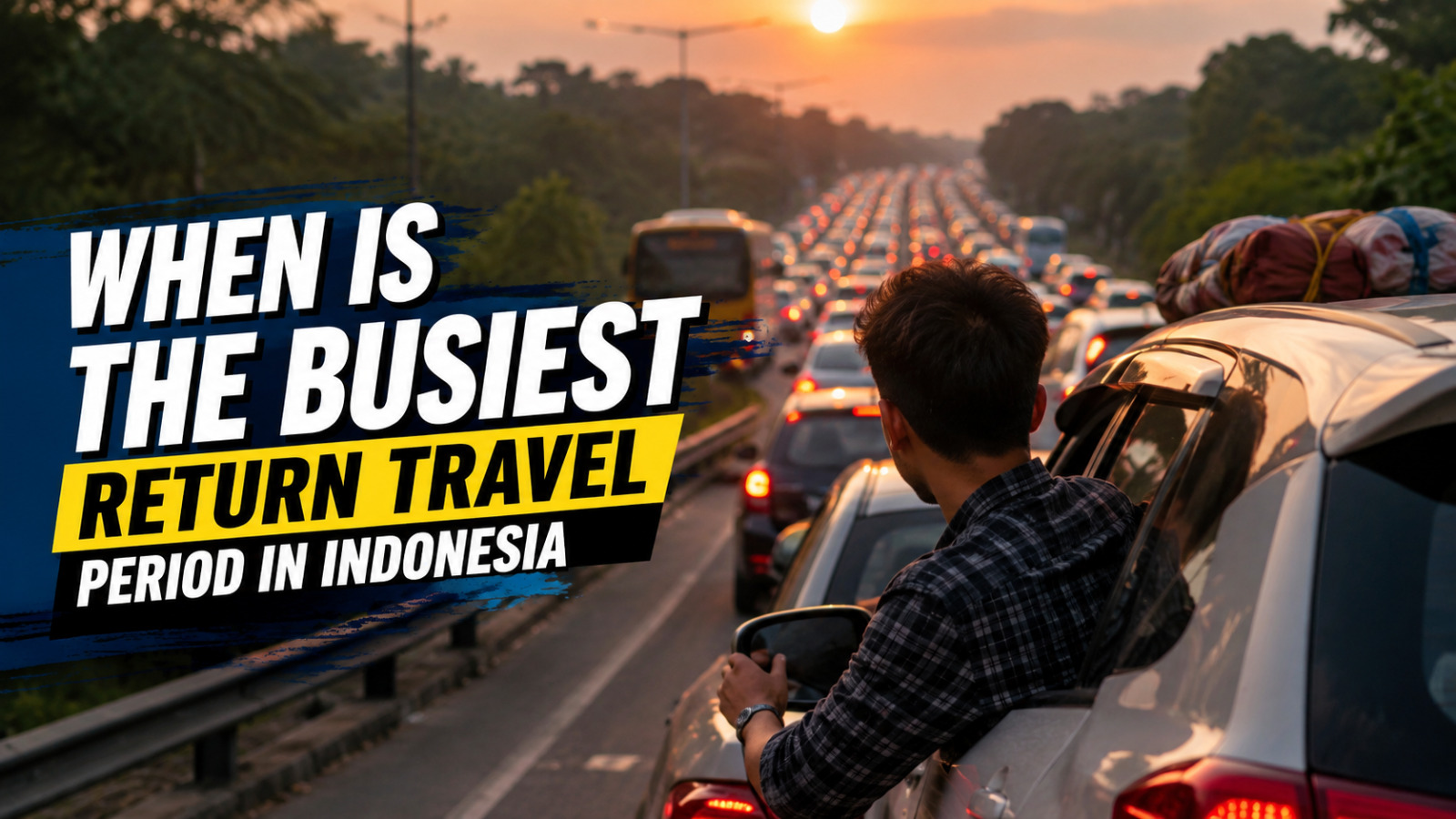
Indonesia experiences significant travel movement after major holidays, especially during the Lebaran return period. Millions of people travel from their hometowns back to cities where they work, study, or live. This large movement can create heavy traffic on toll roads, national highways, ports, airports, and railway stations.
For travelers, knowing the busiest return travel period is important because it helps them plan their journey more carefully. Choosing the right departure date and time can reduce the risk of spending many hours in traffic and make the trip safer and more comfortable.
WHEN DOES PEAK RETURN TRAVEL USUALLY HAPPEN?
The busiest return travel period in Indonesia generally occurs several days after Eid al-Fitr, when people begin returning to their regular activities. During Lebaran 2026, the main peak was recorded around 24 March 2026 or H+3. Jasa Marga recorded 256,338 vehicles returning toward Jakarta on that date, while the government had previously warned travelers about several potential peak periods.
However, return traffic does not always reach its highest level on only one day. Authorities also identified 28 and 29 March 2026 as additional peak periods during the 2026 Lebaran return flow. This happened because some travelers delayed their journey to avoid the first peak, while others had to return according to work, school, or leave schedules.
WHY IS RETURN TRAFFIC SO CROWDED?
Return traffic becomes crowded because large numbers of travelers move toward major cities at almost the same time. Many people return to Jakarta, Bandung, Surabaya, Semarang, and other major urban areas after spending the holiday with their families. This creates concentrated traffic on major transportation corridors.
The situation can become more difficult when travelers use the same roads during similar departure hours. Traffic can also increase near toll gates, rest areas, ferry ports, intersections, and urban entrances. Limited road capacity combined with a sudden increase in vehicles can quickly produce long queues.
WHICH DAYS SHOULD TRAVELERS WATCH?
Travelers should pay particular attention to the days immediately following the main Eid holiday period. In the 2026 Lebaran return flow, authorities identified 24 March as the main peak, with additional expected peaks on 28 and 29 March. These dates demonstrate that the return flow can occur in several waves rather than being concentrated on one single day.
The exact level of congestion can also differ between regions. For example, the Nagreg route in West Java recorded its highest return traffic on H+3, with 149,030 vehicles heading toward Bandung. This shows that local transportation conditions can vary even when the national return period follows a similar pattern.
WHAT TIME IS BEST FOR A RETURN JOURNEY?
There is no single departure hour that guarantees an empty road because traffic conditions depend on the route, weather, vehicle volume, and traffic management policies. However, travelers can reduce their exposure to congestion by avoiding known peak departure periods and checking traffic information before leaving. Early planning is especially useful for long-distance journeys.
Travelers should also consider the condition of their destination roads. Leaving very early may help avoid some daytime congestion, but drivers must ensure they are well rested and alert. Safety should always take priority over trying to arrive as quickly as possible.
HOW CAN TRAVELERS AVOID SEVERE CONGESTION?
One of the most effective strategies is to adjust the travel date when possible. During the 2026 return period, the government encouraged travelers to spread their journeys across different days rather than returning during the main peak. A policy allowing Work From Anywhere also helped shift some return trips from the busiest period to later dates.
Travelers should monitor official traffic information, especially before entering major toll roads or ferry routes. Navigation applications can help identify slower routes, but drivers should not make sudden or unsafe maneuvers simply to avoid a traffic jam. A longer but safer route can sometimes be a better choice.
WHAT SHOULD FAMILIES PREPARE BEFORE TRAVELING?
Families should prepare their vehicle, travel documents, food, drinking water, medicines, and emergency supplies before departure. A basic vehicle inspection should include tires, brakes, engine fluids, lights, battery, and fuel. These checks can reduce the possibility of mechanical problems during a long journey.
Families should also plan rest stops in advance, especially when traveling with children or elderly passengers. Drivers should take regular breaks and avoid continuing when they feel sleepy. Driver fatigue is a serious safety risk, so arriving safely is more important than maintaining a strict arrival schedule.
CONCLUSION
The busiest return travel period in Indonesia generally occurs a few days after Lebaran, when millions of travelers begin returning to their homes, workplaces, and schools. In the 2026 Lebaran return flow, 24 March was recorded as the main peak, while 28 and 29 March were also identified as additional periods that travelers needed to watch.
Understanding these patterns allows travelers to make better decisions about departure dates and routes. By checking official traffic updates, preparing the vehicle, choosing a suitable travel time, and taking sufficient rest, travelers can make their post-holiday journey safer and more comfortable.
About the Author
Gusti Ayu Tita P
Author — STEKOM University
An active author focused on academic issues, educational technology, and human resource development in the campus environment.















