
WHEN ONLINE TRYOUTS BECOME A ROUTINE, DO DIGITAL STRATEGIES BRING STUDENTS CLOSER TO THEIR DREAM PUBLIC UNIVERSITY?
Gusti Ayu Tita P
16 Juni 2026
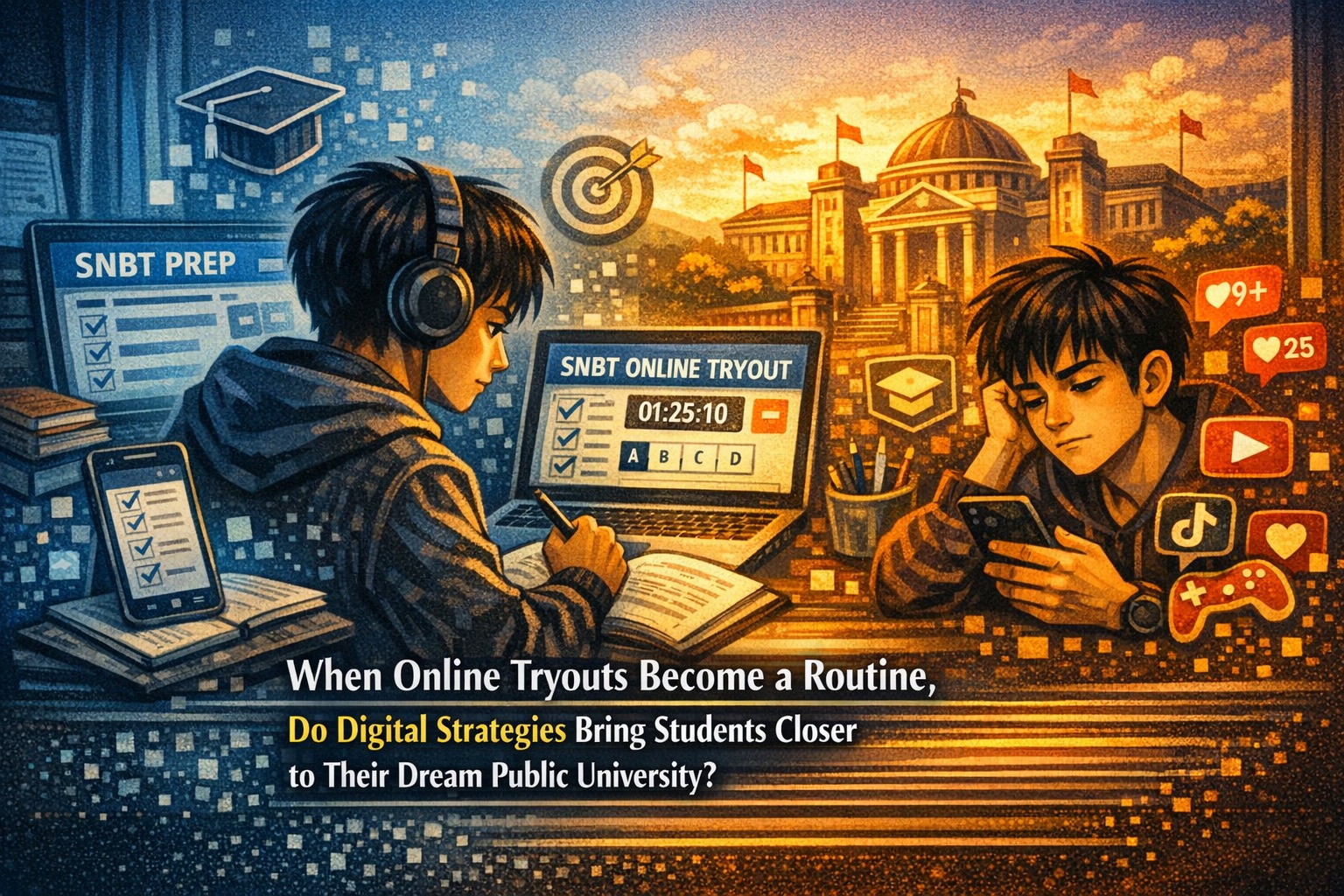
For many students preparing for SNBT (Seleksi Nasional Berdasarkan Tes), entering a dream public university is more than just an academic goal. It represents years of effort, family expectations, personal ambition, and the hope for a better future. In today’s digital era, the journey toward that goal looks very different from the past. Preparation no longer depends only on school textbooks, classroom explanations, or expensive tutoring centers. Students now rely heavily on online tryouts, learning platforms, educational videos, and digital discussion groups.
Among these tools, online tryouts have become one of the most popular strategies. Students regularly complete timed simulations, compare scores, analyze rankings, and monitor progress through digital systems. Many even make online tryouts part of their daily routine, treating them as a reflection of their readiness for the real exam.
This creates an important question: when online tryouts become a routine, do digital strategies truly bring students closer to their dream public university, or do they sometimes create pressure without real understanding?
The answer depends on how students use these tools. Online tryouts can be powerful instruments for improvement, but they can also become a source of unhealthy comparison, anxiety, and passive preparation if used without reflection.
Success in SNBT is not only about practicing more questions. It is about understanding mistakes, building consistency, and using digital strategies wisely.
THE RISE OF ONLINE TRYOUT CULTURE
Online tryouts have become a major part of modern SNBT preparation. Almost every student preparing for competitive university entrance exams is familiar with digital simulations that imitate real test conditions.
These platforms offer timed questions, automatic scoring, ranking systems, and detailed performance analysis. Students can practice from home without waiting for school-based exams or physical tutoring sessions.
The popularity of online tryouts grows because they provide immediate feedback. Instead of wondering whether they are improving, students can see clear numbers that reflect their current performance.
This system also creates a sense of routine. Weekly or even daily tryouts become a habit for students who want measurable academic progress.
In many ways, online tryouts transform preparation from abstract studying into visible performance tracking.
However, numbers alone do not always represent true readiness.
WHY DIGITAL TRYOUTS FEEL MORE EFFECTIVE
Students often prefer online tryouts because they feel practical, fast, and realistic.
The structure closely resembles the real SNBT experience. Time pressure, multiple-choice patterns, and reasoning-based questions help students become familiar with the exam atmosphere long before the official test day.
This familiarity reduces panic and improves confidence. Students who practice regularly often feel calmer because the exam environment no longer feels unfamiliar.
Digital systems also help students identify weak subjects quickly. Instead of reviewing everything equally, they can focus on specific sections such as quantitative reasoning, literacy comprehension, or logical analysis.
This creates smarter study strategies because preparation becomes targeted rather than random.
Another advantage is accessibility. Students from different cities and educational backgrounds can access similar tryout systems, creating more equal opportunities for academic competition.
Technology makes preparation more strategic when used with clear purpose.
WHEN SCORES BECOME A SOURCE OF STRESS
Although tryout scores can motivate students, they can also create emotional pressure.
Many students begin to judge their entire academic future based on one simulation result. A low score feels like proof of failure, while a high score creates fear of losing progress.
This emotional dependence becomes dangerous when students forget that tryouts are tools for learning, not final judgments of ability.
Ranking systems can also trigger unhealthy comparison. Seeing other students score higher may inspire some learners, but for many, it creates self-doubt and anxiety.
Students start focusing more on numbers than understanding. They chase score improvement without asking why mistakes happen.
This pressure can reduce motivation. Instead of feeling challenged, students feel defeated before the real exam even begins.
Healthy preparation requires remembering that tryouts measure progress, not personal worth.
THE DIFFERENCE BETWEEN PRACTICE AND REAL LEARNING
Completing many tryouts does not automatically guarantee success.
Some students become trapped in a cycle of answering questions without reviewing mistakes deeply. They repeat simulations but do not strengthen conceptual understanding.
This creates surface-level preparation. Scores may change slightly, but weak foundations remain unchanged.
Real learning happens after the tryout, not only during it.
Students need to analyze wrong answers, understand why errors occurred, and identify patterns in their thinking. Did they misunderstand the concept, misread the question, or lose focus because of time pressure?
Without reflection, tryouts become repetition without growth.
SNBT demands reasoning ability, not memorization. Improvement requires thinking, not only answering.
Digital strategies become effective only when students combine performance tracking with honest evaluation.
HOW ONLINE TRYOUTS BUILD EXAM MENTALITY
One of the strongest benefits of regular tryouts is psychological preparation.
Many students struggle not because they lack knowledge, but because they panic under pressure. Limited time, difficult questions, and fear of failure can damage performance during the real exam.
Frequent online tryouts help train emotional endurance. Students become familiar with stress and learn how to stay calm while making decisions.
They also develop strategic habits such as time management, question prioritization, and emotional control when facing difficult sections.
This exam mentality is often as important as academic mastery.
Students who understand how they react under pressure can prepare more effectively than those who study only theory.
Digital simulations create a safe space to fail, learn, and improve before the official test day arrives.
Confidence grows through repeated exposure.
THE RISK OF PASSIVE DEPENDENCE ON DIGITAL TOOLS
Technology supports learning, but overdependence creates new problems.
Some students believe that completing online tryouts alone is enough preparation. They focus heavily on simulations but neglect deeper reading, concept review, and long-term understanding.
Others depend too much on instant explanations and shortcuts. Instead of struggling through difficult reasoning, they search for quick answer patterns without mastering the logic behind them.
This weakens independent thinking.
SNBT is designed to test analytical ability, not only familiarity with question formats. Students who rely too much on shortcuts may struggle when questions appear in unfamiliar forms.
Technology should support active effort, not replace it.
Learning becomes stronger when students use digital tools as guidance, not as a substitute for disciplined study.
The smartest strategy is balance between technology and deep comprehension.
BUILDING A CONSISTENT DIGITAL STUDY SYSTEM
Success in SNBT preparation comes from consistency more than intensity.
Students often look for dramatic motivation, but routine creates stronger long-term results. Online tryouts work best when they become part of a structured study system.
This means setting realistic schedules, such as weekly simulations followed by detailed review sessions. Students should not chase quantity alone, but quality of reflection.
Combining tryouts with concept revision, note-taking, and targeted practice creates stronger academic progress.
Digital tools should support a complete system, not stand alone.
Students also need rest. Constant testing without recovery creates burnout and emotional exhaustion. Healthy routines include balance between study, sleep, and personal well-being.
Consistency grows when routines are sustainable.
The goal is not studying harder for one week, but studying wisely for many months.
THE ROLE OF PARENTS AND TEACHERS IN DIGITAL PREPARATION
Students preparing for public university entrance exams often carry strong emotional pressure, and support from parents and teachers becomes essential.
Parents should understand that online tryouts are not just another screen activity. They can be serious academic preparation tools when used correctly.
Supportive communication helps students manage stress better than constant pressure about scores and rankings.
Teachers can guide students by helping them interpret tryout results realistically. A low score should become feedback for improvement, not a reason for hopelessness.
Schools can also provide structured digital literacy, teaching students how to choose reliable platforms and avoid unhealthy academic comparison.
Strong support systems help students remain emotionally stable while facing competitive preparation.
Success becomes more sustainable when students feel guided rather than isolated.
DO DIGITAL STRATEGIES REALLY BRING STUDENTS CLOSER TO THEIR DREAM CAMPUS?
The answer is yes—but only when strategy is stronger than obsession.
Online tryouts and digital learning tools can absolutely bring students closer to their dream public university. They improve familiarity, confidence, performance tracking, and flexibility of preparation.
But technology alone is never enough.
Students still need discipline, focus, emotional resilience, and the willingness to learn from mistakes. High scores without understanding are fragile. True readiness comes from consistent growth, not temporary performance.
Dream campuses are reached not only by those who practice the most, but by those who reflect the best.
Digital strategies should make learning smarter, not heavier.
When online tryouts become a routine, they should function as mirrors, not judges. They should show students where they are and help them move forward, not define their entire future.
In the end, success in SNBT is not determined by how many tryouts are completed, but by how deeply students transform every result into progress.
That is what truly brings them closer to the university they dream of.
About the Author
Gusti Ayu Tita P
Author — STEKOM University
An active author focused on academic issues, educational technology, and human resource development in the campus environment.