
When Will Village BLT Be Distributed? Here Is What You Need to Know
Gusti Ayu Tita P
9 September 2026
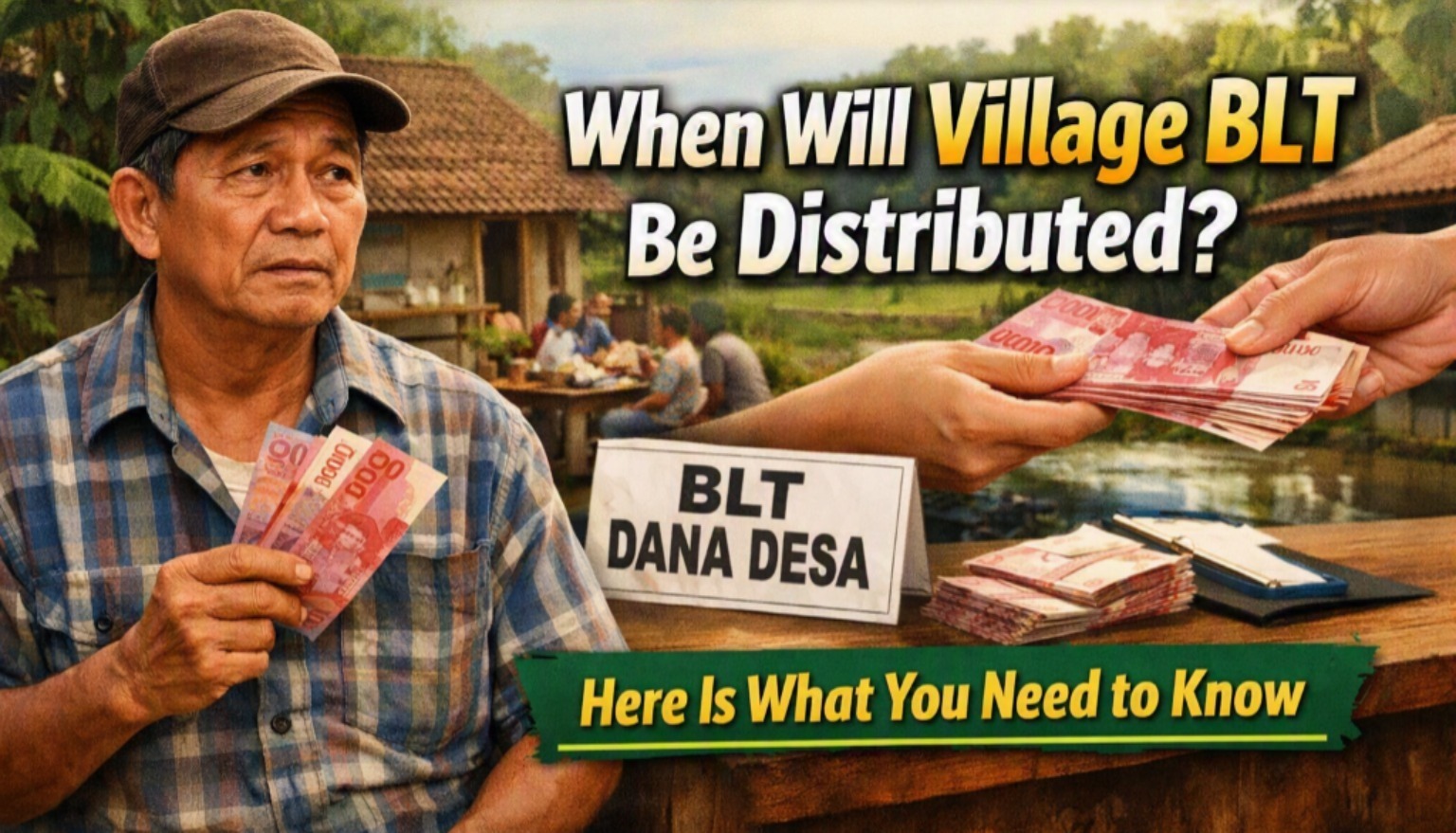
Village BLT, or Bantuan Langsung Tunai Desa, is a form of direct cash assistance funded through the Village Fund to help families facing serious economic difficulties. Many residents are interested in knowing when Village BLT will be distributed, especially because the payment schedule can affect household financial planning. In 2026, the government continues to prioritize Village BLT as part of efforts to address extreme poverty in villages. However, there is no single national payment date that applies to every village. The actual distribution date can therefore be different from one village to another.
THERE IS NO SINGLE NATIONAL DISTRIBUTION DATE
The most important thing to understand is that Village BLT does not have one fixed national distribution date for all beneficiaries. The timing depends on the preparation and implementation of the program at the village level. Each village must establish its eligible beneficiary families through the required village decision-making process before the assistance can be distributed. The availability and administration of the Village Fund also affect when a payment can be made. As a result, one village may distribute the assistance earlier while another village may distribute it later.
This difference can be seen in actual 2026 village implementation. For example, Long Nawang distributed its first 2026 Village BLT payment on June 19, 2026, covering January through June for its beneficiaries. Meanwhile, Caturtunggal distributed its July 2026 Village BLT payment in July, showing that local payment schedules can vary considerably. These examples demonstrate why residents should not assume that a payment date announced in another village will apply to their own village.
WHEN CAN VILLAGE BLT PAYMENTS START?
For the 2026 program, Village BLT is part of the Village Fund focus for addressing extreme poverty. Regulation of the Minister of Villages and Underdeveloped Regions Number 16 of 2025 states that Village BLT may be provided at a maximum of Rp300,000 per month for each beneficiary family. The regulation also states that payments may be made for up to three months at once. This means beneficiaries may receive several months of assistance in a single payment rather than receiving money separately every month.
Therefore, residents should not immediately consider a delayed monthly payment as a cancellation of the program. The village may arrange payments according to its implementation and administrative readiness. What matters is that the payment follows the applicable rules and the beneficiary has been officially determined. The exact timing should be confirmed through the village government, because local implementation can determine when beneficiaries are called or when funds are transferred.
WHY CAN THE DISTRIBUTION DATE BE DIFFERENT?
The distribution date can differ because Village BLT requires beneficiary determination and village-level administration. The 2026 regulation states that the beneficiary families are decided through a Village Deliberation. The government data is used as an important reference when identifying families who qualify for the assistance. If the relevant government data is unavailable, the village can use specified criteria to identify potential beneficiaries. This process means that the village needs time to verify information before the final list is established.
Other administrative factors can also influence the schedule. The village must include the relevant program in its Village Budget planning and implementation, while the distribution of Village Funds follows the applicable financial procedures. A village that has completed the necessary administrative requirements may be able to distribute assistance sooner than a village that is still completing its preparation. Therefore, differences in payment dates do not automatically mean that one village has received preferential treatment. Administrative readiness and local implementation are important factors.
WHO CAN RECEIVE VILLAGE BLT?
Village BLT is primarily intended for families experiencing extreme poverty who meet the requirements established under the applicable regulations. The 2026 rules direct villages to use government data as a reference when determining potential beneficiaries. The final beneficiaries are decided through the village deliberation process rather than being selected solely because someone personally applies for assistance. This helps the village identify households that are considered most in need based on available information.
When the required government data is unavailable, several criteria can be considered by the village. These include families that have lost their source of income, have members vulnerable to chronic or long-term illness or have disabilities, and certain families with specific social and economic vulnerabilities. The criteria also include single elderly households and women who are heads of poor families. Meeting one criterion does not necessarily mean that a person will automatically receive the assistance because the final determination follows the village process and applicable data.
HOW MUCH IS VILLAGE BLT IN 2026?
In 2026, the maximum Village BLT amount is Rp300,000 per beneficiary family per month. The regulation allows the payment to cover a maximum of three months at once. Therefore, if a village makes a three-month payment at the maximum amount, a beneficiary could receive up to Rp900,000 in that payment. The actual amount and payment period should follow the decision and implementation adopted by the relevant village.
It is important not to confuse the maximum monthly amount with a guaranteed payment of Rp300,000 in every situation. The applicable regulation uses the term maximum, while the village must implement the program according to its approved budget and beneficiary determination. Residents should therefore check the official information issued by their village government. This is particularly important when there are changes to beneficiary data or local implementation arrangements.
HOW TO CHECK WHEN VILLAGE BLT WILL BE DISTRIBUTED?
Residents who want to know when Village BLT will be distributed should first contact the village government office. Information can usually be obtained from the village head, village officials, or other authorized village representatives. Residents should ask specifically about the 2026 BLT distribution schedule, the beneficiary list, and the payment period being distributed. Checking official village announcements is safer than relying on messages circulating through social media or messaging groups.
Residents should also make sure that their population and family data are accurate. Changes to household information, address, family composition, or other administrative details may need to be reported to the village government. Keeping documents and administrative information updated can help prevent problems during beneficiary verification. Most importantly, residents should remember that there is no universal distribution date for every village, so the most reliable schedule is the one officially announced by their own village government.
CONCLUSION
The answer to when Village BLT will be distributed is that there is no single date that applies nationwide. For 2026, the program is implemented as part of the Village Fund's focus on addressing extreme poverty, with the assistance set at a maximum of Rp300,000 per month per beneficiary family and payments allowed for up to three months at once.
The distribution schedule depends on village-level preparation, beneficiary determination, budget implementation, and administrative readiness. Some villages have already distributed 2026 payments at different times, which confirms that schedules can vary locally. Residents should therefore avoid relying on a general date found online. The village government remains the best source for the exact payment schedule and beneficiary information.
About the Author
Gusti Ayu Tita P
Author — STEKOM University
An active author focused on academic issues, educational technology, and human resource development in the campus environment.















