
Who Is Eligible to Apply for a Death Certificate?
Gusti Ayu Tita P
14 September 2026
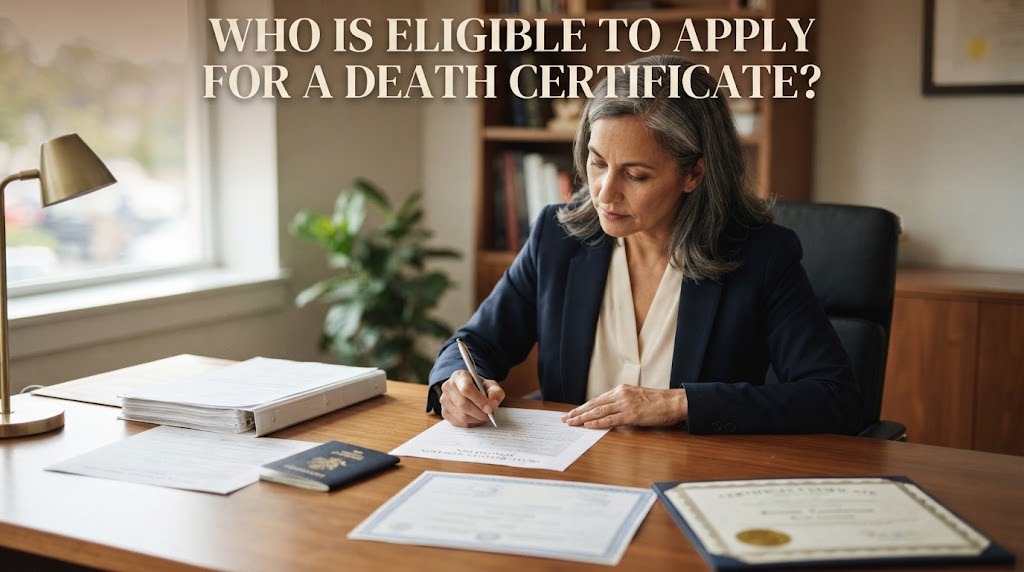
A death certificate is an official civil registration document that records the death of a person. In Indonesia, the death is generally reported by the deceased person's family or someone representing the family to the relevant civil registration authority. This means the application does not have to be submitted personally by the deceased person's immediate family in every situation.
The exact person who can submit the report may depend on local administrative procedures. Some local regulations specifically mention family members, heirs, authorized representatives, or community officials as parties who can report a death. Therefore, it is important to check the requirements of the local Dukcapil office.
CAN A FAMILY MEMBER APPLY FOR A DEATH CERTIFICATE?
Yes. A family member can generally report the death and assist with the registration process. This is one of the most common ways a death is reported because family members usually have access to the deceased person's identity documents and information about the death.
The applicant may need to provide supporting documents such as the deceased person's Family Card, identity document, and proof of death. Additional requirements can vary depending on the local civil registration service.
CAN AN HEIR APPLY FOR A DEATH CERTIFICATE?
An heir may be able to handle the death registration, particularly when the heir is responsible for managing the deceased person's administrative affairs. Some local regulations specifically refer to heirs as parties who can report a death.
However, being an heir is not necessarily the only condition for making a report. The applicant may still need to provide identification and documents proving the relationship or connection with the deceased, depending on the applicable procedure.
CAN SOMEONE REPRESENT THE FAMILY?
In certain circumstances, the family can authorize another person to handle the administrative process. This can be useful when family members cannot visit the civil registration office themselves.
The representative may need to provide an authorization letter and identification documents. The exact requirements depend on the local Dukcapil service, so applicants should confirm whether a power of attorney is required before submitting the application.
CAN A COMMUNITY OFFICIAL REPORT THE DEATH?
Some local regulations allow or require community officials to participate in reporting a death. For example, certain regional procedures involve the head of an RT or RW, village officials, or other local registration officers.
This does not necessarily mean that every death certificate application must be submitted by an RT or RW official. The procedure can differ between regions, so families should follow the system established by their local government.
WHAT IF THE DECEASED DIED IN A HOSPITAL?
When a person dies in a hospital or other health facility, the facility may provide a statement confirming the death. The family or another authorized reporter can then use the document as supporting evidence for the civil registration process.
The medical facility's document does not necessarily replace the civil registration process. The death still needs to be recorded by the appropriate population administration authority so the deceased person's official population record can be updated.
WHAT IF THE DECEASED DIED AT HOME?
A death that occurs at home can still be registered. The family may need to obtain the appropriate death statement according to the local procedure before submitting the death report.
If no doctor or health professional is available, some regional regulations provide alternative procedures for establishing proof of death. The exact requirements should therefore be confirmed with the local Dukcapil or village administration.
WHAT DOCUMENTS DOES THE APPLICANT NEED?
The documents required depend on the local procedure, but commonly include proof of death and identification documents related to the deceased. The applicant may also need to provide their own identification and documents showing their relationship to the deceased.
Some regional regulations list the deceased person's Family Card and KTP, the reporter's identity, and other supporting documents among the requirements.
It is best to check the current requirements before submitting an application because document lists can vary between regions.
IS THE APPLICANT THE PERSON WHO ISSUES THE CERTIFICATE?
No. The applicant or reporter submits the death report and supporting documents, while the authorized civil registration authority records the death and issues the death certificate.
After receiving and verifying the report, the civil registration authority records the death in the population administration system. The certificate is then issued according to the applicable procedure.
CONCLUSION
A death certificate can generally be applied for or reported by a family member or another person representing the family. In some circumstances, an heir, authorized representative, or designated community official may also handle the reporting process. The exact eligibility and required documents can vary according to local regulations and the circumstances of the death. Therefore, applicants should confirm the latest requirements with their local Dukcapil office before submitting the death registration.
About the Author
Gusti Ayu Tita P
Author — STEKOM University
An active author focused on academic issues, educational technology, and human resource development in the campus environment.















